


Experts told how long the period of high rates will last and whether it is worth taking out loans at such interest rates
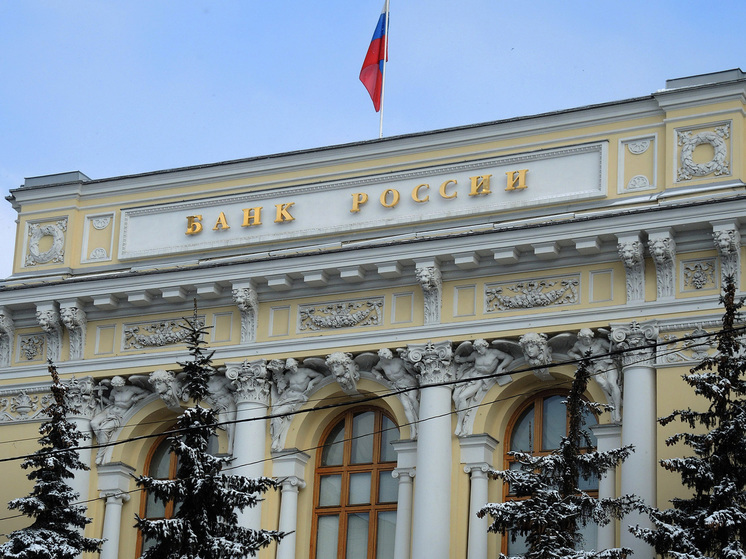
The Board of Directors of the Central Bank of the Russian Federation at its third meeting this year decided to keep the key rate unchanged. The figure has been at the level of 16% since December 18 last year. At the same time, annual inflation — the most important factor for the regulator to decide on the rate — by mid-April rose to 7.83% from the March value of 7.72% and the February value of 7.69%. While the debate continues about when the Central Bank will decide to lower the key rate, experts explained what prospects the protracted monetary pause opens up for Russians.
“The decision of the Central Bank of the Russian Federation to leave the key rate unchanged is due to the fact that in March, according to Rosstat, monthly inflation decreased compared to February to 0.39%, that is, almost half. Annual inflation in March remained virtually stable at 7.7%. That is, we can say that the high key rate of 16% per annum has already begun to bring the first results, although it is too early to talk about a reversal of the trend from growth to reduction in annual inflation.
The ruble may not react to the decision on the key rate on April 26, as it seems well predictable. Most likely, until the end of the month the dollar will fluctuate between 92-95 rubles, and the euro — in the range of 98-101 rubles. Maintaining the key rate of the Central Bank of the Russian Federation at the current level will mean that interest rates of banks will also not change, that is, high interest rates on deposits and loans will remain the same. For investors this is the situation — a good chance to save for the future, at least for large purchases, for vacation, by putting money in a reliable bank at 14-17% per annum. But it’s better not to rush into loans, unless you are going to take out a mortgage or a car loan by participating in one of the preferential programs.”
“Inflation has continued to slow down in recent months, but not as rapidly as is required by the Central Bank to return to the target 4% by the end of this year. Therefore, the Bank of Russia chose to add tighter monetary policy now in order to try to return inflation to the target by the end of this year. We expect that the rate of price growth will continue to slow down in the coming months due to the stable ruble exchange rate and tight monetary conditions (that is, the impact of the regulator’s high key rate on the economy).
At the same time, annual inflation in the coming months months will continue to grow and reach a peak of 8.3% in July after indexation of housing and communal services tariffs by almost 10%. By the end of the year, we expect annual inflation to slow down to 6%.
The results of the Bank of Russia meeting held today may provide moderate support to the ruble. In general, the long-term preservation of ruble interest rates at a high level, along with the extension of the mandatory sale of foreign currency earnings, will keep the ruble stable. In the coming weeks, the ruble will continue to trade in the range of 91-95 per dollar, 97-101 per euro, 12.5-13.1 per yuan
Tight monetary policy (that is, a high key rate) slows down lending and reduces demand for imports and foreign currency. In addition, the current high rates on ruble deposits of 14-16% per annum support the attractiveness of savings in rubles.»
«The decision of the Bank of Russia to maintain the previous value of the key rate was made because There are no consistent signs of inflation slowing down to the target level of 4%, high consumer activity and a tense situation in the labor market remain, and decisions on the budget and taxes are expected.
By the end of May, the dollar may reach the range of 97-98 rubles. Although the ruble now seems resistant to the influence of geopolitical factors, they cannot be written off. Any serious shock, be it an escalation of the conflict or other “black swans”, can significantly undermine the current stability of the exchange rate. Everyone needs to be prepared for possible drastic changes.”
“The decision of the Central Bank of the Russian Federation was made because inflation in the Russian Federation remains, although high, stable. That is, it is too early to reduce the rate, and there are no serious reasons for raising it. The impact of such a decision on the stock market and stock quotes on the stock exchange will be neutral. If the rate is reduced, say, in the fall, it would be positive for the stock market. But for now there should not be a noticeable positive impact on the stock market.
The ruble usually reacts to the regulator’s decisions on the interest rate when it changes, and in any direction. But in this case, the key rate remained at the same level. Most likely, the dollar and yuan will rise slightly before the May holidays. By the beginning of May, the dollar may fluctuate between 93-95 rubles, euro — within the range of 99-101 rubles.»