


The Earth has been blasted by solar wind over the past few nights
The largest geomagnetic storm that continues through May 13 is the strongest since the Great Solar Storms of 2003. As the Earth becomes increasingly electrified, these storms have the potential to disrupt both radio and power grids. The new storm was a warning of more serious risks to come. It also affects people's health.
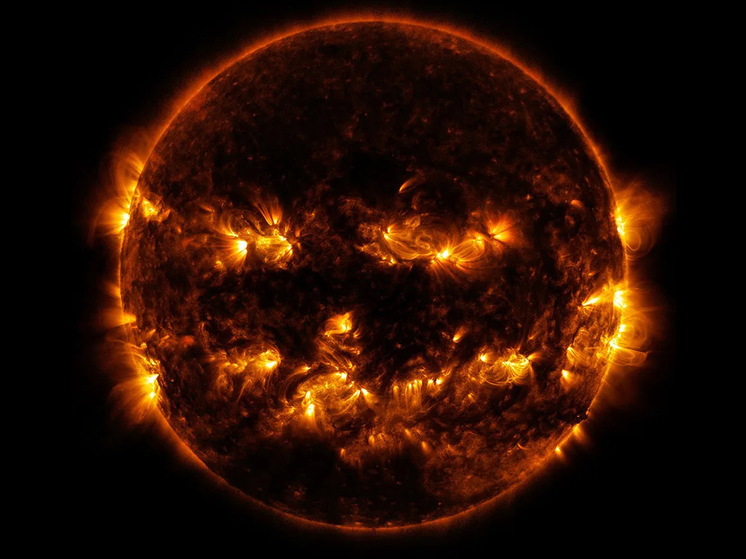
Conditions persisted for several consecutive nights, producing two G5 geomagnetic storms. They are designated as «extreme» and are the most powerful class of solar storms that destroy our planet. And they can be dangerous.
Severe storms in 2003 caused power outages across North America, power outages in Sweden and knocked out 12 transformers at power plants in South Africa.
< p>The current solar storms, as far as scientists know, have not caused any damage, although power outages have been reported. As the intensity of the storms weakens, the threat of danger increases, but more solar storms may occur in the near future.
The culprit is a sunspot region called AR 3664, which is currently crossing the surface of the Sun. It is extremely active. But the flares themselves do not have a strong impact on the Earth. The main risk factor here is coronal mass ejections (CMEs), which sometimes occur simultaneously with flares that occur in sunspot regions where reconnections in the Sun's magnetic field cause huge bursts of energy.
“It may take several days to reach Earth, but when a CME hits our planet's magnetic field, it causes some commotion. Particles in a CME are accelerated along Earth's magnetic field lines until they enter our atmosphere, where they interact with particles already there,” — said representatives of the US National Oceanic and Atmospheric Administration (NOAA). The center predicts moderate geomagnetic storms on May 13, 2024.
The consequences of a solar storm include the aforementioned anomalies in the electrical grid, which are the result of currents generated by the interaction of atmospheric particles. They create power surges that can cause damage. Satellite and high-frequency radio communications may also be disrupted.
«Depending on how strongly the CME interacts with the Earth's magnetic field, the Earth's field can oscillate, sending pulses of electrical current along long conductors such as pipelines, railroad tracks and power lines that shouldn’t be there,” — explained cosmologist Robert Steenburg.
In addition, intense solar storms also pose a health risk to people, especially airline crew and passengers, especially on flights at high latitudes, as solar storms increase the amount of solar and cosmic radiation reaching the Earth's upper atmosphere.
< p>«The Sun is near the maximum of its 25-year activity cycle, which will reach its peak in October, solar flare activity often increases at the end of the peak — Scott McIntosh from the National Center for Atmospheric Research told LiveScience, — this could mean years of increased flares.»
The worst geomagnetic storm in human history was the Carrington Storm of 1859, named after an astronomer who noticed unusual spots on the surface of the Sun, the consequences of which affected the Earth 18 hours later.< /p>
This geomagnetic storm — G5 — caused sparks to fly from doorknobs, blocked telegraph wires and auroras that were visible as far south as the Caribbean.