


The Presidential Academy named trends in the top five BRICS countries
In a month, BRICS will celebrate the 15th anniversary of the 1st summit, held on June 16, 2009 in Yekaterinburg. By world standards, this association is still very young, but the first results of its work can already be summed up. Thus, the director of the Center for Research of International Institutions of the Presidential Academy, Marina Larionova, presented the BRICS Sustainable Development Index 2023. The study analyzed 100 indicators for each of the five BRICS countries (before the 2024 expansion).
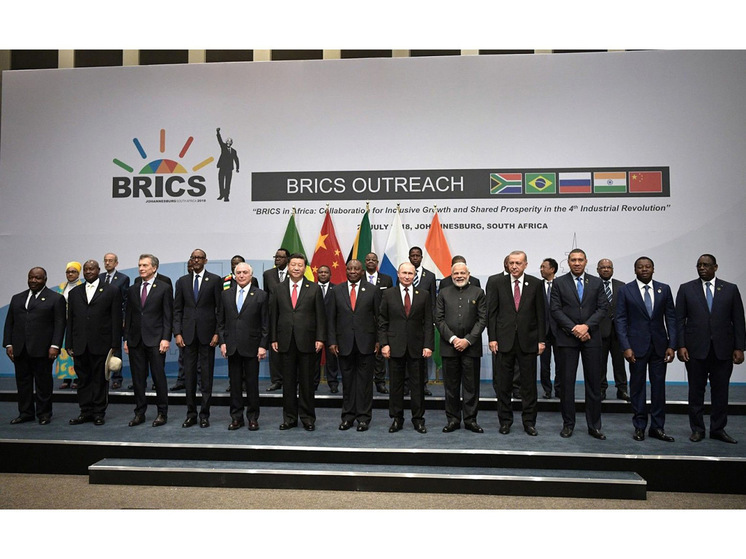
The sources used were: UN SDG indicator system and databases of key international institutions: WHO, FAO, IEA, UNESCO and others. An analysis of sustainability indicators across the social, environmental and economic dimensions of the UN 2030 Agenda revealed several trends.
“We observe the presence of positive dynamics on average in the BRICS in terms of social indicators — the fight against poverty, coverage of the population with a minimum level/social protection systems, access to basic services, quality of education, most indicators of food supply, health care and demography. In terms of environmental indicators, there is a reduction in the average annual level of fine particulate matter in the atmosphere of cities, CO2 emissions, and an increase in the share of low-carbon energy sources in electricity generation. However, the share of subsidies for the production and consumption of fossil fuels in GDP during the monitoring period increased on average across BRICS,” says Marina Larionova.
The expert added that the growth rate of output per worker and the growth rate of GDP per employee have decreased, which likely indicates an increase in the number of unproductive jobs in the economy. In addition, the BRICS countries have shown positive dynamics in the field of innovation and digitalization. An increase in the number of Internet users and mobile networks has been recorded, and access to modern digital financial instruments has been expanded.
According to the results of the study, the Progress Index, reflecting the dynamics of indicators in three areas of the 2030 Agenda (social, economic and environmental) is in the top five , looks like this:
1st place: China (0.38 points);
2nd place: India (0.05 points);
3rd place: Brazil (-0.04 points);
4th place: Russia (-0.10 points);
5th place: South Africa ( -0.23 points).
Recommendations were drawn up on the contribution of Russia and other countries to various areas of sustainable development. For example, food security can be improved by ensuring the availability of goods in remote areas of the BRICS countries, as well as developing and least developed countries. There is also a need to spread awareness about the importance of vaccines. It is proposed to increase cooperation on issues related to the implementation of the climate goals of the 2030 Agenda. In addition, the topic of water use should occupy a prominent place on the BRICS agenda.
“Countries need to keep employment and macroeconomic policy coordination on the agenda as the basis for the social component of sustainable growth. In modern realities, this topic should be linked to the development of promising technologies, such as AI, and digitalization processes. The introduction of digital tools should be a separate item on the BRICS agenda. The basis of the group’s agenda should be issues of stimulating specific projects for the integration of digital solutions, mainly in the social sphere (creation of “smart” cities, introduction of digital public services, digital education), and in such areas as agriculture, clean energy, transport, environmental monitoring.” , — the author of the work emphasized.
In addition, important challenges that require the collective efforts of the “five” are the growth of global instability and geopolitical tension. To overcome it, it is necessary to coordinate the positions of countries, including within the framework of Russia’s chairmanship of the association in 2024.