


The authorities believe that the “black list” of debtor parents will help return children’s billions
A “black list” of alimony defaulters will be created in Russia. This law was adopted by the State Duma, and immediately in the second and third readings. The register of alimony debtors will be open; information about defaulters who have been brought to administrative and criminal liability, as well as those on the wanted list, will be published there. This list will be compiled by the Federal Bailiff Service (FSSP) together with the Pension and Social Insurance Fund. MK found out from experts whether the new initiative of the authorities will help reduce alimony debts.
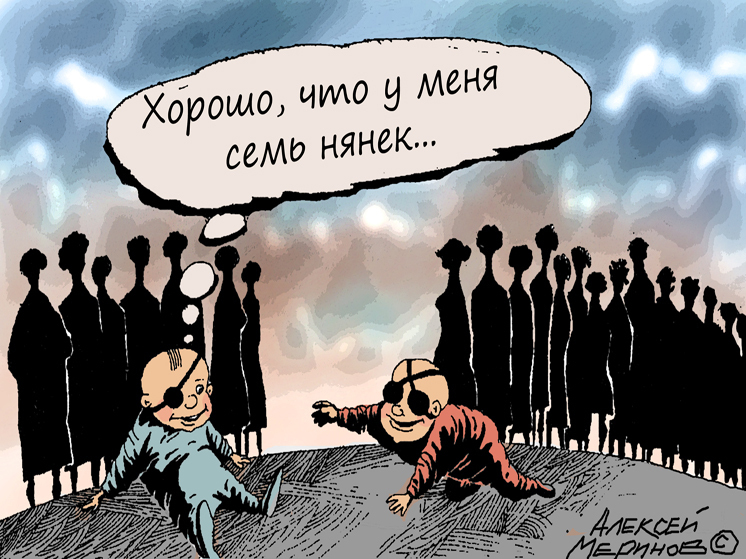
Tambov resident 42-year-old Anna S., in the 15 years since her divorce from her husband Oleg, has never received alimony from him for their common now 16-year-old son. During this time, she officially applied for alimony to the FSSP twice. The first time, her appeal mysteriously disappeared at her ex-husband’s work; the second time, filed anew more than three years ago, the collection is still ongoing. At the same time, the husband does not hide his desire to get rid of any obligations, and even when he buys new cars and apartments, he specifically registers them in the name of relatives or his second wife. Anna turned to professional lawyers with her problem. “They showed me how Oleg was once fined for failure to pay tax on a foreign car, so he paid the debt within an hour, but he hasn’t paid his own son a penny since the divorce,” the woman complains. “And he has money: he holds a good position, he bought two apartments, he got cars for himself and his second wife, he built a house outside the city. But he doesn’t want to pay alimony and that’s it.” Anna hopes that the new law will be able to encourage her ex-husband to fulfill his obligations to his son.
According to State Duma Chairman Vyacheslav Volodin, the register plans to include information about those who do not pay funds for the maintenance of minor children, incompetent children who have reached the age of majority, or incapacitated parents. The alimony debtor will be notified of inclusion in the “black list” within 24 hours after information about him is included in the register. The information will be publicly available until the defaulter repays the debt in full. According to the founder of the vvCube consulting group, Vadim Tkachenko, the “black list” will include, firstly, persons who are persistent defaulters for whom there is an administrative penalty; secondly, malicious defaulters, against whom a criminal case has been opened.
“By creating such a register, the authorities want to reduce the number of unfinished enforcement proceedings on alimony, make the work of bailiffs and other persons easier, improve the quality of life and well-being of alimony recipients, and also increase the efficiency of legal influence on debtors,” says lawyer Alla Georgieva. — The register will significantly reduce the number of alimony defaulters. I am sure that if the father of my child were on such a “black list,” then I would receive alimony regularly, and not when he decides to pay it, and in an amount worthy of my son’s existence.”
According to the latest Rosstat population census of 2021, in our country there are about 38% of families where the mother or father raises children alone. Among single parents, 5.9 million people are single mothers, and 1.09 million people are single fathers (only 1.8 million women and 154 thousand men were officially divorced). In 2023, there were 771.2 thousand unfinished enforcement proceedings on alimony in Russia. According to Alexander Safonov, a professor at the Financial University under the Government of the Russian Federation, the amount of debts exceeded 156 billion rubles last year. It is quite difficult to collect the FSSP debt, since draft dodgers often do not register any property for themselves, change their place of residence and work, and prefer to receive money in cash. How can a register of malicious debtors help? Firstly, this will complicate their employment, since such “advertising” makes employers doubt the integrity of these specialists. Secondly, no one has canceled the impact of public censure: it is uncomfortable to catch the sidelong glances of your colleagues. Thirdly, such a registry will be of great help for women or men planning to start a family. “We looked at the list and saw that the applicant or contender for the hand and heart turns out to be an alimony provider — which means it’s better not to get involved with such a person,” the expert explained.
True, there is an opinion that for malicious defaulters of alimony for their own children, appealing to conscience is a weak argument. “Perhaps employers will look at these lists when making decisions about employment, but the document flow is already visible in both the Federal Tax Service and the Social Fund, so this register will not be a key factor,” believes financial analyst Alexey Krichevsky. By and large, this is purely moral pressure on defaulters: to appeal to conscience after the name and “status” are made public throughout the country. Moreover, it seems that it will not be possible to achieve any really serious effect here, if we talk about money and payments, the economist claims.