


Analyst Osadchy revealed the mechanism of the influence of bribes and kickbacks on price increases
According to Rosstat, annual inflation in Russia reached 7.92% by May 13. Despite all the efforts of the Bank of Russia and the government, it continues to accelerate. For comparison, at the end of March inflation was 7.72%. There are many factors that influence it: the ruble exchange rate, gasoline and oil prices, the situation with foreign trade and much more. But there is another phenomenon that economists do not usually talk about, but it also contributes to inflation — corruption. In connection with the latest “high-profile” arrests and criminal cases in government agencies, MK asked Maxim Osadchy, head of the analytical department of BKF Bank, to talk about the impact of this phenomenon on price increases.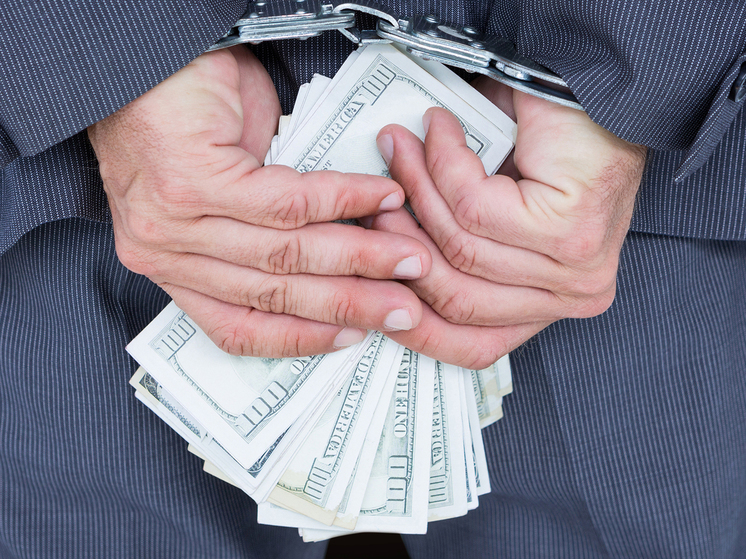 Photo: freepik.com
— The Central Bank of the Russian Federation is not subject to the main reasons for the “invincibility” of inflation — the Russian-Ukrainian conflict and sanctions. But if it were not for the actions of the Bank of Russia, it is possible that the rise in prices would have been like in Turkey: at the end of April, inflation there reached almost 70%.
— There are two opposing opinions about the role of corruption in the economy. According to the first, corruption is like sand in the economic mechanism; according to the second, it is like lubricant, machine oil. Both are not unfounded.
— Indeed, bribes to officials increase business costs. Costs are included in the price of the product and, ultimately, this “corruption tax” is paid by the consumer. In addition, it is not the most efficient business that receives the contract, but the one that “shared”. As a result, the entire economy becomes less efficient — it produces less products than it is capable of producing. Finally, a high level of corruption is not at all conducive to investment activity — you never know how much an official’s appetite will increase tomorrow.
About ten years ago I had the opportunity to participate in a feast with a top manager of one of the banks still remaining in Russia, owned by unfriendly non-residents. This bank was one of the first to come to Russia, and the banker (and he had extensive experience in international activities) said that he gave so many bribes only in Africa.
But corruption can not only increase, but also decrease enterprise costs. In this case, it has, surprisingly, a positive effect on the economy and weakens price increases.
“Nevertheless, the positive effect of corruption is also obvious: in conditions of overly stringent regulation and powerful tax pressure, corruption makes it possible to reduce costs. Which, in turn, helps to weaken inflationary pressure. By the way, here’s a way to fight corruption: we officially call corruption lobbying, and it’s done!
— The “sand in the mechanism” effect is clearly stronger than the “lubricant” effect. And globally, the higher the level of corruption, the lower the level of economic development of a particular country. And inflation is by no means skyrocketing in developed countries.
— Let's consider a typical scheme: a contract for the construction of an object is concluded at a price that is 5 times inflated. The rollback is 300%. It is clear that the contractor’s costs increase due to the need to cash out huge amounts, but the additional 100% generously compensates for these additional costs.
If the kickback is in the form of cash rubles, and the cash is stored in stacks, as we saw in the operational footage filming in the apartments of particularly talented corrupt officials, then such “sterilization of liquidity”, removing a large mass of money from circulation, helps to weaken inflation.
Corrupt officials act less patriotically when they take bribes in dollars and euros or cryptocurrency. In this case, the exchange of a large mass of rubles for foreign currency contributes to the weakening of the ruble and, as a result, increases import prices.
In addition, corruption contributes to the growth of taxes and the nationalization of the economy. After all, a corrupt official is vitally interested in maximizing the expansion of the “front of work.”