


What can emergency measures in the agricultural industry lead to?
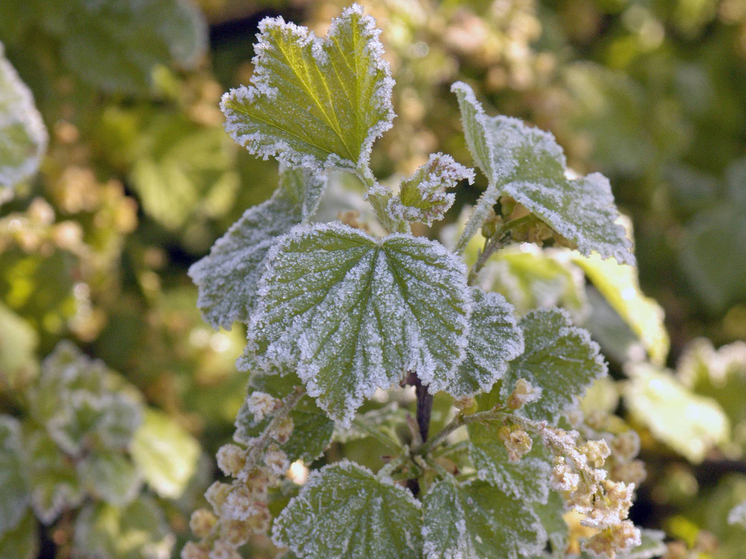
A federal emergency regime may be introduced in Russia after frosts. The measure was announced by the head of the Ministry of Agriculture Oksana Lut. Previously, it was said that the May frosts affected only 1% of the sown areas and affected 23 regions. Is the situation with the harvest really so dire for farmers, and will this measure help compensate for the damage? “MK” addressed this question to the host of the “Rural Hour” program, Candidate of Economic Sciences Igor Abakumov.
— The introduction of an emergency regime will not help farmers in any way, — said Igor Abakumov. — In Russia, only 14% of the area for crop production is insured. Peasants do not trust insurance companies. Russia has not created an effective insurance system for agricultural products.
— Damage will only be considered for those who have insurance. But insurance companies do not fully cover the damage in 90% of cases. They find dozens of reasons not to do this.
— Naturally, large agricultural holdings. Only the “big man” has the opportunity for this.
— It is very difficult to do this now, since we are talking about more than 1.5 million hectares. We do not have a system like in China or the USA, where crop damage is determined from a satellite and compensation for damage is automatically paid. First, we take pictures from a satellite, then the insurers assess the amount of damage. Plus, in Russia, an insured event occurs only when there is 100% damage to the area. But it happens that the percentage of damage is less than half, for example, 45%. This is also a loss, but insurance will not cover it.
— First of all, these are fruits in gardening farms. There the defeat is up to 90%. Large vegetable farms, as well as private farms, which supply more than half of the vegetables to the market, also suffered. Grain can be replanted, but this is an additional expense. In addition, it is not clear whether there will be enough seeds for a new sowing, since now there is a requirement to sow only domestic ones. For example, there are enough seeds for corn, but obviously not for soybeans. What to do about this is unclear. It turns out that expenses will increase for seeds, for diesel fuel, for depreciation of tractors, for workers’ salaries. No one will write off these expenses.
— We need direct non-repayable subsidies per hectare of area. How many hectares a farmer has suffered, that is what he must be paid for. Such a measure would cover the damage caused by the May frosts. But I want to emphasize: there is no fatal situation. We will collect less than planned, but still a lot — about 120-125 million tons of grain. While 80-85 million tons are enough for Russia’s domestic consumption. The rest will be exported. On the other hand, since less grain will still be harvested, farmers with a harvest will have the opportunity to sell the goods at a higher price. This will be a small revenge of our farmers on the Ministry of Agriculture, which reduced grain prices. This, in turn, will push up all other prices: feed, baked goods, confectionery, milk. For example, ice cream makers have already announced a price increase of 10-12%.
— The seedlings suffered. Almost all of the seedlings that were in the open ground died. What was in the greenhouses survived.
— Of course, the price of vegetables will also increase. So now we need to talk about subsidies for the import of fruits and vegetables. It is necessary to finance logistics and subsidies for those who import from Azerbaijan, Turkey and other supplying countries.
— This will not happen if the state does not interfere with the market. As soon as artificial regulation begins, prices rise. But businesses will bring all the products, you just have to not interfere.
— There will definitely not be enough vegetables and fruits. In general, any forecast will not be accurate if there is a lack of information. For example, over the past two weeks, grain harvest estimates have changed downwards four times.
— If we start helping imports right now, there will be no price increase or shortage. But if we don’t… Just against the background of expectations of loss estimates, the cost of Krasnodar strawberries in Moscow has jumped by almost one and a half times. To bring these prices down, we need well-established imports.
— I don’t think the Ministry of Agriculture will be given the opportunity to introduce an emergency situation. This is a question of political expediency, not economic expediency. We must understand that as soon as this regime is introduced, there will be an increased demand for food. People will start stocking up on buckwheat, pasta, and flour. The phrase «introduction of a federal emergency regime» will lead to nothing but panic among consumers.