


You can now open bottles and peel bananas with one limb
What could be done if a person had a third thumb? A robotic prosthesis allows people to open bottles, lift objects and even peel a banana with one hand. The “third thumb” is a controlled prosthesis that is attached to the rib of the right hand.
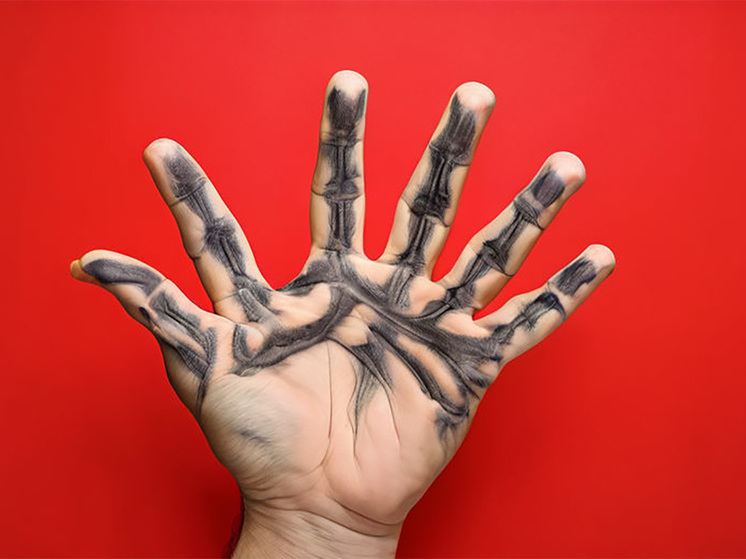
For millions of years, human hands consisted of 10 fingers. But it seems that scientists from the University of Cambridge believe that this is not enough. According to the Daily Mail, experts have created a “third thumb” – a controlled prosthesis that is attached to the edge of the right hand.
With its help you can lift objects, open bottles of drinks, handle playing cards, peel a banana and even thread a needle – and all this can really be done with just one hand.
In the study, human volunteers quickly became accustomed to the extra finger, which could «extend our motor capabilities beyond current biological limitations.»
The study was published in the journal Science Robotics.
Although scientists don't see a future in which people naturally «grow extra thumbs» as a result of evolution, their robotic version can make people's lives easier.
This could be especially valuable for amputees who, for example, have lost an arm and have difficulty performing everyday tasks with only one hand, writes Thumb.
"Wearable technology is already used in our daily lives, and We are now seeing more and more dedicated technologies being developed for augmentation,” study author Lucy Dowdall told MailOnline. – The third thumb can be used to expand the functions of the hand – for any task requiring the simultaneous carrying of several objects, or for stabilizing one object while another is performing a task.
Designer Dani Cloade, a postdoctoral fellow at UCLA's Plasticity Lab, began developing Third Thumb as part of her senior thesis project at the Royal College of Art.
The third thumb is on the opposite side of the palm from a person's thumb and is controlled by a sensor. pressure located under each thumb.
Both sensors, which are wirelessly connected to the thumb, monitor various movements, instantly responding to slight changes in pressure from the fingers.
Pressure from the toe of the right foot pulls the prosthesis towards the hand, while pressure applied from the toe left leg, pulls it towards the toes, and releasing the pressure returns the prosthesis to its original position.
In their study, the team tested 596 participants aged three to 96 years, who were given no more than a minute to familiarize themselves with the device.
The thumb is designed in different sizes to fit the hands of children and adults.
Participants in the experiment performed two tasks: first, collecting pegs and putting them in a basket, and second, manipulating and moving five or six different foam objects of varying sizes.
Overall, the researchers found that 99.3% of subjects successfully carried and controlled their thumb.
And 98 percent of participants were able to successfully manipulate objects using the “third thumb.” within the first minute of use.
Older and younger adults showed similar levels of ability when using the device, although further testing within the older adults' age group alone revealed a decline in performance with increasing age.
“This effect may be due to the general decline in sensorimotor and cognitive abilities that is associated with aging,” the researchers say. – In addition, these effects may also reflect generational attitudes toward technology.»
The new product is «not commercially available,» and it is unclear when and how the scientists will be able to make their device available to the general public and how much it will cost. But they hope it "could pave the way for a benchmark" for other "inclusive" human-oriented devices. “Future magnification technologies could have a significant impact on society and benefit many people,” the researchers write.