


Experts advise in response to strike a blow to the image of the West as a “safe haven” and a reliable partner
The G7 countries want to provide a loan to Ukraine in the amount of about $50 billion from the profits that they get blocked Russian assets. US Treasury Secretary Janet Yellen stated this at a hearing in the Senate Appropriations Committee. The Americans are also putting pressure on their colleagues from the EU, where finance ministers will hold a video conference on the G7 proposal to use the assets of the Central Bank of the Russian Federation frozen in the West. How can Russia respond to such a blatant violation of all international norms?
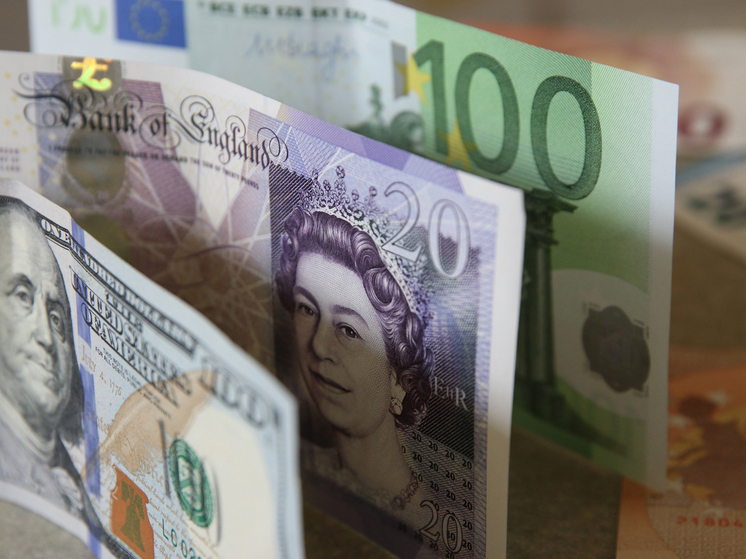
The possibility of providing assistance to Ukraine using profits from blocked Russian assets in the US and EU has been discussed for several years, but it was in the last few months that statements by politicians took shape as a decision. Speaking in the Senate, Janet Yellen frankly said that there was a discussion about the possibility of providing Ukraine with “a loan from the G7 and using windfall profits (from Russia’s frozen assets — MK) to repay those loans that will be provided.” At the same time, Reuters reported that EU finance ministers will hold a video conference on a G7 proposal to use Russian Central Bank assets blocked in the West to allow Ukraine to quickly obtain a loan of about $50 billion — this amount was mentioned by Yellen as a possible amount of assistance to Kyiv after the meeting of finance ministers G7 May 23-25 in Italy.
Let us recall that the EU Council previously adopted a resolution obliging all financial institutions of the European Union, in which more than 1 million euros of Russian assets are frozen, to begin transferring income from their reinvestment to the European Commission (EC) twice a year, which will then direct 90% of these funds to weapons for the Armed Forces of Ukraine , and 10% — for economic assistance programs to Kyiv. In this way, 2.5-3 billion euros per year could be collected. The first withdrawal is scheduled for July. In total, the EU has frozen about 210 billion euros of sovereign Russian assets. “The G7 understands perfectly well that Ukraine no longer has the money to repay new loans,” says BitRiver communications director and economist Andrei Loboda. — All that remains is meager income from the transit of Russian gas, and even that will soon cease. And in the West they are actually trying to take the proceeds from stolen Russian property, while providing Ukraine with “help” on credit.”
The laws of almost all countries in the world, especially the most developed ones, guarantee the inviolability of property rights. As the founder of the vvCube consulting group, lawyer Vadim Tkachenko, pointed out, public law applies to countries: property cannot be confiscated from states, except in a very limited number of cases. However, in the West, apparently, they are trying their best to circumvent their own legal norms, which calls into question Russia’s ability to defend its assets through international courts controlled by the ruling elite of the EU and the G7.
Seeing this attitude, the authorities of our country have already promised a proportionate response. As recalled by Associate Professor of the Department of Global Financial Markets and Fintech of the Russian Economic University. Plekhanov Denis Perepelitsa, President Putin has already signed a corresponding decree on the possibility of confiscating the assets of companies and citizens of the EU and US countries located on Russian territory as compensation for the damage caused to our side. Our enemies clearly have something to lose. A subsidiary of the American Citibank continues to operate in our country, whose assets as of April 1, 2024 amounted to 0.6 trillion rubles, and J. P. Morgan Bank International» with assets of 0.2 trillion rubles. US companies such as Philip Morris (the largest tobacco manufacturer), Pepsico Holdings, and cosmetics giant Procter & Gamble conduct their business. European capital is also present in our country: despite the sanctions, the subsidiaries of the Italian group UniCredit and the Austrian Raiffeisen Bank International operate. All these structures make good profits on the Russian market.
But in addition to the mirror measures proposed by the president, Russia can also deal a blow to the image of the West as a whole. “The situation with Russia’s frozen assets affects the mood of major powers,” said Alexander Razuvaev, a member of the supervisory board of the Guild of Financial Analysts and Risk Managers. “India is already getting its gold back from Great Britain.” Everything that the Western authorities are doing in relation to Russian assets is a severe blow to the status of the dollar and euro as world reserve currencies, as well as to all Western countries as a “safe haven” that can save investments during a crisis. This is what Russia needs to constantly point out, says investment adviser Yulia Kuznetsova. It turns out that you cannot invest in the US economy, since at their whim you can lose your investments.