


“The safest thing is to remain silent”
Why have aliens still not made contact with us? Some scientists put forward their theories about the absence of any signs of the presence of aliens, despite the “100% probability” of their existence. Scientists say that aliens may be hiding from us or may already be destroyed.
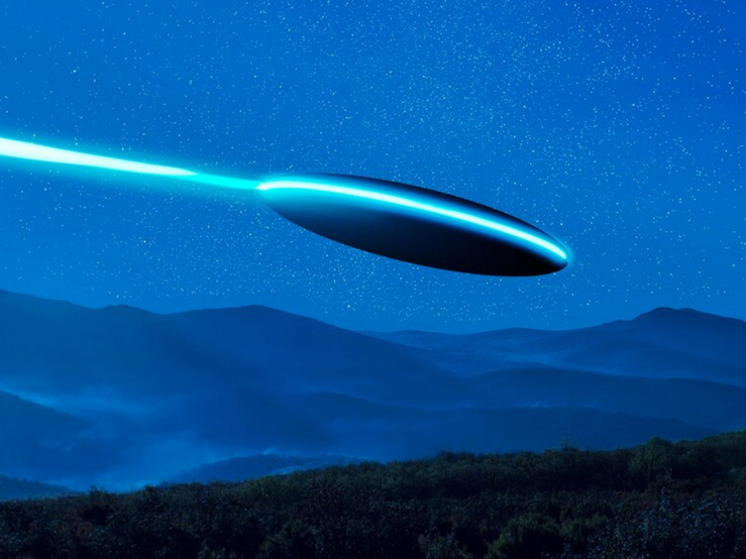
In the vast universe of an estimated 2 trillion galaxies, scientists say there is a «100 percent chance» that life exists somewhere beyond Earth.
Related This raises an intriguing question: if alien life is truly common in the universe, why haven't we heard about it?
Professor Frederick Walter, a galactic astronomer at Stony Brook University, says: «Life is a biochemical process, it should happen, but as you move down the chain things become more uncertain.»
Professor Walter states that he believes there is a «100 percent probability» that life exists in some form in the Universe.
However, on the other hand, scientists are also faced with the absolute absence of any evidence of the existence of life — intelligent or otherwise. The so-called Fermi Paradox, named after physicist Enrico Fermi, poses the question of how we can balance the possibility of alien life with the lack of evidence for its existence. Or, as Fermi once asked his friends in 1950: «Have you ever wondered where everyone is?»
Given that the universe is 13.8 billion years old, if just a handful of civilizations arose, they would have plenty of time to become extremely developed.
When the Fermi Paradox was first introduced, some scientists argued that the age of the universe suggested the existence of super-advanced civilizations in our galaxy.
And although science fiction such as Star Trek suggests that civilization may become more peaceful as As it evolves, some scientists disagree.
Dr. Walter says, “The universe may be teeming with life, but everyone is hiding because they are afraid.”
To understand why this might be the case, imagine that you are a hunter sneaking through a dark forest. If you saw another hunter lighting a fire, would you light yours to say hello? You don't know who else is on the street, whether they are armed, or what their intentions might be. However, you know for sure that if you are quiet and don't make a fuss, no one else will be able to find you.
The so-called Dark Forest Hypothesis states that if you really want to survive, the only sensible solution is to be quiet and shoot everyone you see.
Popularized by Liu Cixin's The Three-Body Problem novels and their recent Netflix adaptation, this theory suggests that the universe may be in a similar state where civilizations take on the role of hunters.
So while While humanity is doing its best to reach out to the stars and make contact, other, more powerful forces may be waiting silently just beyond our sight.
If this is the case, it may explain why we are trying to make contact with any other civilizations have still remained unanswered.
Dr. Walter says, «You have no idea whether the other civilizations are friendly or hostile, and remember, you're new to the area. They've been around for thousands of millions of years and are probably far more advanced, so you don't know what to expect, so the safest thing to do is keep quiet.»
However, the picture of the universe painted by the Dark Forest hypothesis may seem too pessimistic to some to be believed. Professor Walter notes that while the theory is popular among science fiction writers, he is not «that paranoid.» Instead, if we want to explain why no one responds to humanity's messages, we may have to admit that we are the problem. If life in the Milky Way is as common as some estimates suggest, aliens may have little choice of planets with which to try to make contact.
As a 2022 article argues, if this is true, then humanity simply may not be interesting enough for aliens.
Instead of trying to talk to every planet where life could exist, aliens would likely be look for signs of technology and intelligence.
Although life began on Earth almost as soon as the planet cooled enough to form liquid water, humanity did not develop radio technology until around 1880.
Even then, it wasn't until 1974 that scientists sent the first targeted high-power radio transmission to aliens, and a message from Arecibo was sent to the globular star cluster M13.
This means that the Earth may simply not have been emitting any signs of intelligence , which an alien civilization would consider worthy of further study.
On the other hand, aliens may be very knowledgeable about the level of human technology and still not want to talk to us.
Dr Gordon Gallup, a biopsychologist at the University at Albany, argues that aliens may be afraid to visit humans. In an article published in the Journal of Astrobiology, Dr Gallup wrote: «If alien life exists, it may have already found us and discovered that humans are dangerous, violent, and constantly engaged in endless bloody conflicts and wars. It would also be obvious that, as a by-product of increasing pollution, habitat destruction, coupled with endless wars, looting, death, destruction, and conquest, humans pose an unprecedented risk not only to other life forms on Earth, but to life on other planets.»
If Dr Gallup's arguments are correct, it is entirely possible that the galaxy is teeming with life, but humanity has turned itself into social outcasts in an alien society, the Daily Mail states.
One of the main assumptions of the Fermi paradox is that the development of alien civilizations is a fairly common phenomenon on a cosmic scale.
And many scientists agree that the emergence of some kind of communicative alien life forms is quite likely.
And many scientists agree that the emergence of some kind of communicative alien life forms is quite likely.
In fact, according to one 2016 study, humans are only likely to be alone in the universe if the likelihood of civilization developing on a habitable planet is less than about one in 10 billion trillion.
However, these impressive statistics hide a very important nuance: civilizations may have arisen in the past, but this does not mean that they will continue.
Rather than assuming that aliens are silent for one reason or another, the «Great Filter» theory » suggests that we may have already missed them.
To understand how this could happen, we need to look further than the short history of our own civilization.
“Since we developed the technology, we have been on the verge of complete destruction,” explains Professor Walter.
During the Cold War in particular, humanity seemed to teeter on the brink of nuclear annihilation more than once. As technology develops and planetary resources become depleted, nuclear war and self-destruction may become the fate of all sufficiently developed civilizations. And, if nuclear weapons do not seem dangerous enough, there are many other ways for civilizations to self-destruct. Recent years have seen amazingly rapid development of artificial intelligence systems, which are increasingly integrated into all aspects of our lives.
But in a paper published this year, Professor Michael Garrett of the University of Manchester argues that artificial intelligence “poses a major challenge to the survival and longevity of advanced technological civilizations, not only on Earth, but perhaps throughout the world.” throughout space.»
Because artificial intelligence is developing so quickly, it could always run out of control before the species has a chance to become a multi-planetary civilization capable of meeting the challenges.
This means that advanced civilizations may have long since destroyed themselves myself.
As Professor Walter says: “Our capabilities exceed our wisdom, and perhaps other civilizations are doing the same.”
Compared to the 14 billion years of existence of the Universe, humanity is extremely young.
And, like a baby on Christmas Day, some scientists suggest that humanity may have found its feet before adults even woke up.
If very ancient civilizations exist somewhere, they may have already evolved into vast empires spanning the entire galaxy.
But in a paper published in 2017, researchers from the Future of Humanity Institute argued that these vast civilizations may be biding their time, staying out of the field. view.
So why could aliens potentially bide their time in this way?
Researchers point to the fact that computers become more energy efficient as they get colder. Quantum computers, which exploit the strange behavior of quantum particles, must be even colder — requiring temperatures close to absolute zero.
If you belong to an advanced race, writes the Daily Mail, and want to make the most of your energy for computing, you need to make everything as cold as possible. Instead of spending a lot of resources on creating huge cooling systems, the researchers suggest that the aliens would be better off waiting for the Universe itself to cool down.
This may explain why we don't see any of these huge civilizations. the existence of which is suggested by the Fermi paradox.
However, as Professor Walter explains, the «simplest answer» to the Fermi Paradox is that there simply is no one there.
The reason many people think there might be intelligent alien civilizations out there somewhere that we could talk to lies in a formula called the Drake Equation.
This formula, proposed in 1961 by Frank Drake, provides a very rough estimate of how many highly communicative civilizations might exist in the world. Milky Way.
Depending on what your assumptions are about various factors, Professor Walter says the number of civilizations you will reach ranges from «zero to millions.»
But whatever that number, the vast majority of forms life in the Universe may not be intelligent.
— Is there life out there? Yes. But when people ask, “Is there life there?”, they imagine something else,” says Professor Walter.
“There is life, but it could be bacteria, microscopic organisms, slime molds, etc. stuff like that.»
And what's worse, even if there is intelligent life somewhere, that doesn't necessarily mean we could communicate with it.
Professor Walter says: » There are many species on Earth that can at least communicate with each other, but they don't build radios.
«Dolphins may be smarter than us, but they live underwater and don't have arms.» , they cannot work with electricity, so you will not be able to communicate with a creature living in the water world.»