


Two pairs of identical twins were victims of ritual murders
Today, the destroyed city of Chichen Itza in Mexico is a major tourist attraction, attracting about two million people from around the world every year. However, the ancient city hides a terrible secret: about 1000 years ago, the Mayans committed brutal ritual murders of children to appease the gods. A new study found that the victims were boys between the ages of 3 and 6, some of whom were twins.
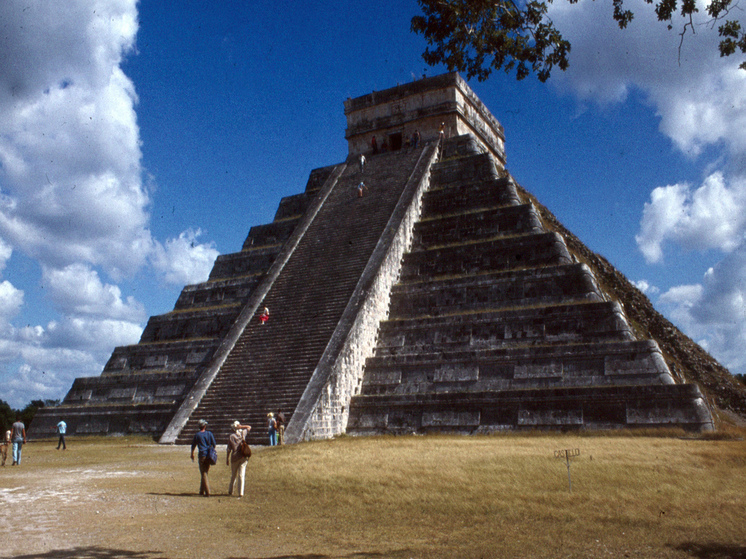
The study was conducted by scientists from the Max Planck Institute for Evolutionary Anthropology in Leipzig. Chichen Itza — one of the Seven New Wonders of the World, it was once a prosperous city built by the Mayan people about 1,500 years ago.
But the ancient people resorted to cruel human sacrifices, believing that the blood of victims – a powerful means of appeasing the gods. In return, they allegedly received rain and, accordingly, fertile fields.
Chichen Itza is already known for ritual killings, as evidenced by the remains of both human sacrifices and artwork, including tzompantli (stone engravings of skulls).
As early as 1967, the remains of more than 100 young children were found at Chichen Itza in a chultun, a bottle-shaped chamber intended for underground storage. Such underground structures were seen at the time as connection points to the underworld.
For their new study, the scientists conducted a genetic analysis of the remains of 64 of these individuals to determine their gender.
“When we analyze the genome, there are regions that are part of the Y chromosome, which is found only in males. So if we get this as part of our genetic data, we can confidently say that the gender of that person is — male», – study author Rodrigo Barquera from the Max Planck Institute told the Daily Mail.
Until now, it was widely believed among scholars that it was mainly girls who were sacrificed at Chichen Itza. This is largely due to reports from the early 20th century that popularized “grim tales.” about young women and girls as victims.
But a new genetic analysis is unexpectedly “confident” shows that all 64 people tested were boys, including two pairs of identical twins.
«Since such twins occur in only 0.4% of the general population, the presence of two pairs of identical twins in the chultun is much higher than one would expect”, — the authors note.
In fact, the results show that at least a quarter of the children were closely related to at least one other child in the chultun. Their “close biological relationship” could somehow be considered by the Maya as the best offering to the gods.
Gemini is especially “auspicious” in Mayan mythology, and the sacrifice of twins is a central theme of the sacred Book of the Maya Quiché Council, the Popol Vuh.
Moreover, as analysis shows, these young victims – all from the local Mayan population – ate the same diet, suggesting they grew up in the same household.
They were likely killed as part of a perverse public spectacle before the bodies were placed in the chultun.
Dating of the remains also showed that the chultun was used as a burial place for more than 500 years, from 600 to 1100 AD.
Most of them were killed and buried there during the 200-year period of «political heyday» Chichen Itza between 800 and 1000 AD.