


An increase in the shell was necessary for reptiles to preserve the species
An increase in the number of protective horny elements on the shell of sea turtles on the island of Sri Lanka was discovered by zoologists from St. Petersburg State University. Scientists studied rare olive turtles and found that the number of “scutes” is an evolutionary change. The results of the study were published in the Russian Journal of Herpetology.
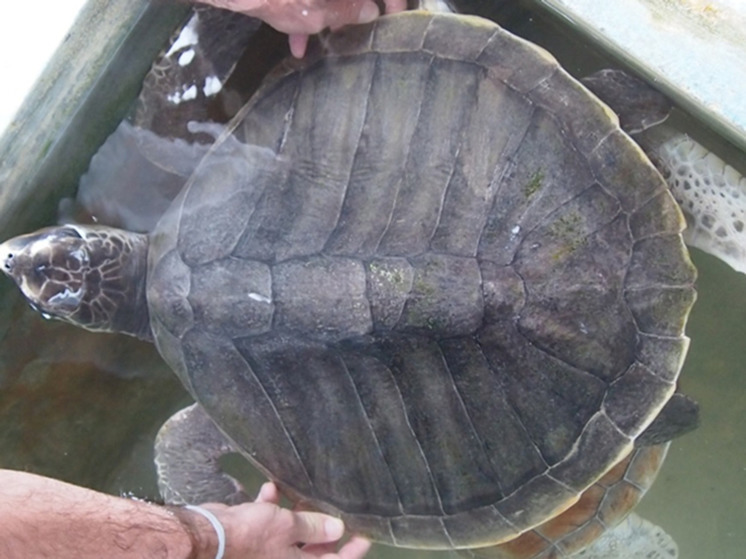 Adult olive turtle. Photo courtesy of St. Petersburg State University
There are no more than 360 species of sea turtles around the world. The largest number of them are found in the warm waters of the Pacific, Atlantic and Indian oceans.
Scientists from St. Petersburg University studied quite rare olive turtles that live near the equator in the Indian Ocean, near the island of Sri Lanka. An important element of their structure is the presence of specific large horny scutes on the shell, and in many individuals, according to zoologists, there has been an increase in their numbers.
Temperature effects during critical periods of embryonic development of turtles can lead to abnormal scute formation (the formation of additional scutes on the shell). And if it was previously believed that in natural populations the percentage of anomalous individuals was small, olive turtles (Lepidochelys olivacea) from the southern coast of Sri Lanka destroyed this postulate.
It was they who were studied by zoologists from St. Petersburg State University along a multi-kilometer coastline, and the studies were carried out without removing animals from the natural environment.
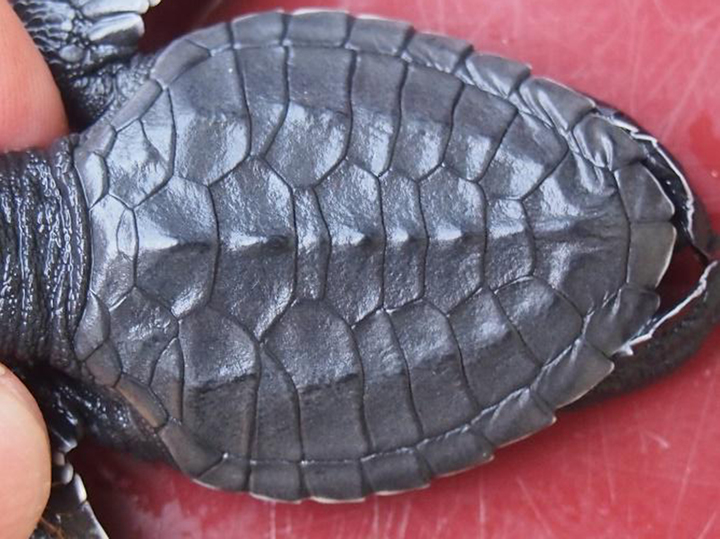 Newborn olive turtle with an increased number of scutes on the shell. Photo courtesy of St. Petersburg State University
Scientists photographed newborn turtles from the dorsal and ventral sides, and then compiled a detailed description of the shell and the location of the horny scutes. Zoologists studied 655 specimens of turtle hatchlings from nine clutches and identified 120 variants of the shield shell, differing in the number of horny elements that make it up. Despite the fact that many different (in shape and order of arrangement) variants of scutes were recorded, scientists recorded an important trend: the olive turtle clearly demonstrates an increase in the number of scutes. This, in their opinion, is an evolutionary process that may be associated with genetic variability of the species or external factors.