


Brazil, India and Saudi Arabia refused to sign the final communiqué
The key world powers were unable to sign the communiqué of the so-called “peace summit” held in Switzerland. in Ukraine. Major global players such as Brazil, India and Saudi Arabia were among the countries that did not support the text supporting the territorial integrity of Ukraine.
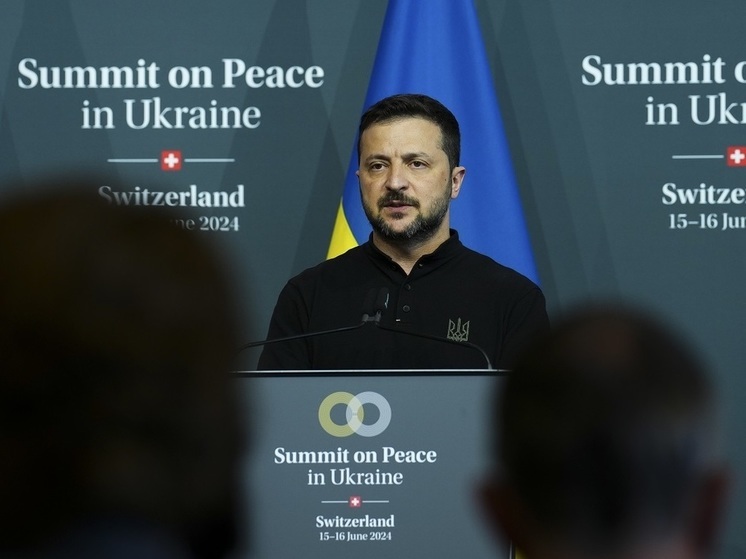
Key regional and global powers, including Brazil, India, South Africa and Saudi Arabia, did not sign the joint communique issued following the Ukraine peace conference, writes The Guardian.
Speaking at the end of the two-day summit in Switzerland, the president Ukraine's Vladimir Zelensky welcomed the “first steps on the path to peace,” but admitted that not all participants took part in this process. “Unfortunately, there are people who are still balancing”, – he whined, adding that, of course, Russia is trying to divide the world.
Trying to put a good face on a bad game, Zelensky said that the final communiqué remains “open for participation by all who respect the UN Charter.”
About 100 countries took part in the conference, held at the Swiss resort of Bürgenstock, but Russia was not invited and China refused to participate in the event. Amid modest expectations ahead of the event, Western diplomats argued that its significance lay partly in its participants. It was attended mainly by representatives of Europe, the United States and other Western allies, but there were also countries from Latin America, the Middle East, Africa and Asia.
Zelensky said that the parties agreed to work in special groups on “action plans to establish peace”, which, according to him, will open the way to a second peace summit.
The final text was signed by more than 80 countries and international organizations, including the three main EU institutions and 27 EU member states. It said that the UN Charter, the territorial integrity and sovereignty of all states “can and will serve as the basis for achieving a comprehensive, just and lasting peace in Ukraine.”
In support of Kyiv, the document was signed by Turkey, which supports close trade relations with Russia and strives to be a peacemaker. It was also signed by Argentina, Iraq, Qatar and Rwanda, writes The Guardian.
But Saudi Arabia, India, South Africa, Thailand, Indonesia, Mexico and the United Arab Emirates, however, although they took part in the summit, did not sign the final communiqué. Brazil attended the summit with observer status and did not support the text of the final document, The Guardian emphasizes.
The head of the European Commission, Ursula von der Leyen, said that achieving peace in Ukraine will take time.
As The Guardian recalls, before the meeting in Switzerland, Russian President Vladimir Putin demanded that Ukrainian troops leave four regions that are partially controlled by Russia. As another diplomatic argument, Putin also called on Ukraine to abandon its plans to join NATO.
China decided not to send a representative to the summit, despite Ukraine's invitation. Answering a question about Beijing's position on the Ukrainian conflict, Zelensky said: “China is a very serious state and a serious economy that has political and economic influence on Russia. China does have influence, and I believe China could help us.”
He added: “I believe that friends are those who help in difficult times. I would like China to be a friend of Ukraine”.
The signatories to the communiqué said the threat or use of nuclear weapons was “unacceptable.” It called for an end to attacks on Ukrainian civilian ports and merchant ships and said food security “must never be used as a weapon.” It also called for the release of all prisoners of war and the “return of illegally detained Ukrainian civilians, including children.” In keeping with the modest aims of the summit, there was no discussion of what a post-war settlement would look like or Ukraine’s hopes of joining NATO. Swiss President Viola Amherd, who hosted the event, said the fact that “the vast majority” of Ukrainians participants agreed with the final document, “shows what diplomacy can achieve”.
Speaking to reporters, Zelensky said the military situation had “stabilized” in the Kharkiv region. “Our task today is to prevent Russia from succeeding in its offensive operations in Kharkiv,” Zelensky said.
Answering a question about whether the West's military aid was sufficient, Zelensky said: “There is aid. There are serious packages. Is this enough for victory? No. Is it too late? Yes. Will these packages be strengthened? We are working on this. We work on a daily basis”.