


The state owes working pensioners half a trillion rubles and is unlikely to compensate them
The authorities have actively taken up the task of restoring justice previously granted to working pensioners who have been deprived of indexation since 2016. After the announcement by Russian President Vladimir Putin about the resumption of pension indexation from February 1, 2025, various government structures began to provide explanations on how this process will be carried out. Russian Labor Minister Anton Kotyakov said that pensions will be indexed according to uniform rules for both working and non-working pensioners. And State Duma deputy Andrei Isaev, one of the authors of the bill on indexation of pensions for working pensioners, spoke about what will happen to the payments not received during the “freeze”.
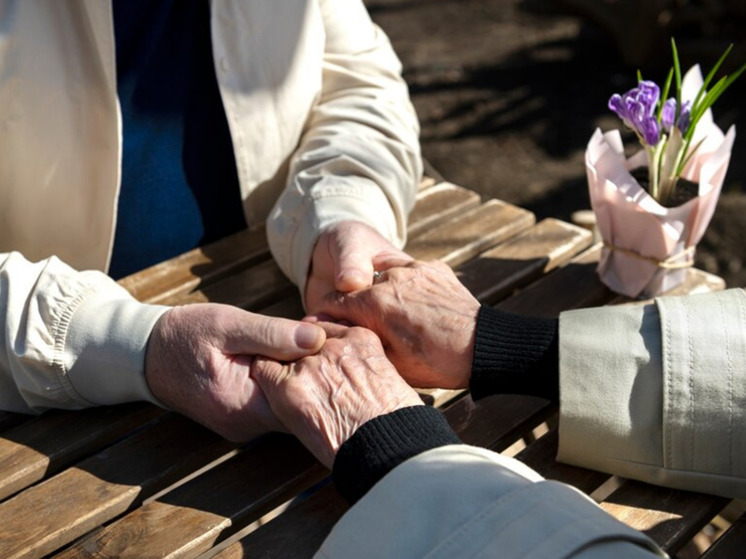
Currently, there are officially 7.8 million working pensioners in Russia. It is already known that to resume the indexation of their pensions next year, 96.45 billion budget rubles will be required. According to Kotyakov, pensions for working pensioners will be recalculated in 2025. From now on, it will be indexed twice a year. From February 1 — it will increase by the inflation rate, and from April 1 — the insurance portion will increase to the level of salary increases. To calculate the increase, the pension amount will be used as the base, taking into account all indexations starting from 2016, when recalculations for working pensioners were suspended.
Let us recall that the average old-age insurance pension in 2016, when the authorities “frozen” indexation for working pensioners, was 13.2 thousand rubles. And this year the average pension for non-working pensioners in Russia is more than 23.4 thousand rubles. As they say, two big differences! Deputy Isaev said in his Telegram channel that the pensions of working pensioners will be indexed based on the maximum amount. “The amount of indexation for working pensioners will be calculated not from the pension without indexation that they receive now, but from the maximum, the one that they would have been entitled to if they had not worked,” &ldash; the parliamentarian emphasized.
The question that interests working Russians of a certain age is: what will happen to the pensioner's income not received during the pension «freeze». After all, if, hypothetically, a pensioner was supposed to retire in 2016 and receive, say, 15 thousand rubles. It would have been indexed, say, by 1000 rubles in 2017. However, he continued to work and was deprived of indexation, that is, in 2017 alone, he did not receive 12 thousand rubles. And then — more. In 2018, there was also indexation and the pension again increased by approximately the same amount. But the working pensioner did not receive a new indexation, this conditional monthly thousand rubles, for the next 12 months. And if all these lost indexations are added up over 9 years, even based on a rough calculation of 1,000 rubles per year, then over the past years each working pensioner has lost 108 thousand rubles. Even if this amount is averaged (someone retired not in 2016, but later) and rounded up, it still turns out that they will need to pay the lost amount of almost half a trillion rubles. Is the state ready to compensate them «retroactively»?
According to Alexander Safonov, a professor at the Financial University under the Government of the Russian Federation, we are not talking about such payments. Deputy Isaev himself wrote very vaguely in his commentary, however, adding that he would make an additional video explanation soon. “The amount lost over eight years does not disappear anywhere, as now, it will be restored to him (the working pensioner “MK”) when he stops working,” &ldash; he said. But «now» Nobody pays the money lost to pensioners during the years of lack of indexation. Simply, upon dismissal, the points earned by the citizen are added to the pension and the pension is recalculated by the Social Fund taking into account the final data.
According to Safonov, according to accepted standards, the inclusion of indexation in the pension for the period from 2016 to 2024 for working pensioners will occur after they complete their work activities. And if the authorities wanted to immediately pay for all the years of under-indexation with all currently working pensioners (and this is a total indexation coefficient of 1.79), the budget would have to spend about 780-890 billion rubles. It is clear that these are approximate calculations, since some working pensioners, having entered the shadow labor market or changed the status of their employment relationship to self-employment, have already received indexation.