


Categories of Russians for whom commissions for paying for utilities will be waived have been named
As is known, Russians can expect a planned increase in housing and communal services tariffs from July 1. Judging by the government's preliminary intentions, from 4 to 15% in different regions, and on average around 10% across the country. And this is, of course, bad news. But there is also good news: a number of categories of consumers can also expect the abolition of commissions for paying for housing and communal services from July 1. Experts told MK who exactly will be able to save and how much.
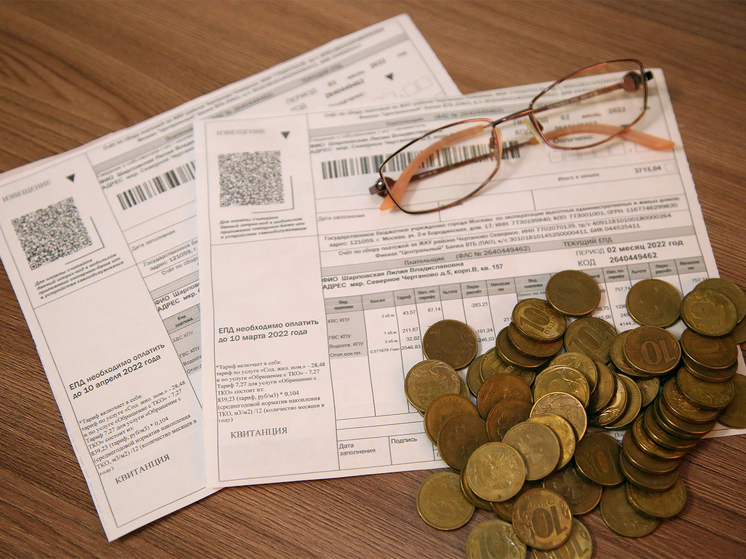
As the State Duma clarified, the following categories of citizens will be exempt from bank commissions when paying for housing and communal services from July 1: pensioners, disabled people, war veterans, citizens aged 18 years and older from large families, as well as family members of deceased (deceased) disabled people, participants of the Great Patriotic War and combat veterans. It is noteworthy that, according to the April government decree, these same categories of Russians are also exempt from fines and penalties for late payment of fees for housing and communal services.
Returning to bank commissions, we note that now banks have the right to charge a commission when transferring money for utilities in the amount of 0.5-2% of each payment.
The history of the appearance of this benefit is interesting — the abolition of the commission for paying for housing and communal services, which Konstantin Krokhin, a member of the Committee on Entrepreneurship in the Sphere of Housing and Communal Services of the RF Chamber of Commerce and Industry, recalled in a conversation with MK. According to him, the benefit was announced back in December 2023. President Vladimir Putin then announced that the commission charged by financial institutions when paying for utilities would be abolished for all pensioners. This happened during his Direct Line, and was regarded as a promise that would certainly be kept. Meanwhile, by that time there was by no means unanimity in the government and the State Duma on this matter. But the president’s “reservation” outweighed all doubts and work began to implement this benefit. And now other preferential categories of citizens have been added to pensioners.
At the same time, Krokhin does not consider “zeroing” the commission itself an important financial decision. “The fact is that the direct payment of the commission is not too important for family budgets,” says the expert. “It is only 0.5-2% of the payment amount — most often mere pennies.” In addition, according to him, even without a decision from the authorities, many banks already provided this service to clients without additional fees. There are also reliable government portals that allow you to pay for utilities without fees. “The benefit itself, which was initially presented as important, in fact is not so. It is small-scale and difficult to administer,” MK’s interlocutor is sure.
The State Duma does not deny the latter fact. Deputy Svetlana Razvorotneva assured that legislators will monitor how the process of abolishing commissions in banks actually occurs. “Because when a person comes to the cash desk with real money, everything is clear: they present their ID and they don’t charge interest. How this will happen when paying online is not very clear,” the deputy noted.
An important question: will the abolition of commissions be able to soften the burden of tariff increases, which will also take place throughout the country on July 1? Or will banks begin to shift losses from dropped amounts onto the cost of other services?
According to the director of the “Urban Economy” direction of the Institute of Urban Economics Foundation, Irina Gentsler, each bank will quickly estimate the number of clients who will take advantage of this benefit, and will assess how noticeable its losses are from the abolition of this commission. “And if the damage turns out to be significant enough, then, of course, banks will find a way to increase some other payments in order to compensate for the losses,” the expert claims. Moreover, in her opinion, this will affect a relatively small number of clients: “mainly those people who do not use the online payment system through personal accounts.”
Another important problem, according to Gentzler, for consumers will be the very fact of confirming that a person is entitled to this benefit — not paying a commission when paying for housing and communal services. According to the expert, this fact will have to be proven every time to the operator at the bank window, who will accept the payment, wasting time and nerves and creating inconvenience for the queue. And all in order to save from 100 to 300 rubles — the overwhelming majority of commissions are paid in this range. “Of course, for some, both 300 rubles and 100 rubles are money that is important to save, but in general it can hardly be said that this will somehow significantly reduce the financial burden for people,” the expert concluded.< /p>