


Economist Belyaev: “The Central Bank determines the exchange rate virtually manually.”
The government has relaxed the requirement for the mandatory sale of foreign currency earnings. Now exporting companies must credit not 80% of their foreign exchange earnings to accounts in Russia, but only 60. This measure will be in effect until the end of April 2025. And it is being carried out “taking into account the stabilization of the ruble exchange rate and the achievement of a sufficient level of foreign exchange liquidity,” the Cabinet of Ministers said in a statement. The ruble immediately reacted: if before that during the week it had sharply strengthened against the dollar and the euro, then on June 21 it pulled back again.
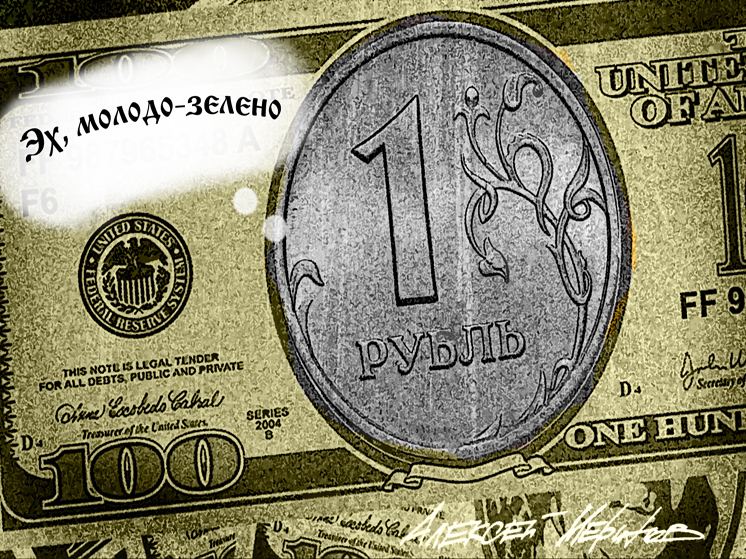
It turns out that the requirement for the mandatory sale of foreign currency by exporters is not called revenue for nothing. It really helps out our monetary authorities in times of difficult currency trials. After bans on exchange trading in dollars and euros were introduced against Russia on June 12, our ruble began to noticeably strengthen.
The monetary authorities watched this for a week, and then decided that little by little is good, it’s time for the ruble and honor. And although the head of the Central Bank, Elvira Nabiullina, has repeatedly stated that the sale of foreign currency earnings does not have a significant impact on the ruble exchange rate and is rather a psychological factor, it turned out that this is not entirely true.
As soon as on Friday, June 21, the government announced a reduction in the sales threshold from 80 to 60 percent, the ruble immediately stopped strengthening against the dollar and euro and went down again. Judge for yourself — on June 20, the dollar exchange rate was 82.6 rubles, and the euro was 89 rubles. And already on June 22, the Central Bank set the dollar exchange rate at 87.9 rubles, and the euro at 94.2 rubles.
The ruble is winning back to the indicators that are familiar and comfortable for everyone, close to those that were on June 11 — before the introduction of sanctions against the exchange. Another thing is what will happen to the national currency exchange rate in the future? Will the ruble find an equilibrium point, as it did in the first half of the year? Or will it begin to weaken further? Many experts are already predicting that the day is not far off when the dollar will “fly away” for 100 rubles.
And there are objective prerequisites for such a “sky-high” scenario. Perhaps the main one is that the Ministry of Finance does not benefit from a strong exchange rate of the national currency. In conditions of budget deficit, the department needs a mass of rubles — and the more, the better.
“I have always said and will continue to say that our national currency is greatly undervalued,” says Candidate of Economic Sciences, financial analyst Mikhail Belyaev. “But that’s not the point now.” A dollar definitely won’t go over 100 rubles. I believe that it will return to its previous values - 91-92 rubles. If the rate was set at stock exchange trading, as before, we could be talking about 95-96. But today the rate formation mechanism has changed, it has become different, and by the way, more accurate: the stock exchange speculative component has disappeared.
— It was introduced so that these funds would come to the exchange, thereby increasing the sale of foreign currency and strengthening our ruble. This was a stabilizing factor for the market: with an increase in the flow of currency, exchange rate fluctuations were smoothed out and there were fewer market fluctuations.
Now there is no trading of toxic currencies on the exchange; the rate is determined in a different way — based on over-the-counter transactions and using other data. Conventionally, this is the determination of the exchange rate by the Central Bank “manually”, through calculations.
In general, the currency is becoming more manageable, the need for large volumes of currency to be “splashed out” at auction to stabilize the ruble exchange rate has disappeared, such an urgency no longer.
— Of course, they will have more currency left in their accounts; it does not need to be converted one way or the other. In such a situation, there is always the possibility of risk. Let's say you sold at a low rate, and tomorrow you need dollars, but you buy at a high rate.
Yes, in some ways we benefit — the government is interested in ruble revenues to the budget. But what we win in exports, we lose in import operations. With a cheap ruble, importers pay more, not to mention goods on the consumer market. Which, in turn, adds to inflation. I do not exclude that at the end of the year inflation will be at the level of 8.5-10%. Why would she become smaller?