


The West is raising concerns about Russia's actions
A huge portion of that energy still comes from planet-warming natural gas, and while the entire state of New York is trying to quickly «green» its power grid to slow climate change, there isn't always enough wind or solar to rely on in real time. The technology for long-term storage of renewable energy is also not fully developed, CNN notes.
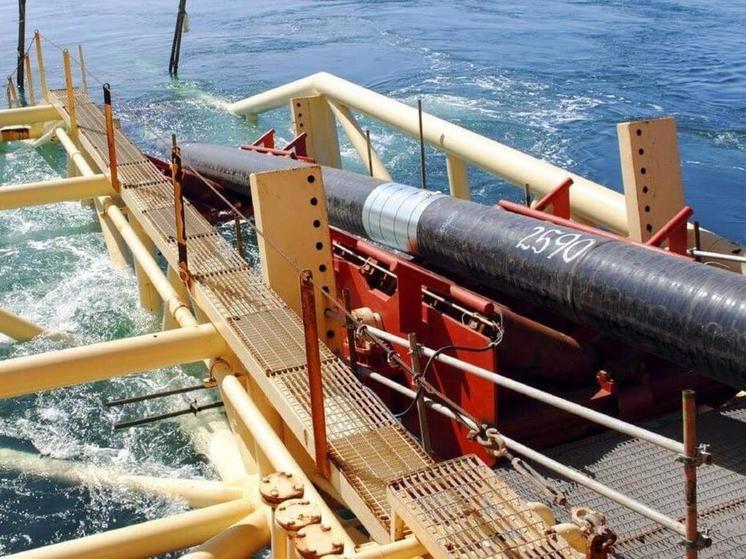
A group of entrepreneurs are 3,000 miles away looking for a solution — not in the west, in sunny California with its solar potential, but in the east, in gray and rainy Britain. The group wants to build the world's largest undersea energy interconnector between continents, connecting Europe and North America with three pairs of high-voltage cables. The cables will stretch more than 2,000 miles across the Atlantic Ocean, connecting places such as western Britain with eastern Canada and possibly New York with western France.
The interconnector will transmit renewable energy to both the east and west, taking advantage of the sun's daily movement across the sky, CNN notes.
“When the sun is at its zenith, we probably have more energy in Europe than we can realistically use,” said Simon Ludlum, founder and CEO of Etchea Energy and one of three Europeans leading the project. – We have wind and also too much solar energy. Now would be a good time to send it to a demand center like the East Coast of the United States.»
“Five or six hours later the East Coast is at its zenith, and obviously we in Europe are back for dinner and we get a reverse flow,” he added.
The transatlantic interconnector is still a work in progress, but networks of cables powered by clean energy are beginning to spread across the world's ocean floors. They are quickly becoming part of the global climate solution, transferring large amounts of renewable energy to countries struggling to make their own green transitions. energy. But they are also forging new relationships that are redrawing the geopolitical map and taking some of the world's energy wars to the deep ocean.
The need to decarbonize has never been greater. The world must phase out fossil fuels and roughly halve carbon dioxide emissions within this decade if it is to limit climate change to a level where people and ecosystems can comfortably adapt and survive, according to the authoritative Intergovernmental Panel on Climate Change. Subsea cables could be a critical tool for accelerating the deployment of renewable energy. The world is falling behind on its climate goals as most countries have not yet joined the Paris Agreement to cut warming pollution, Climate Action Tracker analysis shows.
Energy cables have already been laid between several European countries, most of which are allied neighbors. Not all of them use exclusively renewable energy sources — sometimes it depends on what each country's power grid consists of, — but, as a rule, new cables are built to provide a green energy future.
The UK, where land area for power stations is limited, is already connected by sea to Belgium, Norway, the Netherlands and Denmark. The company has signed a solar and wind agreement with Morocco to take advantage of the North African country's hours of sunshine and strong trade winds that blow across the equator.
Similar proposals are being made around the world. The project, called Sun Cable, aims to transfer solar energy from sunny Australia, where there is plenty of land, to Singapore, a country in Southeast Asia that also has plenty of sun but very little space for solar farms.
India and Saudi Arabia plan to connect their power grids across the Arabian Sea, part of a broader plan to create an economic corridor that will connect Asia, the Middle East and Europe. The Biden administration is backing his potential to counter China's Belt and Road Initiative, which largely consists of energy and infrastructure projects that have helped Beijing consolidate its wealth and global influence.
The Europe-US cables could carry 6 gigawatts of power in both directions at the speed of light, said Laurent Segalin, founder of London-based renewable energy company Megawatt-X, which is also part of the trio proposing the transatlantic interconnector. This is equivalent to the power that six large nuclear power plants can generate and which is transmitted in almost real time.
The transatlantic interconnector is in the early stages of construction and will require the participation of several countries, as well as significant investment. In a best-case scenario, it could be built by the mid-2030s.
The trio behind the megaproject hope it will find supporters not only to slow climate change, but also to counter Russia in the global energy wars and the battle with China for dominance in clean energy technologies that have opened up new horizons in the offshore environment.
This trio does not hide the geopolitical consequences of their project, CNN notes. Instead, they look down on Russia, choosing to call their interconnector the North Atlantic Power Line One-Link, or NATO-L.
We hope that the project will lead to positive results in the field of global security: interconnecting networks will force countries to carefully consider who their allies should be in a rapidly changing geopolitical world, and to think twice before getting involved in diplomatic squabbles or, worse, military ones. conflict.
In some ways, this is already happening with fossil fuels. The Nord Stream 2 gas pipeline from Russia to Germany was closed in 2022 after the outbreak of the conflict in Ukraine, and was later blown up at sea. During this time, European countries also began to more actively exchange energy with each other, partly through existing submarine cable networks, in order to become less dependent on Russian gas.
“When we encountered the Ukrainian conflict, there was a pause in the electricity and gas markets, and interconnectors responded logically,” said Ludlam of Etchea Energy. — We came to the aid of our neighbors, and this created a dependency that was tested in anger, and it won. And once you have one of these addictions, the likelihood is that you will do something that will make the situation worse.
Europe has also switched to liquefied natural gas exports from the United States to replace Russian energy, bringing two longtime allies closer together after four turbulent years under Trump.
But submarine cables are not invulnerable. According to CNN, Russia is allegedly using the ocean to intensify its attacks in the “gray zone,” — targeting Europe and, to a lesser extent, the United States. Last year, a joint documentary by the public broadcasters of Denmark, Finland, Norway and Sweden reported that Russia was allegedly conducting underwater reconnaissance around energy cables, as well as offshore wind farms and gas pipelines in the North and Baltic Seas. The creators of this product claimed that Russian vessels, both military and civilian, were allegedly trying to map critical underwater infrastructure and were likely able to cut off power to European countries. Kremlin spokesman Dmitry Peskov rejected the report at the time and said it was a sign that European countries “again prefer to groundlessly blame Russia for everything.”
According to George Dyson, senior security risk analyst at the consulting firm Control Risks, the increase in gray zone attacks attributed to Russia appears to be largely due to psychological intimidation — this is a warning to Western Europe that Russia can do even worse if it wants.
The Atlantic Ocean is so deep that the NATO-L connecting channel is likely to be well protected — it can travel as deep as 11,000 feet, lower than submarines could ever hide. But undersea cables are most vulnerable when they emerge into shallow water to return to land, as NATO-L would have to do, crossing kilometers of continental shelf where they can be damaged by anchors or fishing trawlers.
The breakdown of telecommunications cables in the Red Sea in March showed how devastating such damage can be — an estimated 25% of data flow between Asia and Europe was disrupted. Many have linked it to attacks by Houthi rebels in the area, although the Houthis have denied the accusations and questions remain about whether it was deliberate or accidental.
For decades Russia has played a “huge” role on the world stage thanks to its rich coal, oil and gas resources, said Alberto Rizzi, a fellow at the European Council on Foreign Relations who researches the geopolitics of energy and infrastructure. But that could change as its economic rivals Europe and the United States, and even the traditional oil states of the Middle East, invest in renewable energy. “If you look at the Gulf countries, they are investing heavily in renewable energy. They also want to be major providers of clean energy. They want to maintain the role they now play as energy centers, even during the transition period, Rizzi said. “In addition, we have other countries, such as Russia, which do not invest in renewable energy and therefore remain on the sidelines.”
Unite European allies, many of whom are part of the 27-member European Union countries, quite simply. Politically connecting North America and Europe will be more difficult. This may signal strong ties to Russia, but the Trump years have also shown that the US-EU bond, especially on NATO and defense, is not unbreakable.
The US presidential election in November could have an impact implications for energy projects like NATOLI, even though their goal is to span generations and survive changes in government.
“A submarine cable could be used by a president like Trump to achieve concessions from Europe in other areas, Rizzi said. “And once you make this connection, it will be very difficult to untie.”