


The behavior of bacterial colonies was described mathematically
Scientists from National Research Nuclear University MEPhI described the possible behavior of bacterial colonies using mathematical formulas. They found that randomly distributed bacteria aggregated into clusters over time without obvious known chemical or light stimuli. Moreover, after a certain time, different groups begin to interact with each other. The results of the study were published in a highly rated scientific journal.
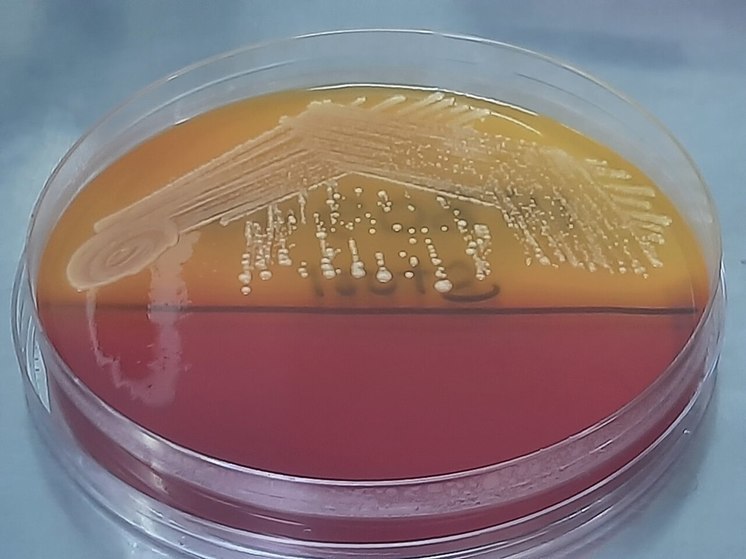
Scientists from different countries are studying the patterns of bacterial distribution in space in order to analyze and predict their behavior. The concept of “microbial intelligence” has even been proposed, which considers certain aspects of the adaptive, altruistic or cooperative behavior of groups of microorganisms.
It is known that to survive in a hostile environment, bacteria have developed a number of adaptive mechanisms. Among them is chemotaxis — displaced movement of bacteria under the influence of a chemical stimulus, and phototaxis — directional movement of microorganisms in response to exposure to light.
Head of the Department of Applied Mathematics of National Research Nuclear University MEPhI Nikolai Kudryashov told how, using mathematical modeling, he came to the conclusion about the ability of bacteria to self-organize without these bright additional stimuli.
– For our mathematical model, we took the so-called “white noise” – bacteria chaotically distributed in space, – explains Kudryashov. – And it turned out that they can also self-organize, gathering into clusters over time. The equations also showed that over time, these resulting bacterial clusters can interact with each other. But for mutual attraction there should not be too much distance between them, – for any bacterium or group of bacteria there is a certain critical distance, beyond which they lose the ability to self-organize.
– Of course, these findings do not necessarily apply only to bacteria. This may well work for birds, for fish, – for many living organisms, including humans. Only in cases with more complex views should coordinates and time be included in the equation.
– To some extent, they have such intelligence. Perhaps studying the behavior of protozoa will lead us in the future to more advanced models of artificial intelligence.