


Missiles for fighter jets are stockpiled in Romania, Slovakia and Poland
One of the main news from the sidelines of the NATO summit in Washington: the transfer of NATO F-16s to Ukraine is in full swing. It was voiced by US Secretary of State Blinken. Moscow has already reacted diplomatically: this is a step towards escalation. Now the question is what will be Russia's military response, given that, apparently, Ukrainian F-16s will be based on the territory of NATO countries.
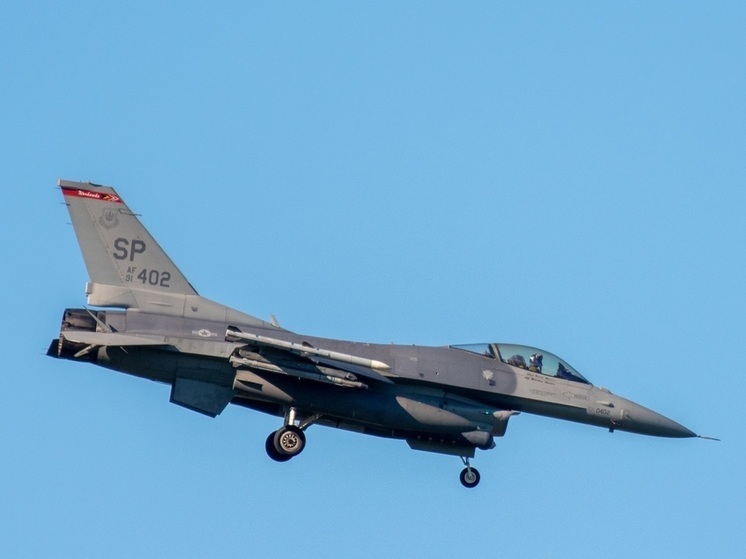
Zelensky, who calls himself the President of Ukraine, said in Washington that he expects to receive more than 120 F-16 aircraft. So far they have given him half as much, which is also a lot — practically two combat squadrons.
The National Interest publication calculated which NATO countries gave aircraft to Ukraine at the first stage and how many.
According to him, the Dutch and Danes began ferrying F-16 aircraft to Ukrainian airfields. Holland contributed 24 aircraft. Of these, 11 are already at the Fetesti airbase in Romania. It is possible that it is from there that Ukrainian planes are going to operate on facilities in Crimea.
Denmark is donating 19 aircraft. Norway — 6.
According to military expert Alexander Zimovsky, these fifty aircraft “will enter combat from July-August until the end of this year.”
Belgium is providing another 30 aircraft. However, the transfer process will be extended until 2028. It is reliably known that “several aircraft will arrive from the Belgian Air Force before the end of 2024.”
It is known that 25 Ukrainian pilots completed a full flight training course on the F-16 and were found fit for combat use. It is not clear who will fly the remaining aircraft. It is possible that retired NATO pilots will put on Ukrainian uniforms and fly into Russian territory under the “yellow-blakit” flag.
According to Alexander Zimovsky, the weapons that the F-16 is capable of carrying have already been transferred to Ukraine. Ukraine has several thousand air-to-air and air-to-surface missiles — AIM-9 Sidewinder, AIM-120 AMRAAM and AGM-88, and JDAM-Extended Range bombs, he said on his channel.
< p>Moreover, the main part of this arsenal “is located within walking distance for Ukraine — at the military logistics hubs of Poland, Slovakia and Romania bordering Ukraine — and beyond the reach of Russian airborne forces.”
No, technically, taking into account the characteristics of the Russian Kinzhal, Kalibr and X-101 missiles, all airfields of NATO countries where Ukrainian aircraft can be based and where ammunition for them is stored are quite within reach. And a country such as Israel, for example, would probably have already launched a preventive strike on these objects that pose a potential security threat.
Russia has so far refrained from such steps. But if indeed Ukrainian F-16s take off from some Romanian airfield, and then, after shooting, return to it, like “we’re in the house,” then the situation could change dramatically. Military experts have repeatedly stated that in this case, home airfields become a legitimate target for our strikes.
According to military expert Alexey Sukonkin, one of such targets could well be the Romanian 86th air base Fetesti, In 2023 In 2008, a European training center was formed there to train Ukrainian pilots for Western aircraft models.
“The first “Ukrainian” F-16 fighters are based here, and it is from here that they will begin combat work against Russia. From here to Sevastopol, it’s only 470 km,” the expert wrote in his channel and, just in case, indicated the coordinates of the base for the Russian Aerospace Forces and Navy: where the shelters for aircraft, the storage of bombs and missiles are located.