


In the Netherlands they came up with a microdrone that remembers the path like ants
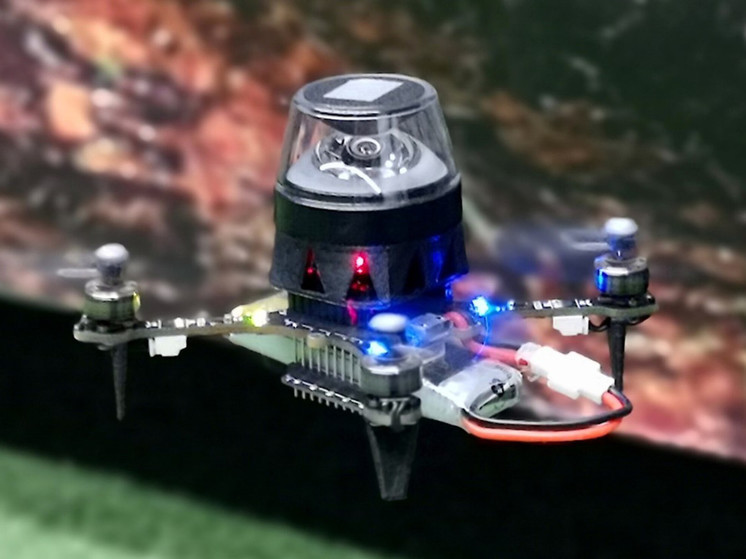 Photo: science.org
Researchers from Technische Universiteit Delft have for the first time presented a unique autonomous navigation strategy for tiny robots that is based on the behavior of ants, Science Robotics reports. The method developed by the scientists combines visual landmarks and odometry, allowing robots to safely return home after long routes using minimal computing resources and memory.
Ants do not lose their bearings even over long distances, relying on visual cues and tracking their own movement. This unique method allows insects to create a “species memory”, which helps them successfully return to the anthill. Scientists from Delft were so inspired by this principle that they developed an innovative navigation system for tiny robots, allowing them to navigate in space independently.
Using biological discoveries, the researchers created an entirely new navigation method that allows the CrazyFlie drone to weigh just 56 grams to cover distances of up to 100 meters using only 1.16 kilobytes of memory. The entire visual processing takes place on the microcontroller, making this method incredibly efficient for use in real-world environments.
The resulting navigation strategy has a wide range of applications. Small autonomous robots could be used to monitor warehouses, detect gas leaks in industrial facilities, and even monitor crops in greenhouses. Their compact size ensures safety of use, and the ability to move in narrow spaces opens up new prospects for their application.
The development opens new horizons in the development of mobile autonomous systems and confirms the potential of bioinspired approaches in robotics.