Professor Zubets: “People have a lot of money, but there are few goods on the shelves”
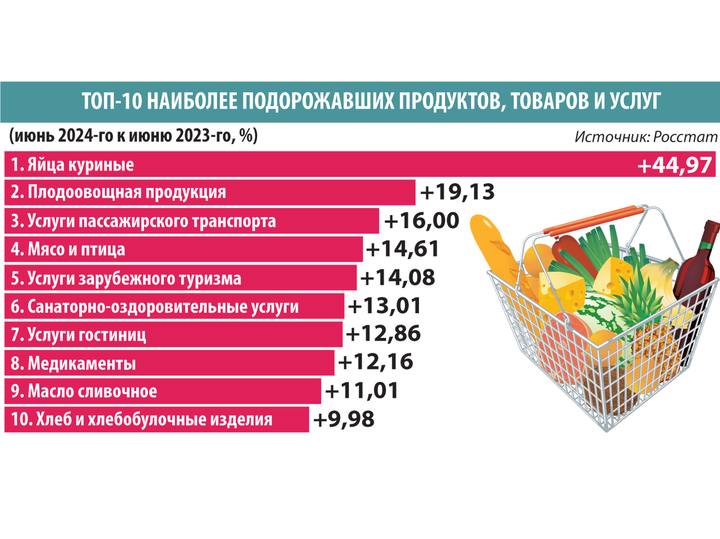
No matter how much the monetary authorities promise from high tribunes to slow down inflation, prices continue to live their own life in Russia, rising higher and higher every month. By mid-summer, inflation in the country had already exceeded 9% in annual terms. Dispassionate data from Rosstat shows that literally everything is becoming more expensive — electronics and household appliances, clothing and shoes, air tickets and housing and communal services. Even fruits and vegetables, despite the seasonal factor, increase in price.
What is the reason for the accelerated inflation? Will the authorities be able to stop the rampant rise in prices of goods in the country and how can consumers save money? Guests of MK spoke about this at an online conference: Anna Vovk, a member of the Council for Financial, Industrial and Investment Policy of the Russian Chamber of Commerce and Industry, Alexey Zubets, Director of the Institute of Socio-Economic Research of the Financial University under the Government of the Russian Federation, and Igor Nikolaev, Chief Researcher at the Institute of Economics of the Russian Academy of Sciences.< /p> 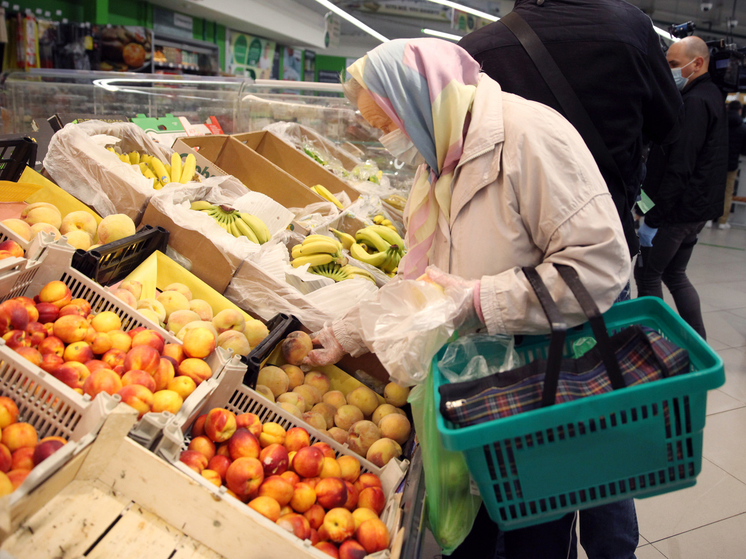 Photo: Gennady Cherkasov < span itemprop="height" itemscope itemtype="https://schema.org/QuantitativeValue">

— There are two approaches to determining the inflation level: one was used by Rosstat, the second by Romir. How does Romir receive its data? They study the purchases that citizens bring into their homes. Then the numbers are compared and classified by type of purchase. This information is summarized, and the dynamics that we see are obtained. That is, Rosstat uses absolutely all components of the consumer basket of goods in its calculations. And Romir only includes those goods that people actually buy. Therefore, if we take the economy as a whole, then the Rosstat data are probably correct. But the results of their research include a whole range of goods that people buy very rarely, not every year: household appliances, cars, clothes… And Romir records the goods that Russians buy every day. Therefore, unfortunately, the Romir data, from the point of view of households, is more accurate. I’ll also add: food prices are rising in the country now, and food is what people buy every day. This “skews” the cost of the consumer basket upward, and the observed inflation is growing faster than the official one for the economy.
— In fact, you need to trust both statistics, but with reservations. Rosstat calculates according to the generally accepted methodology in the world and obtains the average inflation for the country. But people are often surprised by Rosstat’s figures: I went to the store, and the prices there are completely different. It is explainable. People's attention is naturally drawn to things that are becoming more expensive. They don’t pay attention to things that don’t go up in price. Now, for example, we know that housing and communal services have become more expensive — tariffs for them have been raised since July 1. Vegetable prices are not decreasing, although the season is on. But, let’s say, smartphones have fallen in price by 5% since the beginning of the year. But people don't pay attention to this fact. Therefore, the subjective feeling of inflation based on the results of sociological surveys among consumers is different. The official statistics for the whole country is the average hospital temperature. But there is no reason not to trust Rosstat’s information.
 Photo: annavovk.ru
— The objective reality is that prices are rising. But here you need to understand what creates inflation. If a country's economy grows at an active pace, then its money supply grows, and thus inflation inevitably occurs. If we want the economy to continue to develop, then inflation is inevitable, the only question is its volume and controllability. In today's situation, we have targeted inflation, which is regulated by the Central Bank. That is, we have controlled inflation; it affects the pocket of every individual buyer. Therefore, all the indicators you named are correct.
— There are not two reasons, but a whole complex. Now the structure of demand has changed, that is, people have begun to manage their resources somewhat differently. Yes, the level of income of the population has increased, funding from the budget has flowed to various regions, cities and other localities. For this reason, economic activity has intensified, people's salaries have increased, their income has expanded, and accordingly, their consumption basket has grown. Naturally, people were happy to allow themselves more purchases. And as consumer demand increased, prices also went up.
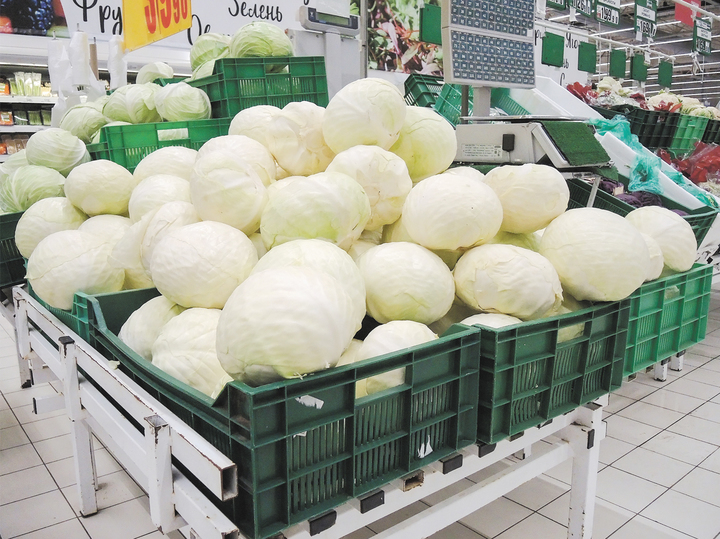
— A lot of money has flowed into the economy through the budget. We are talking about trillions of rubles, which are allocated for special operations, and for defense production, and for infrastructure projects, and for the restoration of new territories… These are huge funds that ultimately end up in people’s wallets. And people, in turn, take this money to stores. Demand is outpacing supply: production is growing much slower than the amount of money in the hands of the population. Due to this, inflation occurs: people have a lot of money, but there are few goods. This is the first reason. The second reason: several oligopolies have formed in the market. Here is one oligopoly — real estate. We know that there is an overstocking of real estate on the market. There are about 500 thousand unsold apartments, but prices are not falling. From which I conclude that there is a conspiracy among developers who keep prices down. But for some reason, the Federal Antimonopoly Service (FAS) is looking the other way. They will willingly monitor the prices of eggs, but for some reason they will not monitor the prices of apartments. There is exactly the same oligopoly with vegetables and fruits. Now in Russia there is import of cucumbers and tomatoes, but it is insignificant. The bulk of the vegetables produced are Russian, from our greenhouse farms that were built in recent years. Their owners maintain monopolistic high prices and do not reduce them. As a result, during the season we see cucumbers for 200 rubles per kilogram. This does not fit into any gates! The third reason is the high rates of the Central Bank, which do not provide the opportunity to develop industry. People have a lot of money, they go to stores, and the goods that can be bought are imported. Since credit is expensive in the country, and domestic production is stagnating, the money goes into imports.
— I will focus on the main reason. Economic policy is now based on the so-called fiscal impulse. That is, a huge amount of money is pouring into the economy. The approach, in general, has been tested many times in the world economy, starting with the Great Depression in the American economy back in the 30s of the last century. Large-scale fiscal stimulation of the economy is underway. All funds are aimed at stimulating demand. And it is right. But if people have a lot of money, it means that prices will inevitably rise.
— Food. There price increases are galloping. Because, firstly, as colleagues have already noted, there are oligopolies. Secondly, there are a lot of imports, and they are tied to currency. Nowadays, logistics and cross-border payments are complicated. It turns out that food products are leading the rise in prices. You can also add seasonal goods to them, for example, everything that is required to prepare a child for school.
— Capital goods become more expensive the fastest. For example, equipment for running a business, if you want to open, say, a restaurant or cafe. Such equipment costs twice as much as last year. In addition, labor costs have risen significantly. At the end of this year, the growth in real labor costs will be approximately 5% higher than inflation. This means that if inflation is 10%, then, accordingly, wages will increase by 15%. And another category of goods that has risen in price the fastest is food.
— Food prices are the first to rise, this is natural. Here we also need to take into account the fact that for many poor Russians, food occupies a very significant part of their consumption structure, up to 50%. And if so, this is the first thing citizens pay attention to.
— The Central Bank can curb inflation; it has the necessary tools, in addition to the key rate, for example, the reserve ratio. The Bank of Russia may raise the reserve requirement for banks, which means that the attractiveness of loans for the population and for business will decrease even more. But the main factor that could strangle inflation is not the measures of the Central Bank, but the measures of the government. I have already said that in our country there are a number of oligopolies that maintain high prices. Accordingly, by lowering prices on the food market and the real estate market, for example, it would be realistic to reduce overall inflation. If the FAS intervenes in these segments, it is possible that prices will go down. But for some reason, antimonopoly officials so far prefer not to interfere. And if there is a certain strong-willed impulse on the part of the authorities, then a reduction in prices can be achieved. But so far, unfortunately, we do not see such an impulse. This means prices will continue to rise.
— For now there is a chance to stay within 10%, but these chances are becoming less and less. Why? Because against the backdrop of accelerating inflation, against the backdrop of an increase in the single utility bill from July 1, the authorities are going, for example, to raise the recycling fee for cars, and immediately by 70–85%. This will be an additional impetus for inflation. In an environment where inflation is accelerating, it would be right to slow down the introduction of additional measures that could further raise prices.
— Many are expecting a decline in housing prices after the abolition of preferential mortgages from July 1. But I don’t think that lower real estate prices will be able to stimulate demand and cool inflation. Plus, we need construction as a driver of the economy: in this area there are a large number of jobs and a large budget. Based on this, I believe that we will most likely see double-digit inflation.
— Much depends on geopolitics. If the conflict in Ukraine begins to fade next year, we should expect a reduction in budget expenditures associated with the conflict in all its aspects. In this case, inflation could be below double digits, say 5-6% next year. But otherwise, if these geopolitical forecasts do not come true, we will most likely get inflation of 10% or higher.
— If we assume that inflation will be high, then the advice is obvious: if you have money and want to buy something, buy it immediately, tomorrow it will be more expensive. I would also recommend paying attention to the fact that all retail chains and shops offer discounts. If there are discounts, take the product. It will be about the same quality as the others, you won’t lose here, but you will win in terms of price.
— When inflation is growing at a high rate, it is very important to engage in rational consumption. You need to constantly compare your income with the expenses you bear. You need to be very careful with your personal budget, not to fall into euphoria. It is advisable not to use credit cards and to adhere to a rationalization approach to your consumer desires, then everything will be under control.
— I agree with my colleagues. Rational consumption, budgeting, expense accounting, refusal of spontaneous purchases, switching to discounted goods. But the most important thing is to invest in yourself, in education and health, yours and your family members. Because the most important thing a person has is his head, his ability to plan and organize his own activities. Don't save money on this!