


“The ruble exchange rate may fall in the fall”
The main intrigue of the July meeting of the Board of Directors of the Central Bank of the Russian Federation has been resolved: for the first time since December 2023, the regulator decided to raise the rate by 2 percentage points at once — to 18%. No one on the market doubted that the indicator would be increased. The dispute among experts was only about what kind of tightening would be: sharp or more smoothed. Prices in Russia are growing, significantly ahead of the forecasts of the Central Bank of the Russian Federation. If in January everyone expected a reduction in the key rate in the summer, now the market does not expect a change in the regulator's mood before the end of the year. Experts told MK how the life of Russians will change in the context of the high rate of the Bank of Russia.
«Now, of course, short- and medium-term forecasts for inflation, changes and maintenance of the key rate for the coming quarters and GDP will be revised. Today's increase in the key rate may be sufficient, since disinflationary factors may begin to act in the second half of the year. In particular, after the curtailment of preferential mortgages, in the second half of 2024, both the issuance of mortgage loans and the volume of project financing should decrease.
In addition, the rate of wage growth should slow down, against the background of the stability of the ruble, slowing growth of net profit of companies and the increase of the profit tax. And due to the decrease of inflationary pressure the economy will move from the state of «overheating» to more balanced growth
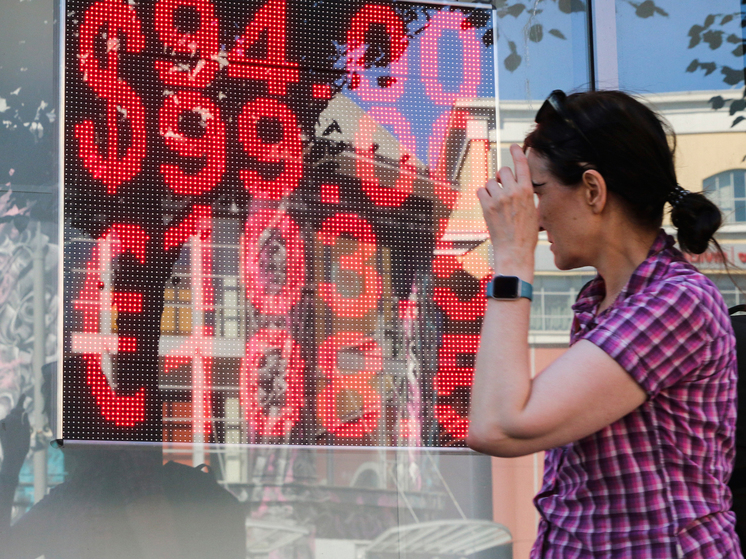
High interest rates increase the attractiveness of ruble assets and also restrain the growth of imports and capital outflow. This contributes to the strengthening of the ruble. At the same time, imports may intensify with the improvement of the situation with cross-border payments and due to the additional easing of the standard for mandatory repatriation of foreign currency earnings (from 60% to 40%). As a result, in the fall, I expect the ruble to weaken to 91-93 rubles per US dollar and 12.5-12.8 rubles per yuan.»
«Inflation in Russia is significantly ahead of the target level, and inflation expectations of the population continued to grow. According to official statistics from the Bank of Russia, inflation in June 2024 rose to 8.8% in annual terms, with its target level for the current year at 4.3–4.8%, and the population's inflation expectations increased in July 2024 to 12.4%, after 11.9% in June.
The ruble exchange rate has already begun to strengthen amid expectations of a key rate increase, since after the tightening of monetary policy the cost of servicing loans in it will increase. However, since the ruble exchange rate in Russia is currently set by the Bank of Russia, and the balance of supply and demand for it is regulated by the repatriation of foreign exchange earnings by exporters on the stock exchange, its strengthening will most likely be short-term in nature and next week we can expect the rate to return to the previous trading range of 87.5–90 rubles per US dollar.
Usually, during times of tight monetary policy (i.e., a high key rate of the Central Bank of the Russian Federation. — ), the population switches to a savings model of behavior. During such periods, interest rates on bank deposits are higher, which makes bank deposits more attractive to citizens, and loans are more expensive, which is why their volumes are reduced. After raising the key rate in Russia, the rate of inflation should slow down, as well as the rate of GDP growth, at least relative to previous months.»
«Inflation continues to grow rapidly, as the economy, according to the Central Bank of the Russian Federation, is in a state of severe overheating. Citizens and companies continue to actively take out loans, despite the high key rate. As a result, the supply of goods and services does not keep up with active demand, which results in increased price growth. Therefore, the Bank of Russia needed to raise the key rate and tighten financial conditions in order to cool demand, bring it in line with current supply capabilities and slow down price growth to the target level of 4%.
We believe that annual inflation is now, in July, passing its peak at around 9.3% and will continue to decline. By the end of the year, we forecast a slowdown in inflation to 7%, while the risks are shifted towards higher inflation values.
At the same time, the acute shortage of personnel in the labor market, rapid growth of wages, increased inflation expectations, and the still significant number of preferential lending programs remain pro-inflationary factors.
If inflation does not begin to slow down in the coming months at the new level of the key rate, then by the end of the year inflation will be around 8%. In this scenario, the indicator may increase in the fall to 20%.
“Today, bank rates have already reached a record 19% — this is the maximum interest rate on deposits since 2022, when the regulator raised the rate to 20% for a short time. Since the rate has already been raised, some banks, in the fight for clients, may try to further “hold” their deposit offers at 19%, but this will not last long.
If you look at the dollar chart, it is possible that the ruble will strengthen to 87-85 rubles per unit of American currency, but further significant strengthening should not be expected: the current dollar exchange rate fits well into the Russian economy.
It will be more difficult for Russians to take out loans. Analysts expect mortgage rates to rise to 23%, which is already very expensive and unacceptable for buying apartments.»