


Analyst Razuvaev reveals secrets of the emergence and prosperity of the largest financial pyramid in the history of modern Russia
These days mark 30 years since the collapse of the legendary financial pyramid «MMM». On July 27, 1994, a crowd of twenty thousand blocked the highway next to the then famous building on Varshavskoe Shosse in the capital, where the main office of the joint-stock company with three letters in its name was located. After which the head of MMM Sergei Mavrodi issued a decree announcing a 127-fold reduction in the value of shares, to one thousand rubles. And a week later, on August 4, 1994, tax officials, with the help of riot police, stormed the central office of MMM, seizing all the cash there. This effectively ended the story of the largest public deception of the 1990s. MK spoke with Alexander Razuvaev, a member of the supervisory board of the Guild of Financial Analysts and Risk Managers, about the main secrets and lessons of the MMM scam.
— Many, and the main thing here is experience and immunity to participation in financial fraud, which, we would like to hope, should appear in everyone who is familiar with the history of the emergence of the Sergei Mavrodi scam.
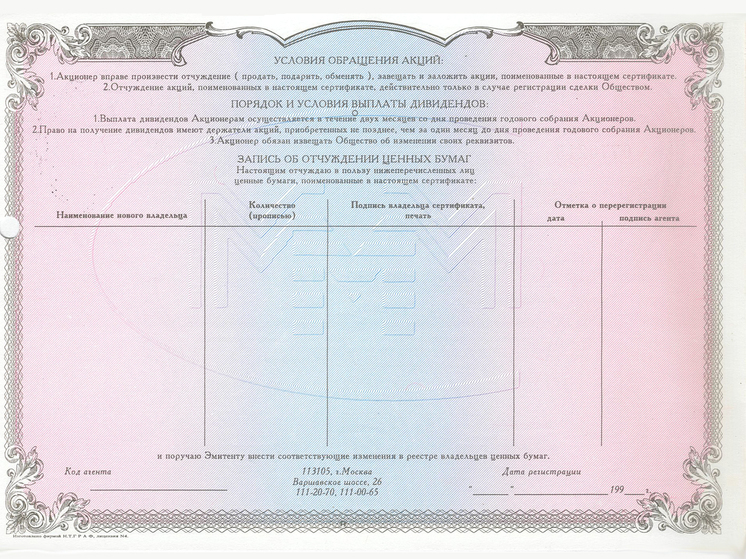
At that time, there were many financial pyramids, for example, «Khoper» or «Telemarket». But MMM is the largest story. The cooperative of the same name was founded in 1989 and for a long time was engaged only in trading activities. According to some evidence, their main business was the sale of imported office equipment, computers and components that had just appeared at that time. And only a few years later, a joint-stock company of the same name was opened, which switched to cash transactions and functioned as a classic financial pyramid, where payments to old investors were made at the expense of contributions from new participants. Despite the fact that 30 years have passed since the collapse of the company, many citizens still distrust the stock market precisely because of the bad associations with this story.
— The company itself quoted its securities, constantly increasing their value. At the start, in early 1994, MMM shares were sold at a par value of 1,000 rubles each, and then at a higher price, which increased more than 120 times in a few months. By mid-1994, the number of investors, according to various estimates, was from 10 million to 15 million people. The pyramid collapsed at the end of July 1994. The total amount of damage caused by it is not exactly known. Most often, in various sources devoted to this case, you can find the figure of 3 billion rubles, which corresponded to the level of purchasing power in the mid-90s, when people could buy an apartment in Moscow for $ 20-25 thousand. But I consider this figure to be understated: the real damage, in my opinion, is much greater. To understand, people whose average deposit was $20,000, as interested observers later calculated, came to demand their money back at the building on Varshavskoe Shosse in late July 1994.
And MMM had simply stopped listing its shares the day before. However, many investors blamed their problems not on the swindler Sergei Mavrodi, but on President Boris Yeltsin and Prime Minister Viktor Chernomyrdin, believing that the government was to blame for everything.
— No one has direct evidence of the involvement of government agencies in the MMM story. And it would have certainly “surfaced” in 30 years… There is a point of view that influential bankers were involved in the actions of the authorities against the company. Mavrodi planned to close shop in the fall. However, the leading retail oligarchic banks, whose names today only old-timers of the financial market will remember — Inkombank, Most-Bank, Stolichny Bank Sberezheniy — faced a sharp outflow of deposits. People closed their accounts to buy MMM shares. It was impossible to explain the outflow of deposits simply by the holiday season.
— Trust in the newly emerging stock market was seriously undermined for years to come. The economic literacy of Russians was at a very low level at that time. Trust in the stock market was restored only in the mid-2000s, when leading state-owned companies in the banking and oil industries held public IPOs and online trading began to actively develop.
— Yes, there are interesting parallels here that not everyone thinks about. So, at the same time as MMM, the privatization of the giants of Soviet industry was underway in the country — large oil and gas companies, large metallurgical plants… It was happening very quietly. First of all, in the interests of people who happened to be in the right place at the right time. And there is a point of view that the authorities deliberately left MMM alone so that ordinary people would have something to do while the new «masters of life» were dividing up the assets of the former Soviet empire.
— Yes, but here we are entering the realm of psychology. Legislation against financial pyramids has long been adopted, but with the collapse of MMM, they have not disappeared from our lives. The thirst for quick and easy money is in people's blood. Working hard and putting part of your salary into a bank account every month is long and difficult. At all times, there are people who want to get rich immediately, literally «here and now». Financial scammers have always counted on them. In the 2000s, various online pyramids became very popular, and about five years ago, companies appeared that offered astronomical earnings on cryptocurrency. The Internet, as well as popular social networks and instant messengers, are full of advertisements for dubious companies. The media constantly publishes news about yet another financial pyramid that has left hundreds or thousands of people high and dry. Meanwhile, it is not difficult to recognize financial pyramids. The expected yield on their «products» is much higher than the key rate of the Bank of Russia (currently 18%) and the dividend yield of the Moscow Exchange index (currently 10%). At the same time, income to old depositors is always paid from the money of new ones until the latter runs out.
— At the end of 1997, the criminal case against Mavrodi was reopened. He was put on the federal wanted list. The founder of MMM hid until the beginning of 2003, until he was arrested in Moscow, where he continued to live with forged documents. In April 2007, the trial, which lasted four years, sentenced Mavrodi to 4.5 years in prison on charges of large-scale fraud. However, in May, Mavrodi was released, since he spent most of his sentence in a pretrial detention center. Where the money of MMM investors went, no one knows, as well as what specific amount we are talking about. I repeat, there are only rough estimates that the damage from MMM allegedly amounted to about 3 billion rubles of that period. But I, as I said earlier, believe that the real damage is greater. But where this amount or at least some part of it is is unclear. Sergei Mavrodi himself passed away not a very rich man. According to one version, all the cash was taken by the businessman’s “roof,” which many had heard about but no one had ever seen; according to another, the money simply burned during the ruble denomination in 1998.