


Intermediaries, digital assets and regional banks can help
Direct money transfers from Russia to China are becoming increasingly difficult: up to 80% of payments in yuan are returned back to our country. Domestic businesses have to resort to the services of intermediaries, of course, for a commission. These costs are reflected in the price of goods and services. Experts told MK why, despite all the efforts of the Russian and Chinese authorities, it has not yet been possible to debug the system of mutual settlements.
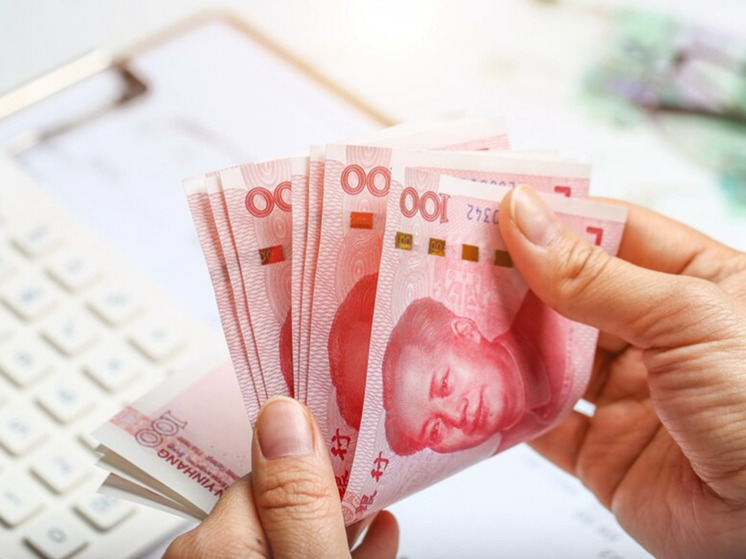
After the introduction of US sanctions against the Russian financial system on June 12, Chinese partners have become more demanding of documents from the Russian Federation. Transfers can be reviewed by Chinese banks for several weeks, but ultimately the transaction is rejected without explanation. All this results in financial losses for businesses in both countries. “Russia is a political ally for China, but Beijing’s economic and financial interests are linked to the United States — it is the largest market for goods and a place for investment,” explains Ilyas Zaripov, associate professor of the Department of World Financial Markets and Fintech at the Plekhanov Russian University of Economics. “The threat of Washington’s secondary sanctions spreading to Chinese banks is real, and they are forced to take them into account. In addition, a number of large Chinese banks have shareholders from the United States and other Western countries, so they also follow their interests.”
To solve problems, Russian businesses are forced to use intermediaries, but this pleasure is not cheap. As explained by Ruslan Dynda, an analyst at Alfa Capital Management Company, payment agents are companies that, having a certain infrastructure in different jurisdictions, transfer client funds, while receiving a percentage of the transfer amount as a commission for their services. In the case of sending money from Russia to China, commissions vary from 2% to 8%, while for sending in the other direction they can be 1-3%. «The most effective payment scheme is to use payment agents from third countries, such as Thailand, Laos or agents from the CIS countries,» says Maxim Chepov, CEO of RFK Group. Normalization of transactions should not be expected in the near future. Rather, it will be necessary to constantly change agent schemes when transferring funds from Russian companies to Chinese ones, the expert believes.
Many analysts cite the exchange of digital financial assets (DFAs are digital analogues of existing financial instruments: shares, bonds, bills, loans. — MK) as a solution to problems with payments between China and Russia. But it is not that simple. According to Freedom Finnace Global analyst Vladimir Chernov, making payments using DFAs requires registration of foreign agents on Russian platforms, which over time may also lead to secondary sanctions against Chinese counterparties. In addition, a coordinated legal framework is needed, and for now the use of DFAs in cross-border transfers is not ready either from the point of view of Russian legislation or from the point of view of the technical capabilities of banks.
Another way out is cryptocurrency. “I hope that the state will allow foreign trade using any available instruments, primarily cryptocurrencies and stablecoins,” says Sergey Mendeleev, CEO of the EXVED exchange. Soon, deputies will discuss a bill that introduces experimental cryptocurrency trading under the control of the Central Bank of the Russian Federation, which many experts consider a step in this direction. It would be possible to create a “proxy exchange” for cryptocurrency trading between specific business representatives in Russia and China, but sanctions may reach it as well.
«China has another scheme: many years of experience working with sanctioned Iran through a special bank that does not «show up» at all, does not connect to any international systems like SWIFT, and therefore is invisible,» says Timur Aitov, Chairman of the Commission on Financial and Information Security of the Council of the Chamber of Commerce and Industry of Russia. Our country could also go this way, but we must understand that the implementation of this solution will take time, and we need to trade now.
It is also possible that small Russian companies will reorient themselves to small Chinese regional banks — there are plenty of them there. But all this will not happen right away either. «We can say that for now, the solution to the problem of payments between the Russian Federation and China is mostly in the «gray zone,» warns Sergey Solovykh, Head of the Wealthy Clients Department at Fontvielle Investment Company.
But despite all the risks and the desire of the United States to «strangle» any contacts between the two countries, the Americans will not be able to do this, analysts are sure. According to financial expert Alexey Krichevsky, there is simply no threat that China will suddenly take and cut off supplies to Russia: the market will be too big and problems will begin with the purchase of oil and gas, which the Chinese government will not allow. So for now, money transfers will simply go into the «shadows». Unfortunately, their stay in the «gray zone» can drag on for years, the expert predicts.