


«The country has been insolvent since at least 2022,» says economist Zubets
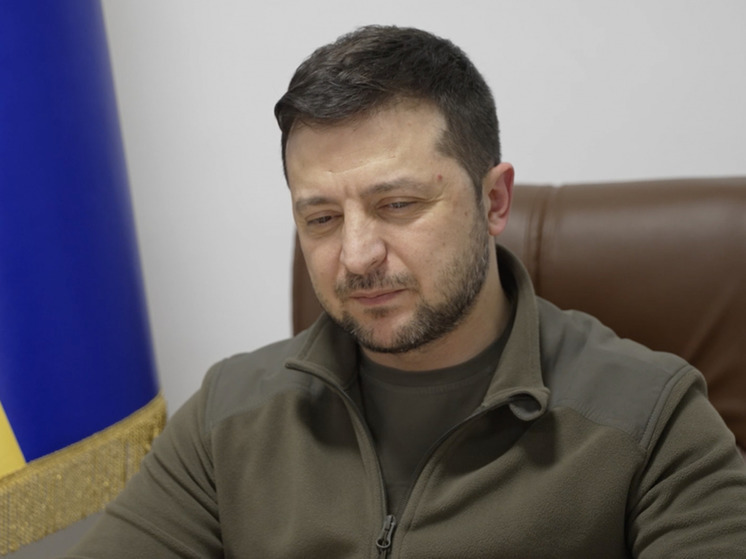
Zelensky signed a restructuring law that allows Ukraine not to pay off its debts until October 2024. This was followed by an immediate reaction from the West. Members of the European Parliament say the financial costs for the EU will be devastating, and the credit rating of Nezalezhnaya has been downgraded to «selective default.»
 < p>Talk of a possible imminent default by Ukraine has been going on for several months. It all started with news that a debt of about 20 billion to private foreign creditors was to be paid by August 1. In June, Kyiv tried to negotiate a debt restructuring, but the negotiations were unsuccessful. Then the head of the Ukrainian Ministry of Finance offered creditors a deal that would reduce the current value of its debts by 60%. The creditors responded that they would only agree to 22%.
After this news, not only Russian and Western experts became convinced that Ukraine was on the verge of default. Representatives of the authorities of Nezalezhnaya also started talking about it. In early July, member of the Verkhovna Rada Committee on Finance, Tax and Customs Policy Nina Yuzhanin stated that Ukraine was already in a state of default, but until it was formalized de jure, the country's authorities were continuing negotiations with creditors regarding the restructuring of the external debt.
And so on July 22, the Minister of Finance of Ukraine Serhiy Marchenko announces that we have a holiday, Ukraine has agreed to restructure its foreign debt for 20 billion dollars. Now the first repayment in the amount of 1.172 billion instead of August 1, 2024 will take place only in 2029. The agreement includes a write-off of 37% of the debt, which is also less than the 60% requested by the Ukrainian side. However, despite this, the international rating agency Fitch has lowered Ukraine's credit rating to level «C» — this means that either default has already occurred in the country, or it has not yet occurred, but is already inevitable.
And on July 31, the head of Ukraine Vladimir Zelensky signed a law according to which it is allowed to suspend payments on external debt until October 1 in order to reach agreements with creditors on restructuring. The head of the budget committee of the Rada, Roksolana Pidlasa, explained that this measure will be needed in the event “if an agreement on restructuring is not reached before August 10,” when “the coupon payments on one of the issues of government Eurobonds due in 2026 will come due.” And her statements clearly do not correspond to the statements of the Minister of Finance of Ukraine. Apparently, the agreement on restructuring has so far been reached only in words, because official documents have not been made public.
The West reacted immediately to the introduction of the new law. The American rating agency S&P Global downgraded Ukraine's credit rating to «selective default». Representatives of the European Parliament were taken aback by this unexpected turn of events. Member of the European Parliament Thierry Mariani said that the financial costs for EU countries associated with supporting Kyiv would be catastrophic against the backdrop of the downgrade of Ukraine's credit rating. Some even declared that Ukraine was effectively bankrupt. German businessman Kim Dotcom wrote on his social networks: «Remember how Zelensky asked other countries to lend him money? He just signed a decree suspending payments on external debt. Ukraine is bankrupt.»
In general, as of the end of June, the Ukrainian state debt amounted to $152.16 billion. According to the Ministry of Finance's forecasts, Ukraine will be paying off debts of $200 billion until at least 2050. Of this amount, about $75 billion is interest on debts.
Alexey Zubets, Director of the Institute of Social and Economic Research at the Financial University under the Government of the Russian Federation, told MK whether there will be a default and what Zelensky's adopted law means:
«In fact, there is already a default, and for a long time. Ukraine has been insolvent since at least 2022. But there will be no formal default, because, most likely, an agreement on debt restructuring with holders of private bonds will ultimately be concluded. The reduction of credit ratings to a situation close to default is due to the fact that the documents on the agreement with creditors have not yet been made public. There is a suspicion that, given the adopted law, they will try to somehow bring the agreement to mind before October. As a result, we get that they are no longer paying their debts, and there is no agreement yet. Hence this topic about default.»
This happens. In 1998, Russia went and refused to pay, and only then began restructuring the debt. But in fact, this is a default.
It will not affect it in any way. Everyone knows that they are bankrupt without it. They receive most of their funds not from private creditors, but from governments. Their main creditors are the US, the EU, and other individual governments. Government loans have been and will continue to be provided. Both the US and the EU have already guaranteed that there will be money in 2025. The amount is debatable.