


Discovery challenges ideas about human evolution
A species of hobbit-sized ancient human that lived on the Indonesian island of Flores about 50,000 years ago has scientists stumped for several reasons. First identified nearly 21 years ago in a stunning discovery, Homo floresiensis, the scientific name for the extinct species, has challenged the idea that human evolution followed a clear line from primitive to complex.
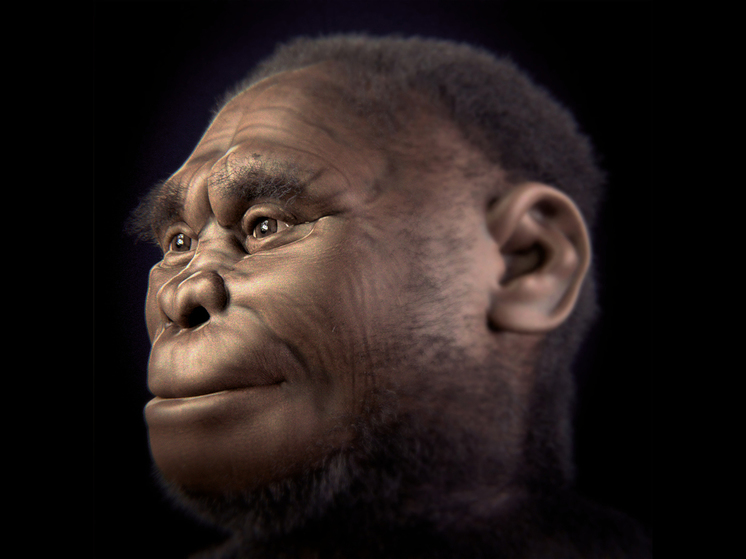
Experts don't know why Homo floresiensis, nicknamed «the hobbit» after J.R.R. Tolkien's fictional characters, evolved such a tiny body despite living relatively recently, how it crossed the ocean depths to reach the island of Flores, where exactly the diminutive oddball fits into the human family tree, or why it disappeared so recently in historical terms, CNN notes.
An analysis of newly described Homo floresiensis fossils, published Tuesday in the journal Nature Communications, attempts to answer some of these questions about the tiny human. The remains examined in the new study include a fragment of a humerus — the lower half of the forearm — and two teeth, all discovered at a site known as Mata Menge, one of two on Flores where fossils of the species have been found.
The study's authors said their findings support an existing theory that hobbits evolved into small creatures long ago and were likely dwarf versions of Homo erectus, the first ancient humans to leave Africa about 1.9 million years ago, with body sizes and an upright posture similar to modern humans. Homo erectus remains have been found on the Indonesian island of Java and elsewhere in Asia, as well as in Africa, CNN reports.
The researchers believe Homo erectus became isolated on the island about 1 million years ago and underwent a dramatic reduction in body size over a period of about 300,000 years. The study notes that such reductions in size also occur in other animals on remote islands — in response to resource constraints.
“There may not have been a need to be large-bodied, requiring more food and taking longer to grow and reproduce,” said lead author Yusuke Kaifu, a professor at the University of Tokyo. “There were no mammalian predators or other hominin species on the isolated island of Flores, so a small body size was acceptable.”
Based on the estimated length of the bone, the team estimated that its owner was 100 centimeters (39 inches) tall. Teeth found at the same site, although smaller, were “highly similar” to Homo erectus teeth found in Java.
Digital microscopy of the bone structure showed that it belonged to an adult, not a child. The complete humerus measured between 21.1 and 22 centimeters (8.3 and 8.5 in), making it the smallest human limb fossil ever found.
Previous studies have dated the sediment layer containing the fossils to about 700,000 years ago.
This early hobbit was 6 centimeters shorter than the original Homo floresiensis specimen, a nearly complete skeleton found in Liang Bua Cave, about 75 kilometers west of Mata Menge, in 2003 and dated to about 60,000 years ago. Liang Bua Cave is the only other site where hobbit fossils have been found, CNN notes.
The size difference between the two may reflect the natural variation seen in modern human populations, the authors point out. Overall, the study found that the small size of the hobbit species remained remarkably constant over a long period.
The newly analysed finds, along with other teeth, a jawbone and a skull fragment found at the same site and previously described, belong to four hobbits. Together with the later Liang Bua fossils, they suggest that the tiny humans could have thrived on the island despite the presence of predators such as 10-foot-long Komodo dragons and crocodiles.
“The early sharp reduction and subsequent stability of body size indicate that smaller body size on this isolated island was beneficial to the survival of these archaic humans,” the study authors said in a statement.
The «hobbits,» along with the subsequent discovery of two other small-bodied, small-brained hominins that lived relatively recently — Homo naledi in South Africa and Homo luzonensis in the Philippines — and the much larger Denisovans, have led to a wider recognition by paleoanthropologists that there were many different species of humans, including several that coexisted with our own species, Homo sapiens.
Before the discovery of Homo floresiensis, many experts on human evolution believed that only one species of human had evolved over time, with regional variations.
Not all scientists agreed with the study's interpretation that the large-bodied Homo erectus was the ancestor of Homo floresiensis and that the hobbit is a miniature version of Homo erectus, said co-author Gerrit van den Berg, a senior lecturer at the Centre for Archaeological Sciences at the University of Wollongong in Australia.
Other scientists have argued that the hobbit, with its tiny brain and chimpanzee-like wrist bones, may be more closely related to small-bodied hominins such as Homo habilis, known only from Africa.
Matt Tocheri, Canada Research Chair in Human Origins at Lakehead University in Ontario, said he was unsure whether the hobbit was a miniature version of Homo erectus.
“I agree that their data indicate that small-bodied hominins were present on Flores at least 700,000 years ago. But why should that mean that their immediate ancestors, the ones that first arrived on the island, were larger?” asks Tocheri, who is also a research associate in the Smithsonian Institution's Human Origins Program. ”I think that's an unanswered question and will remain a focus of research for some time to come.”
“Every tiny fragment of Homo floresiensis or any other hominin is incredibly important,” Tocheri said. “These fossils are our window into the shared evolutionary past of our species. Without them, we have no idea what happened in the past.”