


Why is the imbalance in wages in areas requiring good training dangerous?
The lowest paid in Russia are janitors, cleaners, educators, and nannies. Teachers, merchandisers, artists, psychologists, and security guards are not much better off. According to the study, this category most often includes professions that do not require education or special skills, as well as those for which there is no demand today. However, why then did teachers and kindergarten teachers, whose work requires special skills, end up in this group?
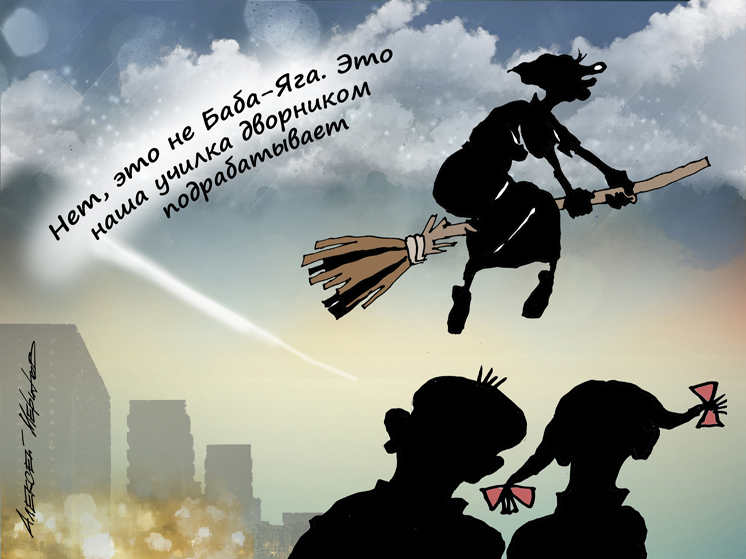
Usually, the focus of labor market reviews is on high-paying vacancies. This time, an exception was made, and this gave the study additional depth. As it turned out, the lowest salaries in Russia are for janitors — 32.6 thousand rubles per month, which is 2.3 times lower than the national average. Let us recall that the median salary is now in the range of 70-75 thousand rubles. Cleaners receive less: their monthly income is 37.3 thousand rubles, as well as educators and nannies — 40.5 thousand rubles.
The top 5 professions with the lowest salaries in the country also included teachers, whose average income was 41.9 thousand rubles, and merchandisers with a salary of 43.9 thousand. Artists (45.6 thousand), psychologists (45.6 thousand), security guards (47.3 thousand) and cashiers-operators (48.4 thousand rubles) also receive little. For comparison, the average salary of couriers, according to researchers on the same portal, today exceeds 110 thousand rubles.
The number of Russians employed in low-paid jobs is known. «There are about 35 thousand janitors, more than 500 thousand cleaners in various organizations, about 700 thousand people work as security guards, there are about 4.5 thousand sales clerks in Russia, the number of psychologists exceeds 57 thousand people,» says Alexander Safonov, professor at the Financial University under the Government of the Russian Federation. The positions of janitors, cleaners, and security guards are low-skilled labor, which is why they earn little. At the same time, one of the reasons for the low salaries is that the workers who occupy these positions work largely in budgetary institutions. They pay less there than in the commercial sector, the work is often in the form of part-time work, and women and people of working age, or migrants, are involved in it.
The income problems of psychologists and teachers are related to regional politics and the long-standing problem of initially low wages, which arose in the early 90s. According to Freedom Finance Global leading analyst Natalya Milchakova, there are different statistics regarding the salaries of secondary school teachers. Rosstat estimated the average salary of a school teacher in Russia in the 1st quarter of 2024 at 55,634 rubles per month. This is about 23% below the national average salary, but the fact is that school teacher salaries vary greatly from region to region. For example, in Moscow, the average salary of a teacher, according to Rosstat, in the 1st quarter exceeded 111.7 thousand rubles a month, while in the North Caucasus Federal District the average salary was 31-32 thousand rubles, that is, even lower than the average salary of a janitor across Russia. Accordingly, a lot here depends on regional budgets and their ability to increase salaries for public sector workers, including teachers, the analyst noted.
Low wages in the economy are a serious problem that hinders the fight against poverty, an underdeveloped structure of consumer demand, which is focused only on food, clothing and housing and communal services. In turn, this limits the country's ability to develop its own production of complex goods: household and computer equipment, cars, furniture. With low wages, the burden on budgets at various levels increases sharply, since it is necessary to compensate for the lack of income for workers and pensioners.
«Despite the desire to save budget expenses by curbing the growth of public sector wages, it is necessary to look at the general trends in the labor market,» says Safonov. «With the flow of workers from low-paid jobs to other areas of activity, we may face a loss of human resources in schools, preschool institutions, and medicine in the medium term.» And this will have the most negative consequences for the future of the Russian economy, the expert warned.