


Experts explained how the authorities can solve the problem in the near future
In China, small regional banks, following their large colleagues, began to refuse to accept payments from the Russian Federation. This was reported by representatives of domestic businesses, emphasizing that since July 20, settlements with a number of organizations have been stopped. According to some data, over 90% of Chinese banks do not want to deal with companies from Russia. Businessmen are already warning about further price increases and possible disruptions in the supply of some goods to our country. Why, despite assurances of friendship and political will of the leaders, the problem with payments between the two countries has not yet been resolved, MK found out from experts.
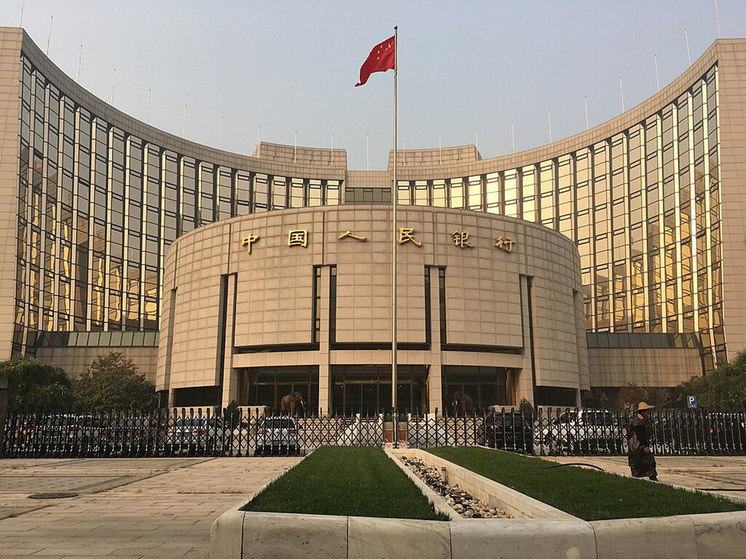
For the first time, Russian businesses began to experience difficulties in settlements with foreign companies back in 2022 — after the introduction of the first wave of sanctions in connection with the start of the SVO. But for a long time, domestic companies managed to bypass the hastily introduced Western restrictions. The situation began to deteriorate noticeably at the end of last year, when US President Joe Biden signed an executive order on secondary sanctions against foreign banks conducting transactions with sanctioned legal entities. After that, in January, domestic businesses began to have problems not only in China, but also in Turkey, the UAE and even Kyrgyzstan — countries considered friendly. Problems with cross-border payments continued to snowball. After large Chinese banks refused to cooperate with Russian businesses, other organizations, according to statements by a number of entrepreneurs, began to divide the yuan into «clean» and «dirty», that is, associated with Russia. Of course, there were very few people willing to deal with the latter.Some time ago, analysts believed that salvation from the US sanctions could be found in small regional banks in China that are not focused on international transactions. However, in August, information began to arrive that they, too, were refusing to conduct transactions with Russian businesses.
“China probably received a serious warning about secondary sanctions from the US and decided to wind up this channel of settlements with Russia,” suggested Artem Lyukshin, associate professor of the Department of Public and Municipal Finance at the Plekhanov Russian University of Economics. “Obviously, for China, the disadvantages of such a scheme of settlements with Russia outweighed the advantages.”
It is surprising not only that more and more Chinese banks are refusing to cooperate with Russia, but also the fact that there is no solution to the problem with payments, which has been going on for more than six months. All this is happening against an extremely favorable political background, when the leaders of both countries assure that they intend not to develop, but to increase trade cooperation.
Small banks can indeed remain more “undetected” for American sanctions, but the idea of creating payment systems to “cover up their tracks” is naive, according to the fintech community. And even small banks are not saved by settlements in fiat (regular) currencies, because the results still “settle” (are terminated) in bank accounts. “Serious cover measures are required, namely, the creation of a closed circuit of mutual settlements, which will not allow foreign regulators and transnational banks, — explains the chairman of the commission on financial and information security of the Council of the Chamber of Commerce and Industry of the Russian Federation Timur Aitov. — Perhaps, they will be forced to create it. Let me remind you that in the recent past, the payment system in the countries of the Council for Mutual Economic Assistance worked with the transferable ruble according to such a scheme.”
However, the launch of such a global project may take time, and payments need to be made now. Perhaps, cryptocurrency transactions will become a replacement for some time. According to the executive director of EXVED, Sergey Mendeleyev, it is possible that the state will soon allow foreign trade using any available instruments, primarily cryptocurrencies and stablecoins. «Judging by the acceleration of the adoption of legislation on cryptocurrencies and the permission to use them in cross-border settlements, this is the main financial route now,» says Sergey Solovykh, head of the department for work with wealthy clients at Fontvielle Investment Company. At the same time, trade turnover between Russia and China is growing. In the first six months, it increased by 1.8% in value terms compared to last year, that is, the problem with transactions does not hinder it, the expert emphasized.