


Cache of treasures discovered in ancient city
The skeletal remains of a man and a woman, as well as a cache of coins and jewelry, have been discovered in Pompeii, archaeologists report.
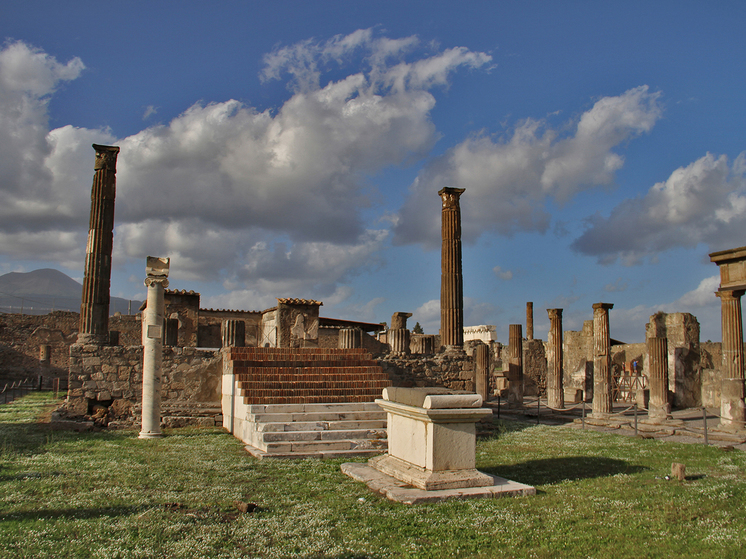
The discovery, CNN reports, is part of an excavation in Area IX of the buried city that has uncovered a host of ancient buildings and artifacts, including a bakery, home renovations and rooms decorated with intricate designs. Pompeii was home to about 20,000 people when it was buried under ash and volcanic glass during the eruption of Mount Vesuvius in 79 AD.
The latest discovery adds more detail to the picture of what life was like in the city before the disaster, CNN notes. According to the archaeologists who made the discovery, the bodies were found in a small bedroom that was being used as a temporary sleeping area while the larger house was being renovated.
The woman was found lying on the bed. In her hands were gold, silver and bronze coins, as well as gold and pearl earrings, CNN reports.
“This room was chosen by two people as a refuge while they waited for the pumice to fall, which gradually filled the open spaces in the rest of the house over the course of several hours,” the archaeologists said in a statement.
Because the door was closed, there were no traces of pumice in the room, but the couple was trapped inside. “Trapped in a cramped, small room, they died as a result of a pyroclastic flow that buried them,” the archaeologists said.
The room, which contained a wooden bed, stool, chest and marble-topped table, was adjacent to the Blue Altar Room, which was excavated in June, and adjacent to a large living room decorated with frescoes. Archaeologists also discovered bronze, glass and ceramic objects still on the table. A large bronze candelabra was found on the floor.
“The opportunity to analyze invaluable anthropological data relating to the two victims, found in the archaeological context that marked their tragic end, allows us to reconstruct a significant amount of information about the daily life of the ancient Pompeians and microhistories of some of them, with accurate and timely documentation confirming their tragic end. uniqueness of the Vesuvius site,” said park director Gabriel Suchtriegel.
He described the excavations as “an effort in which archaeologists, anthropologists and volcanologists work together to reconstruct the last moments of the lives of men, women and children who died in the time of one of the greatest natural disasters of antiquity.”
The current excavations in area IX were started to prevent the destruction of the outer perimeter of the site, says CNN. They enabled some of the most important discoveries ever made in the ancient city.