


The Central Bank will not allow an exchange rate of 100 per dollar
In recent days, the ruble exchange rate has demonstrated an incredibly wide, almost forgotten amplitude of fluctuations. First it fell from 84.9 to 92.6 per dollar, then quickly strengthened to 90. Of course, such volatility can be tied to one factor, for example, to the events in the Kursk region, but in reality the situation is much more complicated.
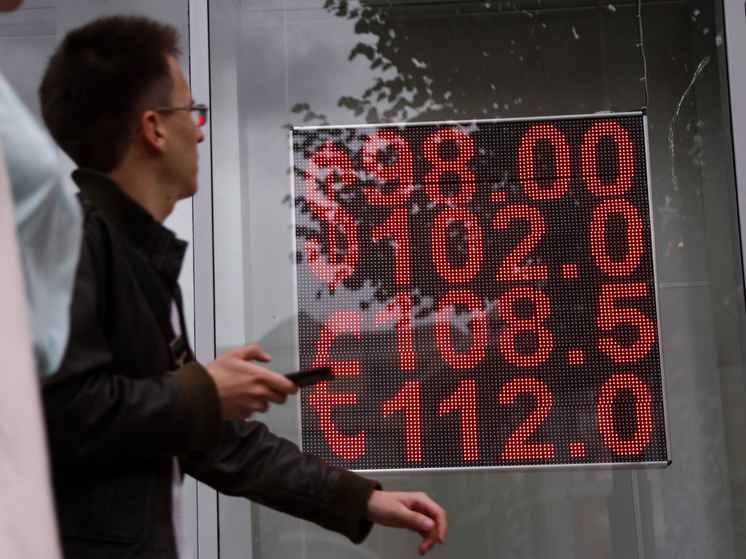
This is largely explained by the fact that classical exchange trading in dollars and euros has been stopped in Russia. If earlier the exchange rate was determined by the market, now it is determined by large banks, exporters and the state represented by the Central Bank, which makes the process completely opaque and unpredictable. An important role is also played by the decrease in import volumes due to problems with payments to China, Turkey, and the UAE. We asked experts — financial analysts — about what is happening now with the ruble and what will happen in the near future.
Maxim Osadchiy, head of the analytical department of BKF Bank:
«Over the last two days, the ruble exchange rate has largely recovered from its previous weakening. The destabilization of the Russian currency market was not a consequence of the events in the Kursk region. After all, nothing has changed on the stock market: the Moscow Exchange index fluctuated in the range of 2800-2900 after August 6. It does not happen that the currency market is gripped by panic due to a geopolitical shock, while the stock market is calm and quiet. Both markets react to external shocks. Therefore, we can assume two options: either some major player, say, a raw materials exporter, bought yuan for several billion dollars, and a shortage of yuan liquidity arose on the Moscow Exchange. We saw something similar, for example, in December 2014: the then currency crisis was caused by the actions of one well-known raw materials exporter, who acquired several billion dollars at one time.
The second possible explanation: the acceleration of the withdrawal of foreigners from Russian assets. The fact is that OFAC (Office of Foreign Assets Control, a division of the US Treasury Department responsible for law enforcement in the area of sanctions) on June 12 added the Moscow Exchange and its group, the National Clearing Center (NCC) and the National Settlement Depository (NSD), to the sanctions list and issued a license to wind down operations with them until August 13. On August 2, OFAC extended the license to wind down operations with the Moscow Exchange, NCC and NSD until October 12. However, foreign investors could have rushed to withdraw their funds from Russia before August 13. In both cases, we are talking about a one-time impulse, not a systemic phenomenon. The impulse ended, and the market rolled back to its original state.»
Sergey Drozdov, financial analyst:
«We currently have a certain collapse in currency liquidity, since all trade is conducted through the yuan. Transactions with Chinese banks are difficult, which is causing nervousness in the market. Since the Central Bank is fighting inflation, it is probably better not to allow the ruble to weaken, otherwise all the work to tighten monetary policy will go down the drain. There are no fundamental prerequisites for this yet: our imports are squeezed due to problems with payments. If the ruble «flies» to the 100 per dollar mark, inflation expectations will immediately grow. I doubt that the Central Bank will allow this, judging by how much the Russian currency has strengthened over the past few months, after the introduction of sanctions against the Moscow Exchange and the National Clearing Center. As for the influence of external factors, it is not very large today. Previously, when dollars and euros were traded on the exchange, investors responded to the slightest geopolitical stress and immediately began to buy currency. Now the currency has ceased to play the same role for investors, banks, and, finally, for citizens, for whom it is simpler and incomparably more profitable to keep rubles on deposits at a high rate. In essence, it is important only for companies working with imports.»
Alexander Shneiderman, Head of Sales and Customer Support at Alfa-Forex:
“The strengthening of the ruble is partly explained by the general trend towards strengthening of national currencies of oil-exporting countries. This is due to the threat of an open military conflict in the Middle East: for now, the parties (Turkey and Syria, Israel versus Iran and Palestine) are exchanging barbs in the public space and making isolated mutual attacks. Accordingly, if the confrontation enters a hot phase, the markets will react immediately: the world's oil supply will decrease. However, in the case of Russia, weakening factors may be more significant: in the context of geopolitical uncertainty, the demand for the US dollar is growing. This may hit national exchanges, currencies, including cryptocurrencies. Thus, within a week or two, in the absence of other strong factors and other “black swans”, the ruble exchange rate may weaken to 93.50 per dollar, after which its positions will be restored under the influence of the Central Bank.”