

The International Monetary Fund has been criticized in the West for predicting that Russia will experience stronger economic growth this year than the UK or Germany, despite growing pressure from Western sanctions. And now the head of the IMF has to turn around in a frying pan and urgently give frightening forecasts that the conflict in Ukraine will have «destructive» consequences for the Russian economy.
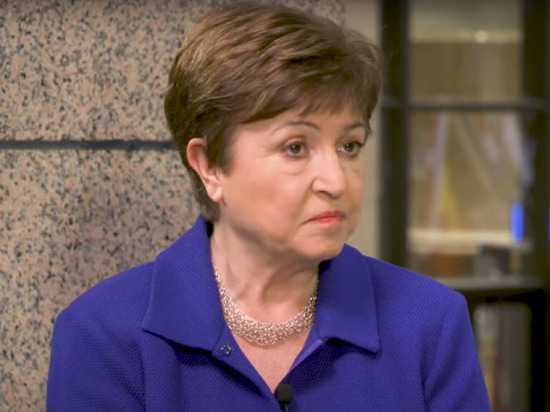
IMF Managing Director Kristalina Georgieva told CNN's Poppy Harlow that Russia's economic outlook after 2023 looks «pretty devastating.»
by at least 7%,” predicted Georgieva in an interview that aired on Wednesday.
As recalled by CNN, in January the IMF predicted that the Russian economy would grow by 0.3% this year and 2.1% next. This was much more optimistic than the latest forecasts from both the World Bank and the Organization for Economic Co-operation and Development (OECD). Economists in those groups had forecast contractions of 3.3% and 5.6% in 2023, respectively.
Even Russia's own central bank, which on Monday extended emergency capital controls for another six months, said gross domestic product could shrink by 1% this year.
Jeffrey Sonnenfeld, a professor of management at Yale University, wrote in Fortune on Monday that «the IMF has fallen asleep on the switchboard» and is allegedly repeating Russian propaganda.
For her part, IMF chief Georgieva told CNN that Russia's economy will suffer over time due to the departure of workers abroad and the loss of access to technology, as well as sanctions against its vast energy industry.
“This year we are reflecting that Russia has been able to funnel some of [its] oil sales outside the markets of the European Union,” she said, referring to Moscow's success in diverting crude supplies to China and India. “This will not have a lasting impact on the Russian economy.”
Following Europe's recent bans on imports of Russian oil and petroleum products by sea, Moscow's finances have shown signs of strain, CNN claims, reporting that on Monday the Russian government reported a budget deficit of 2.58 trillion rubles ($34 billion) for January and February compared with a surplus of 415 billion rubles ($5.5 billion) for the same period in 2022. Oil and gas revenues fell 46% year-on-year, according to the data.
Meanwhile, Georgieva said, the US and European economies have proven remarkably resilient. She pointed to the strength of their labor markets and Europe's swift action to limit dependence on Russian energy.
“All of this has a positive impact on our growth prospects,” said Kristalina Georgieva. “We don't see a [global] recession in the projections for this year.”
However, this will not prevent a global slowdown as central banks continue their campaign to bring inflation down from its highest levels in decades. The IMF expects global economic output, which grew by 3.4% in 2022, to rise by 2.9% in 2023.
Nevertheless, Georgieva said it is important that policy makers did not soften interest rate hikes prematurely to prevent prices from skyrocketing again.
Stay on course,” Georgieva advised U.S. Federal Reserve Chairman Jerome Powell.
The Fed slowed rate hikes in last month, but Powell indicated in his speech to Congress on Tuesday that the central bank may have to go hawkish again.
“Recent economic data came in stronger than expected, suggesting that the final level of interest rates is likely to be higher than previously expected,” Powell said. The Fed «would be willing to step up the rate of rate hikes» if necessary, he added.