

What laws of history govern what is happening around Russia now
Each of us is just a human being. But some of the people living today seem to have a supernatural gift of foresight. American political scientist George Friedman in his book The Next Hundred Years published in 2009: “During the life of the next generation — roughly speaking, until 2020 — Russia's main task will be to restore the Russian state and Russian influence in the region …
The Russians must dominate Ukraine and Belarus for the sake of the basic foundations of their national security … Ukraine and Belarus are everything for the Russians. If they fell into the hands of the enemy, for example, if they joined NATO, Russia would be in mortal danger.

“Moscow is just over two hundred miles from Russia’s border with Belarus, Ukraine is less than two hundred miles from Volgograd, formerly Stalingrad.
Russia was able to build an effective defense against Napoleon and Hitler thanks to its strategic rear. Without Belarus and Ukraine, there is no strategic rear, no land that could be exchanged for the blood of the enemy.
 July 2009 Russian Prime Minister Vladimir Putin sees off US President Barack Obama's limousine to Novo-Ogaryovo. Officially, a «reset» reigned in Russian-American relations at that moment. But the most far-sighted analysts like George Friedman have already predicted the coming conflict between Moscow and the West over Ukraine.
Of course, it is absurd to assume that NATO is a threat to Russia. But Russians think in terms of twenty-year cycles, and they know how quickly the absurd becomes possible.”
And here is another one of the «brilliant seers». The American political scientist Robert Kaplan, in his 2012 book The Revenge of Geography: What Geographic Maps Can Tell Us About Coming Conflicts and the Battle Against Fate, about the situation of our country after the end of the First Cold War: “Probably never before in peacetime Russia was not so geographically vulnerable… The Russian state has no choice but to follow the strategy of reviving its former power, starting with the restoration of its former power in Ukraine and Belarus.
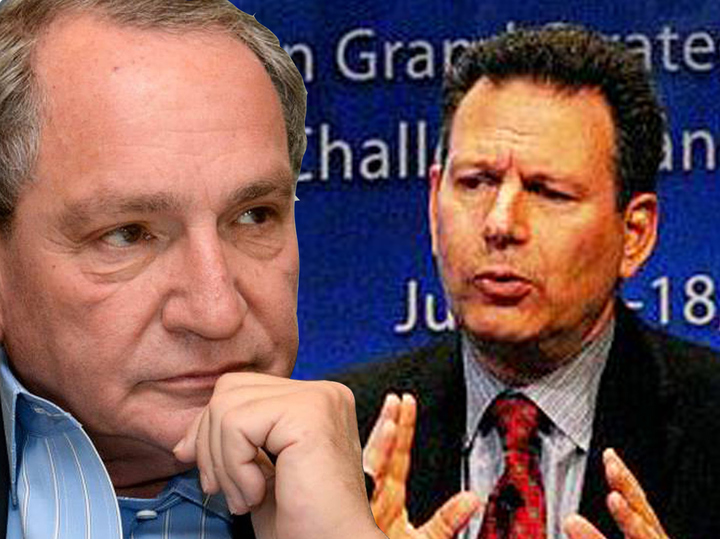 George Friedman and Robert Kaplan: Advanced geostrategy studies bring out visionary talents in people.
Kaplan were able to learn the art of geopolitical predictions at such a magical level? What kind of «political science Hogwarts» did they go to? The point is not what school they attended, but what school of thought they are adherents of. The two authors cited above are prominent representatives of geostrategy, a branch of political science based on the postulate that the geographical location of states determines to a very large extent their national interests and, consequently, their policies.
Of course, geostrategy is not a piggy bank, in which hides the answers to all questions. As Robert Kaplan himself wrote, “geography does not explain everything in the world, and there is no universal solution to all problems in it.”
It is not a commitment to geostrategy and insurance against erroneous forecasts. For example, in 1991, George Friedman began his career as a geostrategist with The Coming War with Japan, which argued for the high likelihood of a military conflict between Washington and Tokyo over the next two decades. Many of Friedman's current forecasts also look far-fetched (but at the same time very politically correct). But with all these obvious limitations, geostrategy allows you to look at what happened and is happening around Russia now, from a fundamentally new angle.
One of the most iconic and famous episodes of early US history looks like this. Early on the morning of July 11, 1804, in a rural area near New York, two of the most prominent politicians in the country met with each other: the current vice president of the United States, representative of the Republican Democratic Party, Aaron Burr, and former Secretary of the Treasury, representative of the Federalist Party, Alexander Hamilton (the one whose image flaunts on a ten dollar bill). The purpose of the rendezvous was not a political debate, but a duel over political differences. Following the religious principle «Thou shalt not kill,» Hamilton shot in the direction of the trees, but Burr, who was not constrained by any religious restrictions, shot him directly in the stomach. The next day, Alexander Hamilton died, but Aaron Burr quietly continued his duties as vice president.
The American political process has not always been so dangerous for its main participants. But it has almost always been based on very tough competition. Why «almost always» and not just «always»? Because there was a rather long period in the history of the United States when, based on external signs, the tough political competition came to naught.
Between 1817 and 1825, Republican James Monroe was the leader of the United States for two presidential terms. This period is described in history books as «an era of good agreement»: no open struggle between different parties and groups, no mutual insults and scandals, general politeness, courtesy and even euphoria from this state of affairs.
 An idyllic scene from American political life during the first «Era of Good Accord». The second «era of good agreement» in which we all happened to live turned out to be the same illusion as the first.
Such a «barrel of honey» cannot do without a solid portion of «tar»? Right. The term «era of good agreement» itself appeared in a newspaper article in the same 1817. And in the original version, there was no double bottom, offensive hint or irony in it. But today this term is used by historians with irony. The “era of good hopes” arose because by the time it began, the old political differences had completely exhausted themselves. And the new ones have not yet formed. They were formed during that same “era of good agreement” — but not in front of everyone, but secretly, behind the facade of universal friendship and politeness.
Remember that until very recently we also lived in a period of a deceptive «era of good agreement.» In February 1992, Boris Yeltsin, speaking in the US Congress: “Today, when the period of global confrontation has ended, I urge you to take a fresh look at today's US policy in the Russian direction. Take a fresh look at the prospects for our relations. Russia is already different.
But I'll be direct. It happens that some people in your country still use the concepts and methods of the old policy. It happens that old approaches brought to life by a different era are artificially adjusted to new realities.
However, all this equally applies to us. Let's learn together to resolve disputes on the most effective democratic basis — in partnership. This is in the spirit of both the American and Russian character. Then many of the problems that today hamper mutually beneficial cooperation between Russia and the United States, including on issues of legislative practice, will disappear. It will not require useless sacrifices, but, on the contrary, will allow us to better solve both your and our problems, and, above all, will create new additional jobs not only in Russia, but in the United States too.
History presents us with a chance to realize President Wilson's dream of making the world safe for democracy.”
From the height of the past three decades, this impassioned appeal looks hopelessly naive. However, it is easy to be smart, looking at everything «from above», it is easy to be «strong hindsight».
The American of 1817 did not know that he was living at the beginning of a brief and very specific historical period, a brief historical anomaly. It seemed to him that the “era of good agreement” was not a fleeting historical phenomenon, but a stable and fundamentally new stage in the development of the country. Something similar happened to us in 1991. The old disagreements between Moscow and Washington had exhausted themselves by that time. Like, what is the fight between capitalism and communism? Take your temperature immediately! And new disagreements with the United States either had not yet formed, or did not seem to most of the then Russian political class to be in any way important.
Let's be fair to the «then Russian political class.» The realization that the new «era of good agreement» is somehow one-sided came to him quite quickly.
To quote Robert Kaplan's book again: “It didn't take long for Russian leaders to appreciate the full extent of the problem. Less than a month after the collapse of the USSR, Foreign Minister Andrei Kozyrev, in an interview with Rossiyskaya Gazeta, noted: “We quickly realized that geopolitics is replacing ideology today.” “Geopolitics, which was underestimated in the USSR,” writes John Erickson, emeritus professor at the University of Edinburgh, retired, “haunts and takes revenge on post-Soviet Russia.”
Tooting. The “revenge of geopolitics” against Russia already in the first half of the 1990s was so harsh and painful that even such pro-American figures as Andrey Kozyrev could not fail to notice it. But it took time to realize the full depth.
What exactly did the leaders in Moscow lose sight of during the Gorbachev period and the very early Yeltsin period? The fact that political processes — both relations between states, and relations within a state, and even within any single organization — are necessarily built on competition.
This competition does not always have the character that Charles Darwin so convincingly described back in the 19th century: the strongest eats the weakest, the lowest link in the food chain with a guarantee becomes a “dinner” for the lower link. In the modern world, civilization and a high level of economic development sometimes (I emphasize — just sometimes, by no means always) make their own adjustments to this principle. The weak — or, as in the case of Russia in the early 90s, the strong, who suddenly suddenly became weak — are not «eaten», but gently pushed aside, driven into a subordinate position with velvet gloves.
These are the laws of life that any person encounters already in kindergarten or, at the latest, in the lower grades of school. In order for someone in the children's company to become the leader, someone in the same company had to become the follower. Everyone cannot be a leader. All cannot be leading countries.
Having given up on “building communism at home on their own,” leaders in Moscow during the Gorbachev and very early Yeltsin years expected that “communism” in Russia—in the sense of a developed economy and developed society—would now be built by the West for them. But such an expectation was absurd — both from the point of view of the laws of life, and even more so from the point of view of the laws of geopolitics and geostrategy.
I am currently reading Strategy and Power in Russia 1600-1914, an absolutely brilliant book by the American military specialist William Fuller, published for the first time in the United States back in 1992. And this is what he wrote in it about the strategic decision-making system in Russia in the 18th century: “When you analyze the motives of the “builders” of the Russian Empire, as in any other discussion about human motives, it cannot be an analysis in the style of “either this or other” — they say, the course for the expansion of Russia was based only on strategic considerations, either only commercial, or only dynastic. Different goals can comfortably coexist with each other and be achieved through the same policy.
But the dominant goals, those that persisted over time and passed from one reign to another, were strategic. Russia in the 18th century had a well-defined set of strategies. And given the fact that geography determined Russia's strategy (as it was supposed to determine), this should not be a surprise: that so many different statesmen in different decades, analyzing the international position of Russia, came for the most part to one and the same conclusions.»
“Geography determines the strategy”, “geography must determine the strategy” – why did something that seemed self-evident, even to the banal leaders of Russia in the 18th century, ceased to be so for their Soviet colleagues at the end of the 20th century? The answer to this question is extremely important not only in terms of a complete understanding of our past.
Answering a question from a lady from the British Sky News channel at his last big press conference to date, Vladimir Putin, among other things, made the following statement: “How would the Americans react if we took both on the border between Canada and the United States or on the border Mexico and the US supplied our missiles? And what, didn't Mexico and the USA ever have territorial issues? And who owned California before? And Texas? Have you forgotten?
Okay, everything has calmed down, no one remembers about it — the way they remember about Crimea today. Amazing. But we also try not to remember how Ukraine was formed. Who created it? Lenin Vladimir Ilyich, when he created the Soviet Union: the Treaty of 1922, the union, and 1924 — the Constitution. True, after his death, but it was created according to his principles.”
I would like to “complete and deepen” this statement of the owner of the Kremlin. Lenin Vladimir Ilyich is not just a «posthumous creator of Ukraine.» He is also the author and architect of the policy that, by the time the USSR ceased to exist, completely ruined geostrategic thinking in high-ranking Moscow offices.
The book “Ministers of the Soviet Era”, published in 2010, includes the following memoirs of the last Minister of Trade of the USSR, Kondrat Terekh: “I remember Solomentsev, Chairman of the Party Control Committee, called me. He kept me on the phone for an hour and a half and kept telling me how important the anti-alcohol campaign is for maintaining the health of the nation. At the end, he warned: “If at least one liter more alcohol is sold today than last year, lose your membership card.” “But what about the state budget revenues? I ask. “After all, we will not get several tens of billions of rubles.” «It doesn't concern me.» “But it concerns me,” I nearly broke down. “They will ask me.” “Remember: increase the sale of alcohol — I will personally take your party card away.”
What does this episode have to do with geostrategy? The most direct thing. Geostrategy is, first of all, a system of thinking based on realities and on not always pleasant, but accurate conclusions from these realities. The scene above is an example of the opposite kind of thinking. Thinking that is based on something that hangs in the air.
The “founding father of independent Ukraine”, Vladimir Lenin, had a goal that seemed quite achievable during his life – a world revolution. The entire internal structure of the country created by Lenin — its territorial division, its ideology, its economic system — was sharpened precisely for the achievement of this goal. But over time (and a very short one at that) this goal went away — it ceased to seem achievable or even desirable. But the device remains.
In itself, this circumstance did not yet mean a death sentence for a great power. China at the start of Deng Xiaoping's reforms was not even in a similar, but in a much more difficult situation. But official Beijing of the Deng era chose pragmatism: «It doesn't matter if it's a black cat or a white cat, as long as it can catch mice, it's a good cat.» «There is no basic contradiction between socialism and the market economy.» «We should not be afraid to adopt the advanced methods of management used in capitalist countries … The very essence of socialism lies in the liberation and development of production systems … Socialism and the market economy are not incompatible.» But Moscow of the Gorbachev era chose a course for romantic experiments in the economic and political sphere.
General Secretary of the Central Committee of the CPSU on the tasks of economic reform, January 1987: “The development of democracy in production, the consistent introduction of truly self-management principles into the work of labor collectives are of paramount importance. The economy is a decisive sphere in the life of society. Tens of millions of people are employed here every day. That is why the development of democracy in production is the most important direction in deepening and expanding socialist democracy as a whole.”
It sounds (or rather, it sounded) beautiful. But, as the country has learned the hard way, «democracy in production» is a myth and a chimera. Attempts to create such a «democracy» led to the fact that the system that used to work, albeit badly and inefficiently, but still worked, gradually stopped working completely.
And here is how Mikhail Sergeevich described the tasks of political reform in the same speech: “The school of perestroika is not easy for some party leaders. They just can't give up the dispatching functions that are not typical of party committees, the desire to solve problems for everyone, to keep everything, as they say, in a fist. And this, as before, hinders the growth of personnel responsibility for the assigned work, the development of their initiative and independence.
Instead of developing an innovative search, party workers often react painfully to the initiative and activity of people, considering them almost like a natural disaster. And again, an attempt to put into practice a beautifully formulated task led to the complete collapse of the country's governance mechanism — to the very «natural disaster» that Gorbachev mentioned.
The reasons for the striking contrast between the results of Gorbachev's reforms and the results of Deng Xiaoping's reforms are usually sought in the sphere of personal differences between the two leaders. And given the centralized nature of power in Moscow and Beijing, such differences do account for at least 50% of the explanation.
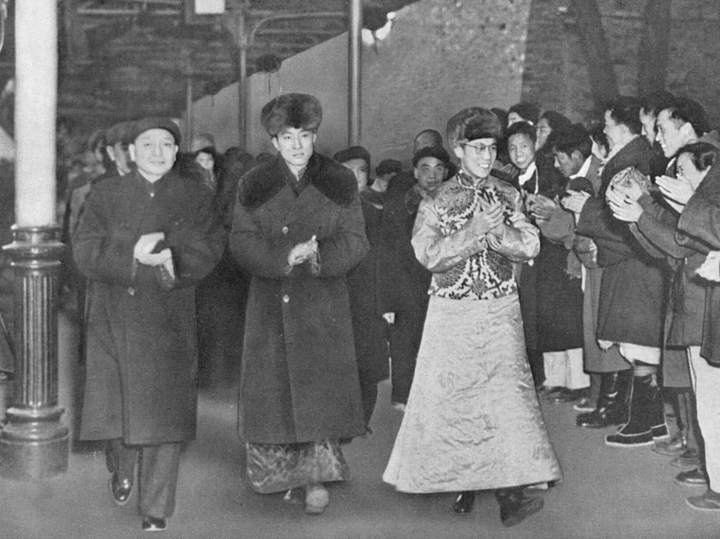 1954 The then vice premier of China, the future great reformer of China Deng Xiaoping meets with the religious and secular leader of Tibet, the Dalai Lama. In the first 45 years of his life, Deng Xiaoping had every opportunity to get personally acquainted with the market economy and other aspects of the life of the «old world».
But here is where, from my point of view, the remaining 50% should be looked for. Deng Xiaoping was born in 1904. At the moment when the communist system was established in mainland China in 1949 with its desire for world revolution (the first leader of the PRC, Mao Zedong, at one time dreamed of this idea no less than Lenin), he was already 45 years old. In the first decades of his life, Deng Xiaoping was able to personally observe how the market economy works.
By the time Mikhail Gorbachev was born in 1931, there had been no market economy in the country for about 14 years (we leave out the brief period of NEP in the 1920s). Gorbachev did not have any deep personal acquaintance with the market and the reliance on pragmatism arising from the very fact of the existence of this market. And not only with Gorbachev — except for those individual Soviet specialists who worked in the West, all those people who at the turn of the 80s and 90s made up the Soviet political, economic and intellectual elite did not have such a personal acquaintance.< /p>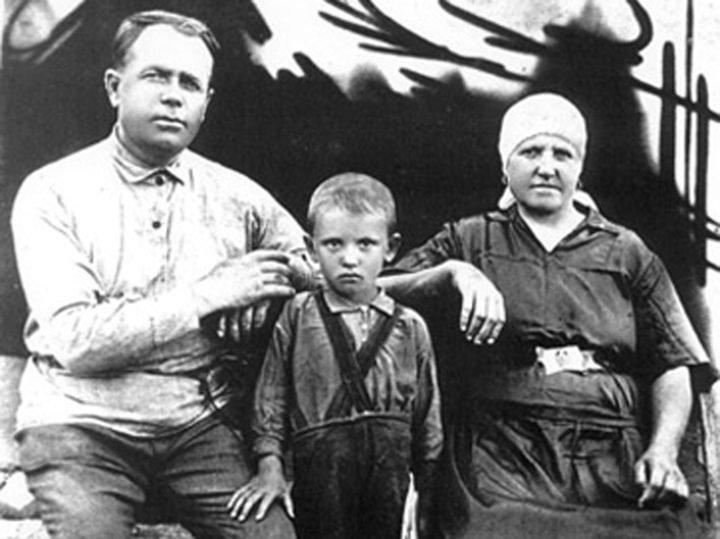 Future leader of the USSR Mikhail Gorbachev with his grandfather Pantelei and grandmother Vasilisa. At the time of Gorbachev's birth, more than 13 years had passed since the 1917 revolution. He did not know any other political and economic system except the Soviet one.
By the late years of the USSR, even the most basic understanding of how the world around us actually works was lost in the country. Real knowledge has been replaced by myths, conjectures and what in English is called wishful thinking — wishful thinking.
According to legend, in the 17th century, local Indians from the Manahattou tribe sold the territory that now forms the heart of New York — Manhattan Island — to the Dutch colonists in exchange for knives, guns, gunpowder, alcohol and clothing for a total of 70 guilders. The leaders of the Manahattou tribe did not and could not know the real value of what they parted with in exchange for this amount. The leaders and citizens of our country had the amount of knowledge necessary to understand the fantastic disparity of the «exchange of land for glass beads».
But by the time of the collapse of the USSR, due to the breakdown in the transmission of vital information between generations, this amount of knowledge was lost. An offensive comparison, I do not argue. It is bitter and painful for me to use it myself. However, only this comparison can somehow explain the desecration to which the basic principles of geostrategy were subjected in the last years of the existence of the USSR.
From the point of view of geostrategy, the fact that official Moscow (or, rather, two official Moscows — Gorbachev's Moscow and Yeltsin's Moscow) acted as the main gravedigger of the USSR, defies any reasonable explanation. In world politics, it is customary to play geopolitical chess, not geopolitical giveaway.
In world politics, it is customary to increase one's influence, and not engage in self-crushing and self-destruction. But, having fenced itself off from the surrounding world for several generations, the late Soviet Union chose its own “special road” — the road that led it nowhere. What Gorbachev's Moscow and Yeltsin's Moscow once «discarded as useless», Putin's Moscow today returns with incredible efforts, guided by the principle «we won't stand up for the price».
The modern world is a world that is unlikely to soon forget the basic principles of geostrategy. The recently familiar theses about «a common destiny» and «peaceful coexistence» have been handed over, if not for scrap, then certainly for «long-term political storage.» Geostrategy, with its emphasis on the most naked realism, competition and self-interest protection, is not just in vogue today. Geostrategy is now the “queen of all social sciences.”
An illustrative example. Headed until the year before by current CIA director William Burns, the Washington-based Carnegie Endowment for International Peace is definitely not an organization that is sympathetic to the Russia-China alliance that is now emerging before our eyes. Suffice it to recall that last fall, the Carnegie Moscow Center was closed by order of the Russian Ministry of Justice «due to revealed violations of the current legislation of the Russian Federation.» But here is how an article on the website of the US head office of Carnegie assessed the recent visit of Chinese leader Xi Jinping to Moscow.
“Even if the leadership of the PRC and the entire Chinese people empathize with Ukraine, joining Western sanctions against Moscow would run counter to the fundamental interests of China, for which Russia remains a unique source of resources and experience, which would be very expensive and painful to receive on its own… The current the stage of Russian-Chinese relations is no longer determined by specific events and reactions to them, but by structural factors that set a rigid framework for interaction and significantly limit Moscow and Beijing in choosing further moves…
As China's confrontation with the US and EU inevitably deepens, Beijing's options are also reduced. Russia is a non-alternative partner in terms of resources, which China may critically lack in the event of an escalation of its confrontation with the West.
However, what and to whom am I proving here? In America, geostrategy has always — sometimes openly, sometimes slightly camouflaged — been on the «throne». It was in Russia that she was removed from this “throne” so that, faced with the catastrophic results of this step, she could be returned there.
The entire history of post-Soviet Russia is the history of at first slow, and then increasingly rapid rehabilitation of geostrategy . It turns out that it is no longer necessary to stand up for its basic principles and lessons? But I still see such a need.
In modern Russia, there are calls from time to time: they say, for the sake of the “success of the NWO”, it is necessary to withdraw from all international organizations, close off from the world and “sail further” in splendid isolation. In the USSR, this has already been tried. Geostrategy is subject to rehabilitation in full — without exceptions. Only in this way can this new “queen of the social sciences” bring real benefits to the country.