


Sleepless on the Web
According to fresh research by experts, the last decade has been marked by a steady growth in the subscription business model in Russia and around the world. Its essence is quite simple: the consumer's card is periodically (monthly/six months/yearly, etc.) debited for gaining access to the service/goods during the prepaid period. The subscription model usually involves the renewal of the relationship with the consumer after the prepaid period has expired. In doing so, it aims to build a long-term relationship with the client and maximize the lifetime value of the client. Nothing, as they say, personal, because we are talking about business, more precisely, about business in cyberspace, which we all got into and flounder for a long time.
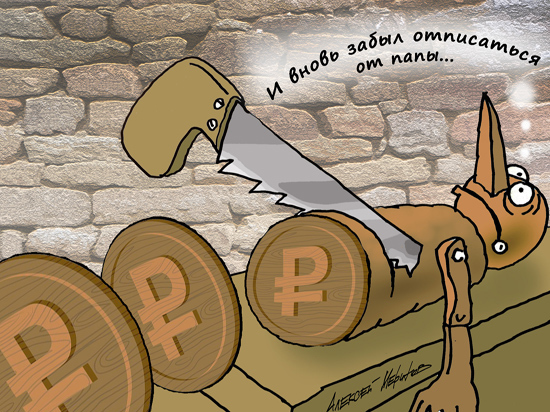
There are a huge number of dubious services on the Web, the business model of which is based on the fact that users do not understand the terms of the contract or simply cannot unsubscribe. Many cannot even understand which organization and for which service withdrew money, since this is not indicated in the message from the bank. These can be subscriptions with a selection of offers from microfinance organizations, and subscriptions to nutrition plans or sports exercises, and services with extracts from the USRN, and much, much more.
According to experts, 50% of users with experience in using subscriptions in Russia and 45% in Moscow report that they have encountered a situation where the service received through a paid online subscription did not match the stated offer. Among them, 50% in Russia and 43% in Moscow turned to service representatives with a request to cancel their subscription. Most of those who applied did not receive their funds back.
For example, do citizens regularly fall into subscription traps? Three main reasons are cited.
1) Information asymmetry — if an elderly grandmother simply does not have the opportunity to learn everything about the final product.
2) Consumer carelessness — we are lazy, incurious and do not study ourselves available information.
3) Self-confidence of consumers (or, for example, ordinary sclerosis) — a person simply forgets about the subscription.
So consumers themselves drive themselves into subscription traps. At the same time, there are so-called gray practices. For example, the consumer is warned about all essential subscription conditions and significant terms once, after which the subscription management passes under his independent control. The legislation of many countries has already risen to protect users. And Russia is still lagging behind.
The State Duma has already drawn attention to the existing problem and even plans to oblige Internet services to warn customers about the upcoming debiting of money for a subscription by a new bill. And also to ensure the transparency of the interaction between the «producers» of online services and users. This initiative provides for amendments to the Consumer Rights Protection Law. Of course, you can guess that such a turn caused a bullish reaction in the commercial structures that saw a red rag. I was convinced of this personally, watching a large-scale discussion of the initiative of deputies to protect people at the Center for Strategic Research. Representatives of government and business gathered here in mid-March. Business kicked as best it could, putting forward dubious arguments. And it was predictable. Indeed, for many Internet services, subscription is the only way to make a profit. This model has spawned unscrupulous services that offer customers non-transparent terms of the contract or deliberate difficulties with unsubscribing.
— we turned for comment to one of the experts on this issue, State Duma deputy Anton NEMKIN.
— It was inevitable. Bills don't come out of nowhere. They are always a reaction to the processes taking place around. Our society has long crossed the line after which the Internet has ceased to be a space for those who used to be called computer scientists. The vast majority of our voters — both present and future — have turned into Internet users. It is quite natural that both the state and legislators have become more attentive to what is happening in this environment. And, of course, the experience of the pandemic influenced when schools and universities massively switched to online learning, and many adults had to work remotely. Even those who were far from digital technologies came to the Internet. Many of these people have found their inexperience costing them dearly—literally. Specialists carefully studied this problem and identified specific numbers.
— Already now, almost every fourth resident of Russia (more precisely, 24% of Russians) has experience of using paid online services. 13% of our fellow citizens have become active users of such products. At the same time, 66% of them at least once forgot about their paid subscription, and 63% in Russia and 66% in Moscow ever forgot to cancel it during the trial period. In other words, two-thirds of all users of paid online services have lost money at least once. Someone lost 100 rubles, someone a thousand. But if you remember that today the annual revenue from subscriptions to digital content in Russia is estimated at about 180 billion rubles, then the size of these losses is understandable. So this is a problem that has affected millions of people. And problems of this magnitude cannot go unnoticed for long.
— Certainly! What is called the «subscription trap», when unnecessary services are forced on the user and it is difficult to refuse them, exists everywhere. Moreover, a variety of people can suffer — both advanced residents of megacities who forget to unsubscribe from the third or fourth online cinema, and people with a much more modest family budget. In the Perm Territory, the family of a serviceman from Elani, who participates in the SVO, became a victim of unscrupulous services.
— For those who offer the most popular services: music streaming, online cinemas, cloud services, mobile operators, providers, online game manufacturers. According to research, 18% of subscription users have unused live subscriptions. And the two main reasons for this are people either forget to unsubscribe or experience technical difficulties trying to unsubscribe from an unnecessary subscription. Not in all services you can easily find such an option or follow the proposed opt-out path to the end.
Actually, this is exactly what the bill proposes to fix — to oblige services to warn customers at least a day in advance about future debiting of funds. And in the same notification there should be a link to the rules for using the service. This link should clearly and explicitly describe the procedure for unsubscribing. It is important that for a conscientious business, for those who offer a service for which people are willing to pay, this will not change anything. But it will become more difficult to take advantage of users' forgetfulness.
— In general, if a person controls his expenses, he will immediately notice that the money is being spent somehow wrong. And he himself will find a way to get rid of unnecessary subscriptions. But, of course, the main risk groups are children and the elderly. It is they who find it most difficult to understand the texts of user agreements. They have a harder time finding the «unsubscribe» button, especially if the operator has hidden it away.
— A lot of. More than once we received requests from clients of one large marketplace. They discovered that the store was debiting money from cards, the data of which had long been deleted from personal accounts. As it turned out, the trading platform prescribed such a procedure in its rules. That is, they indicated the ability to write off money without notification, even for remote payment data! But users did not notice this. Formally, the law is not violated. After all, it does not prohibit adding such items to user agreements. I note that this paragraph in the bill did not cause any particular objections from the business community.
— The main stumbling block is the issue of notifying users about the upcoming write-off of funds. Representatives of well-known Internet services insisted that such a measure would be very painful for them. After all, they may lose such a source of profit as «sleeping» customers. These are just those people who forget to unsubscribe from unnecessary services, or those who could not find the right button on the service website. During the discussions, it turned out, for example, that because of such notifications, online cinemas can lose 10-15 percent of subscribers.
But if the bill is passed, it will come into force only from March 2024. So the business will have enough time to prepare for change. Some provisions of the law have also been relaxed. For example, even in case of cancellation, the subscription will continue until the end of the paid period. In general, I am sure that a business that provides quality services will not lose anything. On the contrary, people trust services that are more attentive to their interests.
Russian online business is in a unique position today. After all, many powerful competitors — for example, foreign online cinemas or music services — have left our market. The occupied niches were freed. Domestic services can take their place, increase their customer base, increase profits. But it must be done in a fair way.
“Of course, this situation is unfair. There is a violation of the rights of a huge and most vulnerable group of citizens. I think that this issue should be addressed in a separate bill. Numerous benefits have already been established for pensioners. Perhaps it makes sense to work out the introduction of additional regulation. It will oblige retail chains to establish uniform prices for this particular group of the population, regardless of the place of purchase — directly at the pharmacy or when ordering through a website or application. After all, it is important to ensure that the cost of a drug purchased offline does not exceed the price of the same drug that is set online. However, of course, consultations should be held on this issue both with regulators and with representatives of the legal and business community.
According to official statistics, about 20 million Russians are now subscribed to ecosystem services . On average, in Russia, there are 1.5 subscriptions for each active user.
By the end of this year, their number will increase by 30-40%, by 2024 it will be 35 million, and by 2030 it will reach 55 million users analysts predict. Now the audience not covered by subscriptions is large, so there is no fierce competition for the client — they are recruited through welcome offers.