


Roskosmos advised to run faster
Twelve years ago, a large scientific and technical council was held at the head institute of Roscosmos — the Central Research Institute of Mechanical Engineering, at which representatives of 13 (!) Industry organizations conferred for more than 8 hours on where Russia should fly — to the Moon or directly to Mars. Today, this is no longer an issue. Everyone understands that our priority is the Moon. Not only because Russia has the Luna-25 interplanetary station, which is waiting to be launched in July this year, but also because there is an agreement with the Chinese comrades to build a lunar station together, and maybe a lunar base. On the eve of Cosmonautics Day, we assessed with our experts what our space industry is entering a new stage of international cooperation with.
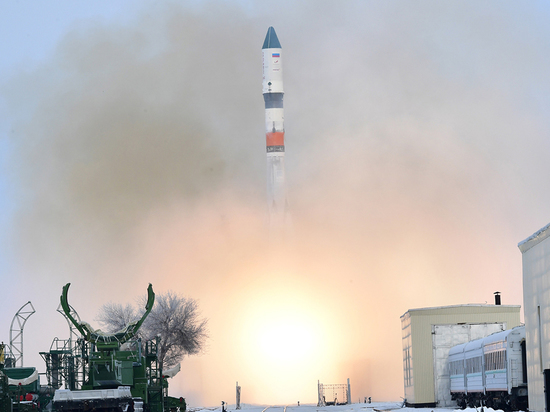 Photo: roscosmos.ru
“In good times, there was no money for space, and you want us to think about the Moon now!” — one of my acquaintances, an economist by profession, was indignant the other day. Financiers always don’t have enough money for anything, only one fine day hundreds of billions of euros pop up from somewhere, moreover, they pop up not here, but abroad … So let’s not talk about “there is no money, but you hold on” , — in every oligarch, as they say, you can find something good for the good of the country, if you look carefully…
Today, alas, we no longer claim technological feats like those performed by Sergei Pavlovich Korolev. His niche, according to many, was occupied by the dreamer and doer in one person, Elon Musk, but this does not mean that we should give up all other positions. The challenge for us is the creation of modern launch vehicles, satellite constellations that provide citizens with good navigation, communications, and accurate maps. In spite of everything, one cannot refuse to create the latest spacecraft for manned space exploration. Our country is already with great difficulty maintaining parity in manned launches, in preparing crews for a long stay in orbit, and this cannot be discounted.
Just think, in fact, we are still operating the royal «seven» — the R-7 launch vehicle! Yes, its most advanced version — the Soyuz-2 launch vehicle of the Samara RCC «Progress» performs all the assigned tasks to the maximum, this is the most versatile carrier that today can be launched from four cosmodromes at once: from Baikonur, from Vostochny, from Plesetsk, from Kuru, putting into orbit up to 8 tons of payload, including spacecraft and satellites for various purposes.
Soyuz-2 provides for the launch of Soyuz manned spacecraft and Progress trucks into orbit, but in the near future it will be replaced by other carriers that are being created for more modern, comfortable Orlovs. The most realistic contender for this role is Soyuz-5 (the successor to the Russian-Ukrainian launch vehicle Zenit). It will launch new ships into low orbit (where the ISS currently flies). Previously, its flight tests were planned for the end of next year, now, due to certain events (about them a little later), the timing of the first launches is still unknown.
As for the flight to the moon, the Soyuz-5 Orel will not pull that far. To do this, it is planned to use the created in the Center. Khrunichev heavier launch vehicle «Angara-A5». As Aleksey Varochko, Director General of the Center, recently told the TASS agency, the first Angara-A5 will be delivered to the Vostochny cosmodrome for pre-flight preparation at the end of 2023.
As for the first unmanned launch of the Orel spacecraft, which is being built at RSC Energia, the opinions of various experts regarding the timing of the start of its flight tests differ: some believe that they will begin in 2024, others call 2025 more realistic.
We discussed the situation with import substitution in the space industry with a member of the Russian Academy of Cosmonautics. K. E. Tsiolkovsky Alexander Zheleznyakov.
— If we are talking about Soyuz spacecraft or missiles, or rather about their control systems, they are not subject to sanctions (after all, they carry Americans and Europeans to the ISS). But access to many components for our new space technology is prohibited. Now we have to extract them using parallel imports or create our own, — says Alexander Borisovich. – Take, for example, the Luna-25 interplanetary station, the launch of which we are looking forward to in July this year. This will be the first launch of our device to the Moon, after 47 years. We planned to launch it back in 2022, but could not carry it out, because the Europeans at the last moment withdrew their Doppler velocity and range meter from the project, without which a soft landing on the Moon is impossible. It took us a year to create our device and test it.
Approximately the same reason — the reluctance of foreigners to support our new projects — delays, according to Zheleznyakov, the implementation of many other projects. But, he confidently says, we will definitely implement them.
Since the main goal of the three space powers — Russia, the United States and China — is the expansion of the Moon, which must be completed before the end of this decade, alliances began to be created starting in the 2010s. At first, the leadership of Roskosmos expressed a desire to join the American Artemis program. However, not satisfied with a secondary role in it, in March 2021, it signed a memorandum on the International Scientific Lunar Station with China. On our natural satellite, according to the project, it is planned to create first a visited and then a habitable base.
“I think that the joint lunar project will be the pinnacle of our relations with the Chinese,” says Andrey Ionin, an expert in the field of astronautics. — I also hope that it will outgrow the Russian-Chinese format and become a common project for the BRICS countries (an alliance of five states: Brazil, Russia, India, China, South Africa). I think all their representatives share this idea, because any international project means tight deadlines, budget and political responsibility of each of the participating countries, which means more expected success of the enterprise. On the way to the lunar station, we could cooperate in the creation of ships and rockets.
The second big goal of our alliance, I see joint programs for the joint development of satellite constellations with the Chinese. As you heard, the agreement between the leaders of our GLONASS navigation system and the Chinese Beidou has already been signed. Further, it would be nice to agree on a joint system for remote sensing of the Earth and the space Internet, similar to Elon Musk's StarLink. I think that something similar is already being planned, and it is no coincidence that the head of Roscosmos, Yuri Borisov, was a member of a narrow circle of Russian representatives during negotiations with Xi Jinping in Moscow.
Against the backdrop of recent political events, we left the cosmodrome in the Kura and clashed strongly with the Kazakhs, who arrested the property of our Ground Infrastructure Operation Center at Baikonur for 2 billion rubles (more than 13 million tenge). The reason for the contention is the Russian-Kazakh launch complex Baiterek, which has not yet been brought to mind, that is, to launches.
The agreement on the creation of the space complex was signed by Presidents Putin and Nazarbayev in 2004. The Kazakh side, which was interested in the technological development of the country, had to invest in the modernization of the launch pad, the Russian side was preparing the launch vehicle itself. Initially, Angara was considered for the role of an «international» carrier.
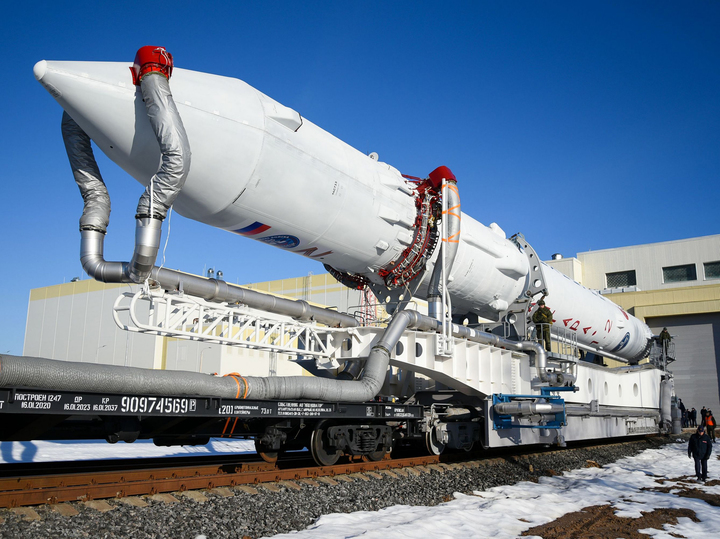 Photo: roscosmos.ru
— For Russia, in fact, this option was quite profitable, because in Plesetsk under the «Angara» we already had a converted table for the launch vehicle «Zenith», — Andrey Ionin explains. — The same thing should have appeared in Kazakhstan, where everything could be arranged in the image and likeness of the option in Plesetsk. But, unfortunately, then we began to pandemonium … According to the original plans, the Angara was supposed to appear in 2007-2008, but the deadlines were postponed many times, and the leadership of Roscosmos decided to change the rocket for Baiterek, completely recreating it from Russian components «Zenith». Alas, he did not stay long — after that we changed our minds about the launch vehicle several times, until we settled on Soyuz-5. But nothing has come of it yet due to the lack of understanding why this is needed at all. In 2022, the first test launches were to take place, but the deadlines were missed, and the Kazakh side also contributed to this.
— In 2004, when there was a different political situation, the creation of Baiterek at Baikonur was a gesture that strengthened relations between Russia and Kazakhstan. At the same time, we re-signed an agreement on the lease of Baikonur's property (all of it, after the collapse of the USSR, became owned by Kazakhstan). The rent cost us 115 million dollars a year.
— At that time it was fair, because then Soyuz, Proton, Zenit, “ Dnieper». Now, when the number of launches has decreased by almost five times, there is no Zenit, no Dnepr, the Proton program is coming to an end, and rockets are launched from only two active sites (we have 4 launches a year) , in my opinion, it's a little expensive.
— To quarrel and leave everything there, of course, would be a great stupidity. After all, whatever one may say, our specialists have created an excellent (and very expensive) infrastructure at Baikonur, including technical and launch infrastructure. Everything still works reliably. There will be no this infrastructure — for now there will be nowhere to send our manned ships. Therefore, in my opinion, we definitely need to negotiate and develop various programs at Baikonur. First of all — to bring Baiterek to mind by creating a medium-class rocket for it, the same Soyuz-5. Invite the United Arab Emirates, which have been eyeing Baikonur for a long time, into cooperation. The Kazakh site, our technologies, Arab money — all this could work perfectly.
— It is impossible to catch up with the one who is ahead and who is running fast. If Russia develops technologically, there is no need to be afraid that it will be overtaken in some way. On the contrary, if other countries switch to our standards and our engineering schools, this is good, let as many countries as possible develop in line with our technologies, depend on them!