


Moscow will have to look for new ways to insure maritime transportation of its energy resources
The threat from the collective West to punish third countries for violating the terms of the price ceiling for the purchase of Russian oil has begun to be enforced. It became known yesterday that the US Insurers Club refused to provide services to the Indian tanker company Gatik Ship Management, accusing the carrier of facilitating an increase in oil exports from our country.
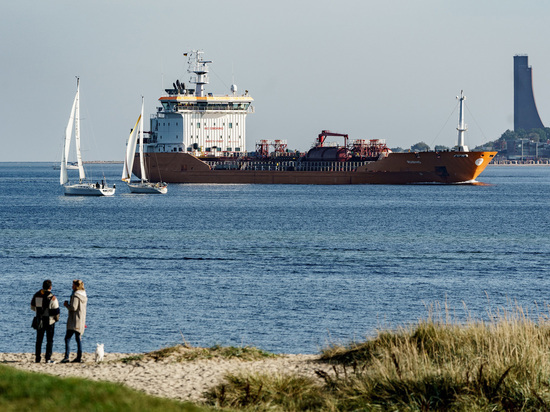 < span class="article__picture-author" itemprop="author">Photo: Global Look Press
Such a targeted restriction is unlikely to significantly interfere with the supply of «black gold» from Russia, but Moscow will still have to think about hedging the risks of sea transportation of energy resources.
The Indian company Gatik Ship Management has not been widely known in the maritime transportation market until recently. Only this year, according to Bloomberg, the company was able to form a large tanker squadron of almost fifty ships, which not only plowed the expanses of the world's oceans, but also constantly called at Russian ports to fill the tanks with domestic oil and finished fuel.
< p>According to American sources, Gatik Ship literally in a matter of months has become the largest transporter of «black gold» from our country. The company transported more than 30 million barrels per flight, the lion's share of which went to India, which quickly became the leader in Russian liquids purchases.
Washington considered the actions of the Indian carrier a violation of anti-Russian sanctions, since the cost of raw materials in such deliveries was not regulated and could exceed the $60 price ceiling that Western countries set for our raw materials in December last year. As a result, the insurance services of the Indian company were denied: mainly, this concerns compensation for losses and expenses associated with a possible oil spill, as well as a ban on the entry of tankers into certain ports and straits.
According to the expert of the Financial University under the Government of the Russian Federation Igor Yushkov, the threat of the US Insurers Club is more likely a preventive measure than a real prohibitive strike on the tanker fleet carrying Russian «black gold».
Since all maritime transport companies soberly assess the risks associated with the transportation of oil from our country to foreign markets at prices that differ from the introduced «ceiling», they most likely have emergency plans in case of emergencies, one of which is the termination of the contract with auxiliary counterparties, in particular, with companies providing hedging against various dangers and risks.
Most commodity exporters over the past two or three decades have become accustomed to using the services of American and British insurers without considering alternatives. Now, most likely, Russia and its friendly partners will have to consider other options. In particular, Moscow and New Delhi have been negotiating for quite a long time on the creation of a joint resource that will provide an opportunity to hedge maritime transport, including not only from bottling raw materials, but also from pirate attacks. It is quite possible, the analyst believes, that in the coming years the fuel market will face a massive transition of tanker companies from Western to the Middle East and even Russian jurisdictions.
According to analysts of the Singaporean trader Trafigura, which specializes in the wholesale trade in raw materials around the world, the oil «shadow» fleet of Russia, transporting hydrocarbons after the entry into force of the Western embargo and the price «ceiling» to various parts of the world, has grown to about 600 vessels, ownership and registration of which, as well as routes, are in the «shadow». And the claims against them from the West, in theory, should be confirmed by the courts. “The fleet is shady for that, so as not to advertise what kind of oil, at what prices and where it transports,” explains Artem Shakhurin, an expert at IVA Partners Investment Company. — Specifically, against certain companies, as in the case of Gatik Ship, sanctions will be taken, complicating their operations, but it will be extremely difficult to introduce restrictions against a significant part of the current carriers of Russian oil.”
In the world market economy, in the presence of a demand for goods and services, administrative prohibitions only give rise to ways to circumvent them, but cannot stop the movement of products if the supply is beneficial to the seller and buyer. India has not joined the sanctions and the «ceiling» of prices for Russian oil, and the American Insurers Club does not have a monopoly in the highly competitive and extremely profitable market for hedging ship risks. domestic companies whose policies are recognized by the countries that have become our main consumers: China, India and Turkey,” says TeleTrade analyst Vladimir Kovalev. — The tanker fleet of Gatik Ship, in the event of a ban by the American Insurers Club, is likely to switch to service with other representatives of the industry, and its vessels may be transferred to other carriers that have no insurance restrictions. Therefore, I believe that this incident will have little effect on the possibility of transporting Russian oil.”