


New sanctions hurt Russia's relations with neighbors
On July 20, the United States and Canada imposed additional sanctions against five Russian credit institutions. One of them belongs to the Unistream money transfer system, from cooperation with which, after the official announcement of the introduction of restrictions, the company's partner banks in the CIS began to refuse cooperation. Whether the domestic money transfer market will change under pressure from the Americans and what other ways it is possible to send money to neighboring states, MK found out from experts.
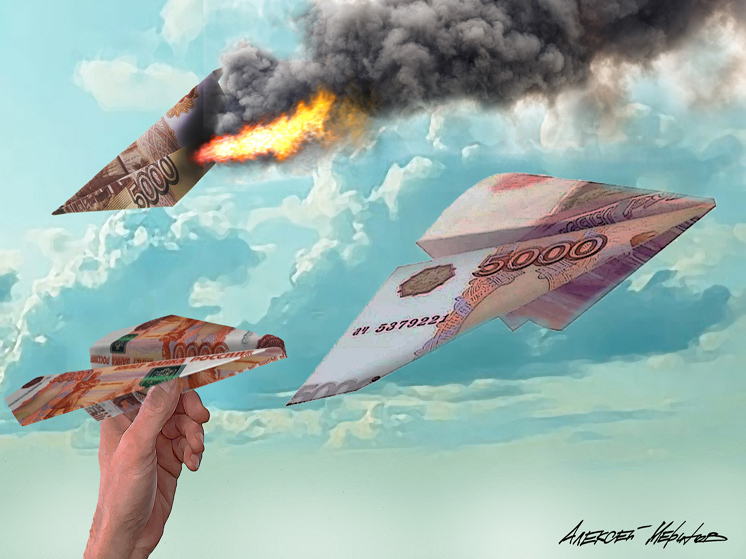
A common feature of banks that fell out of favor with the Americans this time was active work in the foreign exchange market, which is now virtually inaccessible to them.
Now the US SDN list (the name of the document listing organizations under sanctions) includes banks, including the owner of the money transfer system of the same name, Unistream Bank (due to which it managed to enter the top five Russian players in cross-border transfers). The restrictions have already affected the clients of these organizations.
For example, banks that have fallen under US sanctions this time have already recommended cardholders of the Chinese UnionPay payment system not to use them abroad. Being on the SDN list will make it difficult for all five banks to work with dollars and yuan, which financial organizations also warn individuals about. And there are fair fears among experts that customer transactions in other, even «non-toxic» currencies may also suffer.
But that is not all. This time, the Americans tried to inflict one of the strongest blows on the Russian business related to money transfers to the CIS.
When it became clear that the bank operating the Unistream system would fall under US sanctions, cooperation with it began refuse partners in all neighboring countries. First, the two largest banks in Georgia announced the termination of business relations, then they were joined by financial institutions in Armenia and the two largest credit organizations in Uzbekistan. And this is just the beginning.
“It is expected that other banks will also make a decision on this issue in the near future,” said a representative of the Central Bank of this Asian republic. In Kazakhstan, they refused to accept and send money through Unistream, not only large banks, but Kazpost, which had not previously been seen in a strong desire to support anti-Russian sanctions. “The US and the EU, by isolating Russia, are methodically blocking the ways to circumvent sanctions,” explains Maxim Osadchiy, head of the analytical department at BKF Bank. “There are fewer and fewer available destinations for transferring money from Russia abroad.”
So far, not a single bank from Kyrgyzstan is on the SDN list under US sanctions, and, apparently, the Kyrgyz have no desire to get there. In this republic, they very quickly began to refuse cooperation with the domestic payment system, which is so popular with guest workers. In Kyrgyzstan, six banks first stopped working with Unistream, and on July 26 three more joined them, thus, the total number of financial organizations that refused to partner reached nine financial organizations.
“The money transfer system fell under blocking sanctions of the Office Office of Foreign Assets Control of the US Department of the Treasury (OFAC) and this means that it is denied access to the dollar financial infrastructure, so Unistream Bank will be able to continue its business only using rubles and its own infrastructure,” explains Lazar Badalov, Associate Professor of the Faculty of Economics of RUDN University.
In part, the Americans manage to achieve their goals. For example, in April 2023, the volume of remittances from Russia to Kazakhstan decreased by 44% for the first time since their surge in the same month last year. Now it will become even more difficult to implement them, so we can expect an even greater decrease in the flow of remittances to the republic. However, the United States is unable to completely stop them.
Today, citizens still have the opportunity to transfer money to friendly countries using similar systems that have not been sanctioned. According to Osadchy, Russians still have access to transfers to the CIS countries through the subsidiaries of the second state bank of Russia in Armenia, Kazakhstan, Moldova, Serbia and even Vietnam country and Vietnam Investment and Development Bank). This state-owned bank and its subsidiaries are already under US sanctions, so they are not afraid of the introduction of new restrictions, so the Americans still cannot completely deprive Russians of the opportunity to transfer money to the CIS countries.