


Analyst Osadchy: “Support for housing lending has become a time bomb for the economy”
The authorities are tightening the screws on preferential mortgages. The “powers that be” are frightened by the continued high rate of its growth, despite the measures taken by the Central Bank of the Russian Federation to cool the overheated market. In particular, the issue of increasing the down payment from 15% to 20% is being considered. It is curious that before this, financiers and officials unanimously said that it is housing lending that stimulates the development of the construction industry, which is rightfully considered the locomotive of the entire economy. So what is a preferential mortgage for the Russian financial system in the current conditions — evil or good? We sought the answer to this question from the head of the analytical department of BKF bank Maxim Osadchy.
“As Mark Twain said, a banker is a man who will “lend you an umbrella on a sunny day and take it away the moment it starts to rain.” The secret is not at all in the generosity of bankers, but in the fact that the state compensates banks for lost income from issuing preferential mortgages. Lost revenues are the difference between the key rate of the Central Bank of the Russian Federation, increased by 2.5%, and the preferential rate. In addition to the preferential rate of 8%, there are also much lower rates for specialized types of mortgages subsidized by the state. For example, in the case of rural mortgages, the rate range is from 0.1% to 3%.
The key rate, increased by 2.5%, is now 14.5%, and before its last increase by the Central Bank it was 11%. It turns out that the bank receives a subsidy from the state at the rate of 6.5% per annum, and not 3%, as it was before August 15, before the key rate was increased by 3.5%. Consequently, the burden on the budget to subsidize preferential mortgages due to the increase in the key rate has more than doubled! And this is in the context of a huge federal budget deficit, amounting to 2.4 trillion rubles for 8 months of 2023.
—Two weeks after the key rate was raised from 9.5% to 20% on February 28, 2022, the rate on preferential mortgages was raised from 6.5% to 12%. However, now, after increasing the key rate on August 15, 2023 from 8.5% to 12%, the preferential rate remains at the same level of 8%. Expectations of an increase in the preferential rate are spurring demand for preferential mortgages at the current interest rate, and thereby also contribute to the growth of government subsidies.
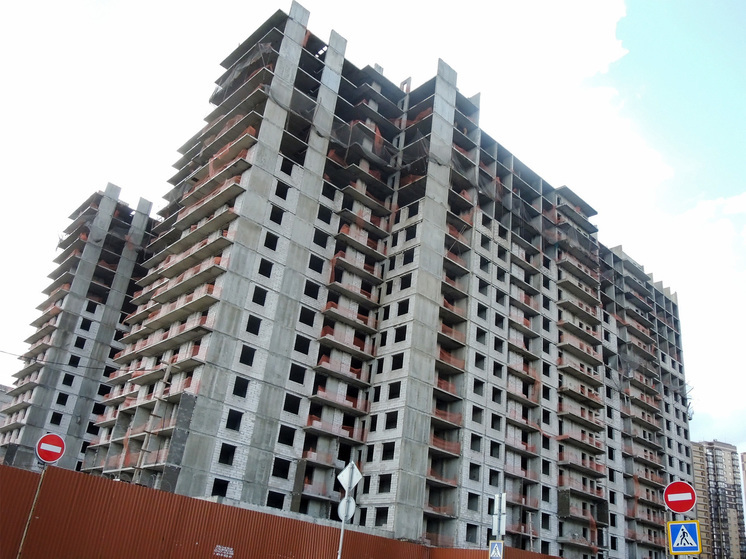
— The main instrument of preferential mortgages is the pledge of rights of claim under agreements for participation in shared construction. As of August 1, 2023, the debt on mortgage housing loans provided to individuals secured by rights of claim under agreements for participation in shared construction — “IZhK on DDU”, a poetic abbreviation in rap style — amounted to a total of 3.8 trillion rubles in the country as a whole.< /p>
Calculations show that the increase in budget expenditures aimed at compensating banks for lost income on preferential mortgages amounts to 133 billion rubles per year. Naturally, this celebration of unimaginable generosity on the part of the state cannot last too long.
— For banks and developers, preferential mortgages are manna from heaven. And it is not surprising that the powerful banking and construction lobby is slowing down the winding down of this extremely dangerous mechanism for the Russian economy. As a result, the preferential mortgage market is overheated. One of the reasons for this overheating was the increase in investment demand for real estate against the background of the depreciation of the ruble — “people's investors” are looking for a “safe haven”, a replacement for foreign currency deposits that have lost their attractiveness. In addition, preferential mortgages distort the housing market and cannibalize market mortgages.
—First of all, the fact that housing prices in the primary market have increased much more than in the secondary market. The reason for the discrepancy is simple: preferential mortgages apply only to the “primary” mortgage. It turns out that housing, turning from “primary” to “secondary”, immediately after purchase depreciates by tens of percent!
“I was repeatedly reproached for this. They say that I am trying to deprive poor people of their last joy — the opportunity to improve their living conditions at an affordable price. However, opponents do not notice an important negative effect: the aggressive rise in prices on the primary market has led to the fact that the debt burden on borrowers not only did not decrease due to the introduction of preferential mortgages, but, on the contrary, increased. The reason is obvious: the aggressive rise in prices for new buildings “ate up” the effect of low preferential rates.
Deformations also occur in the labor market. Preferential mortgages stimulate the growth of the construction industry. The bulk of the construction workers are millions of migrant workers from the former Soviet republics of Central Asia. They send a significant part of their earnings home, thereby contributing to the outflow of capital abroad, and thus supporting the devaluation of the ruble. In addition, millions of guest workers create additional demand for goods and services in the Russian economy, thereby contributing to rising inflation. It is also worth mentioning the increase in crime in places where migrant workers gather. As you can see, no matter where you throw it, there’s a wedge everywhere! And who wins? The players in the preferential mortgage market are banks and developers. Trillions of rubles are circulating in this market, and they will not give up their positions so easily.
— Yes, and the Central Bank is aware of the threats of preferential mortgages and is trying to cool this market. It is clear that quickly curtailing the program would be an unforgivable mistake, because preferential mortgages have become a “support” of the housing market. Remove this “support” and the market will collapse, housing prices will collapse, so the preferential mortgage program must be curtailed with great caution. A possible option is to partially reduce the volume of subsidies and at the same time expand programs for specialized types of mortgages (Far Eastern, rural, etc.) subsidized by the state by curtailing preferential mortgages.
The main danger of a preferential mortgage is that it is a subprime mortgage, that is, “low-quality.” It is aimed at people with fairly low incomes. In conditions of economic shocks, they are the first to go into default and stop servicing their debts, since they do not have savings, a “liquidity cushion.” It should be recalled that the last global crisis — 2008-2009 — was caused precisely by the collapse of the American subprime mortgage.
We should also not forget about the Russian experience: what a fuss a small group of “currency mortgage holders” made during the crisis foreign currency mortgages 2014-2015! Mass actions, rallies and pickets were held in big cities. But there were only about 20 thousand “currency mortgage holders”, while there were millions of “ruble mortgage holders”!
— Tightening of requirements is inevitable. In the context of an escalating geopolitical conflict, economic stagnation and an unstable financial market, inflating a preferential mortgage bubble is fraught with a crisis.
— The Central Bank does not rule out a further increase in the key rate. An increase in interest rates on preferential mortgages is also likely. Therefore, if you want to get a preferential mortgage in time, hurry up.