


What kind of food is best to buy for the winter?
This fall, Russians need to prepare not only for rain and slush, but also for rising food prices. Many food market experts talk about this, and they know a lot about rising prices. This fate awaits almost all products — inflation is not asleep. But among them there are those that are in a special risk zone. MK tried to find out from analysts what these products are, why they will skyrocket in price, and whether it’s time for us to stockpile food. As they say in one popular TV series, winter is coming…
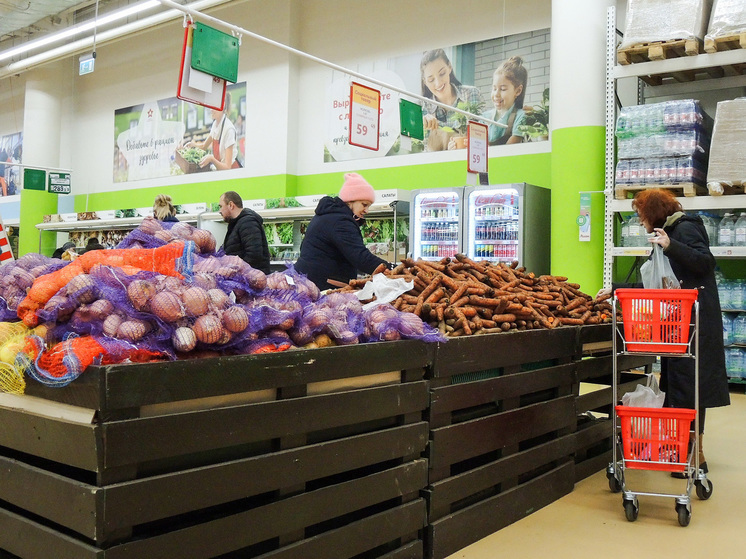
Housewives complain about canned vegetables in the store — terribly expensive! You won’t find 700-gram jars of cucumbers and tomatoes for less than 200 rubles, or even 250. Last fall, 3-liter containers cost that much. Today there is no trace of them.
“I was left without cucumbers, I didn’t buy them on time,” a pensioner I know complains, “And today’s prices are 110-160 rubles per kilo — very expensive.” But it’s profitable to twist tomatoes now. “Cream” costs 45-50 rubles, domestic pepper 60. This is normal. For 200 rubles you can fill four jars — everything is better than buying one in a store…
According to her observation, food prices have already jumped up significantly.
— Until recently, pork, ham, cost 250 rubles on sale, now at a discount of 329, the price has risen by 80 rubles. A neck in general is 554 rubles per kilogram, it was 420. Now we will buy pork, like beef, only for the holidays…
It is believed that this fall the price of imported products will rise sharply: tea, coffee and exotic fruits such as bananas.
A weak ruble, difficult logistics — everything is as always… Bananas did not wait until late autumn, in the summer they were 65 rubles per kilo, today you can’t find less than 90, and in some stores it reaches 140. Coffee is still in price, but imported black tea , a 200-gram pack, the price has risen from 300 rubles to 400.
The surest way to avoid price stress is to stock up on food in advance; fortunately, tea and coffee in glass jars can be stored for months, if not years.< /p>
But prices for Russian products are not going to stand still, preparing for the autumn-winter surge. As you know, manufacturers and processors have already asked their partners from retail chains to introduce new rules of the game by the end of this year. So that they can warn trade about the upcoming rise in prices of supplies not three months in advance, as today, but 14 days in advance. Because the economic situation is changing rapidly.
The Federal Antimonopoly Service is also preparing to combat rising prices. At the beginning of August, she began checking the unreasonable rise in price of pork and chicken meat. The results have not yet been announced. But they are clearly visible on store shelves. Chicken meat from 120 rubles rose in price to 180-210 per kilo.
Experts do not rule out a sharp rise in prices for seafood. This is due to the release of contaminated water into the sea from the Japanese nuclear power plant Fukushima. China will certainly refuse such products with radionuclides, and the lion's share of the Far Eastern catch at world prices will flow into the Middle Kingdom. Well, we will be faced with a shortage and, as a result, a rise in price.
But for now, some types of seafood are becoming cheaper. The saleswoman in the fish department reported that capelin and sea bass lost 30 rubles per kilogram. Well, a jar of red caviar now costs 690 rubles, although in December last year it was around 900. Good luck, and the new year is still far away…
However, there are many more counterexamples. Sugar prices on the world market have risen by 25% since the beginning of the year, and there is no doubt that prices on the domestic market will also creep up. Also for the reason that housewives are starting to wrap and preserve vegetables for the winter. And the main thing is to make jam, by this time sugar always rises in price by 10-15 percent.
According to experts, the price of rice will rise even more, by 30% — a cereal beloved by many, which helps out in all cases of life. We produce an average of 1.2 million tons of rice per year, with domestic needs of 600 thousand tons. However, imported short-grain rice is in high demand, while we grow long-grain rice for rice porridge in kindergartens and social institutions. Previously, we bought it in Thailand, but then the dollar exchange rate was 60-65 rubles, and now it’s 90-95. In addition, prices for short-grain rice on world exchanges have increased by 50%, as the harvest failed in Thailand, the main exporter.
There are two news about dairy products — good and bad. The good thing is that if milk itself rises in price, it won’t be by much. This is a social product, prices are constantly monitored by regulators and antimonopoly officers. In addition, according to MK, large volumes of powdered milk have been delivered to dairies — prices for a liter bottle will definitely not change.
And the bad news is that cheeses, butter and yoghurts will definitely rise in price, and noticeably — because are produced from a natural product; in addition, yoghurts contain various fruit ingredients.
Candidate of Economic Sciences, host of the “Rural Hour” program Igor Abakumov says that the peasants have grown a good harvest for literally all agricultural crops. However, he shares the alarming expectations of Russians regarding the growth of food inflation.
“These are not even expectations, but confidence, because in the countryside there is no fuel for field work,” he says. – At first, diesel fuel became much more expensive, in some regions more than 100 rubles per liter. And now it’s not even 100 rubles. The village's costs for harvesting the crops that will end up on our table will increase by at least 30%. What kind of stabilization of food prices can we talk about?