


The expert assessed the feasibility of the task of doubling the minimum wage by 2030
The President instructed the government to ensure an increase in the minimum wage (minimum wage) by 2030 at an accelerated pace. It should almost double compared to today’s level and be at least 35 thousand rubles per month. If this goal was declared in the February message to the Federal Assembly, now it has already acquired the status of an order to the government, the implementation of which will be personally controlled by the head of state.
By March 15, 2025, the government must submit a detailed report to Vladimir Putin on the work performed. And then report on this issue once every six months.
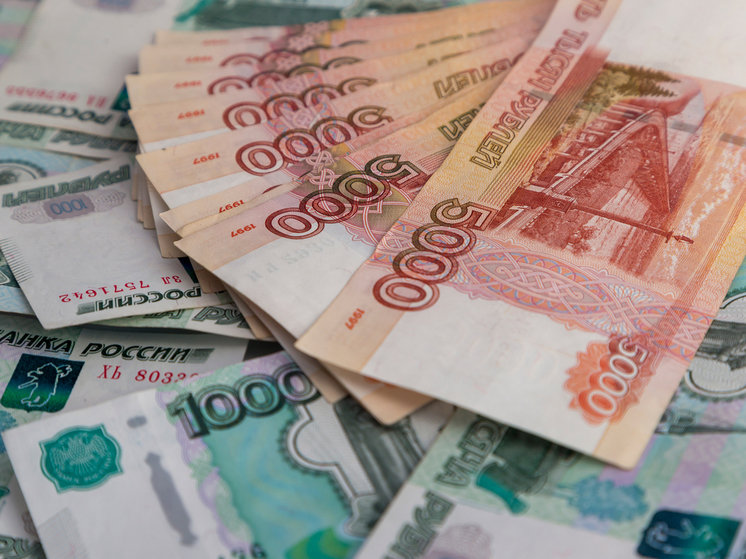
We remind readers that this year the minimum wage is 19,242 rubles. In 2023, this figure was 16,242 rubles, that is, the annual growth was as much as 18.5%. And if we take 2020 as a starting point, then the “minimum wage” in Russia has increased by 1.5 times.
According to official statistics, as a result of increasing the minimum wage, wages will increase for 4.8 million Russians. However, an increase in this payment will also affect the amount of social benefits, salaries in the public sector and in various sectors of the economy.
Needless to say that an almost twofold (compared to 2024) increase in the “minimum wage” over 6 years can significantly improve the well-being of our fellow citizens.
Is it realistic to carry out Vladimir Putin’s instructions (he appointed Prime Minister Mikhail Mishustin responsible) in today’s conditions? When Russia is hit by endless economic sanctions and inflation makes itself felt?
At first glance, the task is difficult, but completely solvable. After all, the minimum wage for the 2024 model is 18.5% higher than it was in 2023. If the Cabinet manages to add about the same amount every year, even a little less, then by 2030 the “minimum wage” may well rise to 35 thousand rubles per month.
But is it realistic to maintain such rates of growth of the minimum wage from year to year? We ask an expert economist about this.
“All the country’s wealth comes from one source: the gross domestic product,” says Candidate of Economic Sciences, financial analyst Mikhail Belyaev. – Unfortunately, ours is not that big, it needs to be increased, we need serious growth rates…
— Yes, we can be proud of this success, it’s good. But what gave us such a leap? We are “unwinding” the military-industrial complex. It is certainly necessary to strengthen the country's defense capability. And it is included in the statistical calculation of GDP. But it should be recognized that this is a specific part of the economy.
— Investment processes in the military-industrial complex are largely based on the budget. The products of the military-industrial complex do not participate in the country's economic turnover. From an economic point of view, it, of course, gives impetus to the development of other areas of activity involved in the production of weapons.
However, outside the orders of the military-industrial complex, these industries cannot move forward further. Their development is hampered by the strict monetary policy of the Central Bank. Under the slogan of fighting inflation, the regulator maintains a high key rate of 16%. But inflation is growing not because the population has accumulated a lot of money, but because of the actions of monopolistic companies that inflate the prices of all manufactured goods.
At the end of 2023, we achieved a GDP growth of 3.6%. In my opinion, it could have been much higher if not for the high key rate. Industries are unable to develop and take out loans in such conditions. Therefore, there is no hope that we will be able to ensure high growth rates every year. The growth rate has to come from somewhere. I don’t see such reserves yet.
— On the contrary, it is easily feasible if the Cabinet of Ministers switches to a policy that stimulates economic development and provides cheap loans to producers. We often hear that companies take out loans even at today's extremely high rates. Yes, they do. But not in order to develop, but to stay afloat.
— Until the Central Bank abandons the current monetary policy, inflation will rise. It, I repeat, is not of a monetary nature, but of a monopoly nature.