


«It would be fair to add one percent for each year of work before the collapse of the Union»
If Russian pensioners are dissatisfied with the level of their pensions, then what can we say about veterans who worked at enterprises in the USSR for more than one year? For some reason, Soviet work experience is valued lower than modern pension points when calculating payments. At the same time, labor service in the Union was much stricter than today. They did not stand on ceremony, and slackers and parasites could be sent away for 101 kilometers.
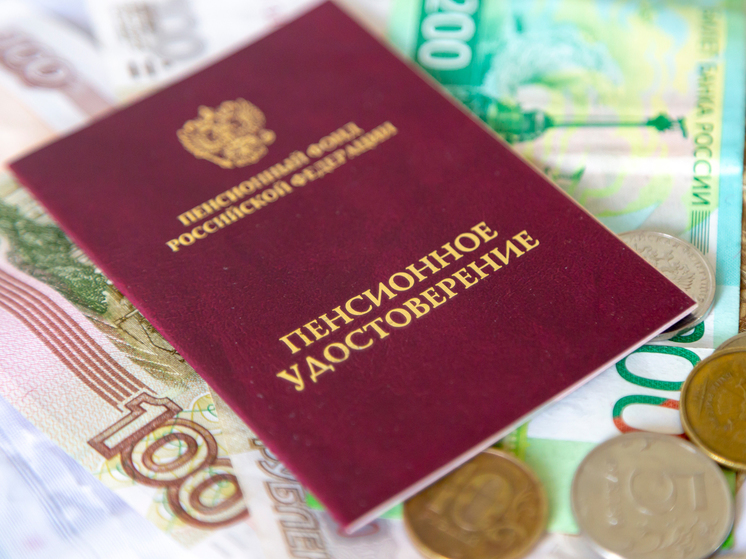
It is not surprising that reports in various media about additional payments due to pensions for work during the Soviet period are of particular interest to readers.
According to the professor of economics at the Russian Economic University named after G.V. Plekhanova Yulia Finogenova, veterans are entitled to a one percent pension increase for each year of work in the USSR until 1991. And if a person continued to work in perestroika Russia, then for the period from 1992 to 2002 he can count on an additional 10% to his pension.
A simple arithmetic calculation shows: if a citizen has, say, 7 years of work at an enterprise during the existence of the USSR, and if he still worked until 2002, he needs to add 17% to his existing pension. It turns out plus 3-4 thousand rubles a month — for some people this amount will be enough to pay utility bills.
Could it be that veterans have no idea about such an indexation of Soviet experience? Maybe.
We simply do not know our pension rights, just as most people do not know, for example, that the poor are entitled to a subsidy from the state for paying for utilities — if it exceeds 20% of the family budget. Agree, many fellow citizens are simply not aware that there is such financial support from the state and for this reason do not seek help.
So in the situation with the additional payment to the pension for Soviet work experience, we also may not know anything. And the authorities, for well-known reasons, are in no hurry to enlighten us.
Although indexing old people with Soviet experience would come in very handy. After all, it was they who raised virgin soil and sent Gagarin into space… In general, they handed over the country’s economy to the current authorities like a baton. However, for some mysterious reasons, officials value a year of work in the USSR in monetary terms lower than in modern Russia, where pensions are calculated by points.
There is probably a document on this matter that is hidden away from the public eye. All you and I can do is go to the Social Fund and write an application for indexation of our Soviet experience — who has how much of it. And, of course, refer to the number of this very law.
“I don’t know anything about such a document,” Associate Professor of the Russian University of Economics tells us. G.V. Plekhanova Lyudmila Ivanova-Shvets. — Although I closely monitor pension legislation. Those who are over 80 years old (these people worked almost their entire lives in the USSR) receive a double fixed pension. And I don’t know that there were recalculations for each year of work in Soviet times.
— When applying for a pension, there is a certain methodology that converts Soviet work experience into pension points. It is quite complicated, this methodology, we will not touch on it. But according to it, it really works out: the longer the Soviet work experience, the lower the person's pension compared to the current period.
Let's take two people 75 and 65 years old. Both have Soviet work experience, but the one who is 75 years old receives a pension slightly less than the one who is 65. Because the first worked longer in the USSR, «lingered on», and the second — in modern times.
Including those who retired, say, in 2015, are in a less advantageous position than those who stopped working in 2020. All for the same reason.
— Periodically, such conversations arise in our society — about the upcoming indexation of the Soviet period of work. We have many initiatives and proposals regarding pension reform, but not all of them become laws or even bills. There are no official documents on this matter.