


Experts expect higher prices and instability of the ruble exchange rate against toxic currencies
On Russia Day, the US Treasury introduced new sanctions against the financial sector of our country. The most painful restrictions turned out to be against the Moscow Exchange, the National Clearing Center (NCC) and the National Settlement Depository (NSD). In this regard, the Central Bank of the Russian Federation announced the suspension of trading in the dollar, euro and even the Hong Kong dollar from June 13. MK found out what new American sanctions threaten the domestic economy and Russians.
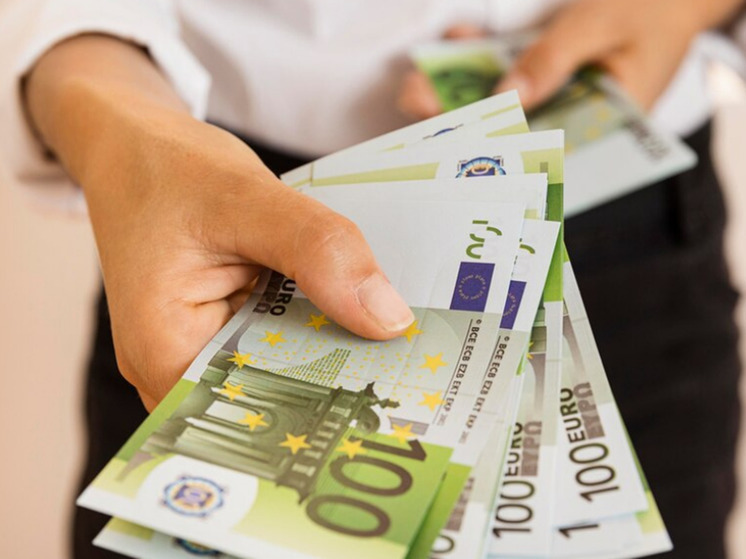
The Moscow Exchange announced the suspension of trading in the US dollar and euro from June 13 due to the introduction by the US Treasury of restrictions against the exchange itself, NSD and NCC. The Central Bank confirmed the cessation of trading in dollars and euros, recalling that transactions with other currencies will take place as usual. However, on June 13 it turned out that trading in the Hong Kong dollar on the Moscow Exchange was also stopped. The Central Bank of the Russian Federation explained this decision by the fact that this currency is strongly tied to the US dollar — which carries risks when conducting transactions.
The news of June 13, however, also came from the US Treasury itself, which allowed transactions with the sanctioned Moscow Exchange, NCC and NSD until August 13, and for transactions related to oil products, gas and other energy resources — until November 1. This was done, of course, exclusively in American interests. «Extending the deadline for energy transactions until November 1, 2024, is due to the critical importance of energy resources for the global economy,» says financial analyst Oleg Orlov. «The introduction of immediate sanctions could cause significant disruptions in energy supplies, which would lead to higher prices and instability in the global market.» It seems that before the US elections, the White House leadership is trying to prevent «distortions» in the fuel market. «The decision to allow transactions with Russian exchange structures until certain dates is due to the US desire to avoid a sharp energy crisis,» says BitRiver financial analyst Vladislav Antonov. «A ban on transactions with the NCC would immediately block settlements on Russian energy exports, which could critically destabilize world markets. Therefore, the US has provided a «window» for an orderly winding down of this activity.»
However, Russian citizens are much more interested in learning why the Moscow Exchange, NCC and NSD, in principle, obediently agreed to implement the decisions of the US Treasury, although their infrastructure is located on Russian territory and the Americans do not have access to it. The fact is that all these structures are essentially intermediaries between Russians and their partners abroad. “All transactions are actually concluded not directly between the participants, but with NCC, which acts as a guarantor of the fulfillment of obligations,” Antonov explained. And these counterparties “from the other side” now do not have the right to cooperate in any way with Russian structures after the deadlines established by the US Treasury. Most international payments and transfers in dollars and euros go through banks and financial institutions located outside of Russia, which are subject to international rules and laws, including sanctions.
Well, the calculation of the dollar and euro exchange rates after the introduction of sanctions will be carried out using alternative methods. “To establish the official exchange rate, the Bank of Russia will begin to use bank statements and information coming from digital platforms of over-the-counter trading,” explained Associate Professor of the Department of Global Financial Markets and Fintech at the Russian Economic University. Plekhanov Maxim Markov. “The regulator developed and adopted this procedure back in October 2022 in the event of sanctions being imposed against the Moscow Exchange.” The market rate will be set based on transactions in the interbank market. “All over the world, currencies are traded this way,” says Vladimir Bragin, director for analysis of financial markets and macroeconomics at Alfa Capital Management Company. “In Russia, the share of over-the-counter trading also gradually grew: according to the Central Bank, in May the share of the over-the-counter market in the total volume of currency trading exceeded 58%.” Also, to set the rate, the ratio of supply and demand for currency for foreign trade transactions, as well as cross rates through third currencies, for example, through the Chinese yuan, can be used.
The current situation will affect Russians in several directions at once. “The share of settlements in dollars and euros will decrease at a fairly rapid pace,” says Natalya Milchakova, leading analyst at Freedom Finance Global. “Other payment and settlement technologies will also probably be used, for example, dollars and euros can be purchased through the infrastructure of friendly countries either for rubles, or for yuan at a cross rate, or for the currencies of friendly countries also at a cross rate.” So there will be no currency paralysis, but all this will cause the numbers on the price tags in stores to increase. “Sanctions may lead to an increase in prices for imported goods and services, since payments in dollars and euros will become more complex and expensive,” explains Oleg Orlov. “This, in turn, may cause general inflation and an increase in the cost of living.”
Money from dollar and euro accounts may become less accessible for withdrawal, especially in large amounts. In addition, banks may begin to set their own rates and apply high spreads (the difference between selling and buying currency), which will make currency exchange less profitable for customers. “Now offers for the sale of dollars and euros reach 200 rubles,” said financial analyst Alexey Krichevsky. “But this is a common practice for banks to make money on speculation, and the exchange rate will correct itself quite quickly.” In general, citizens will have to adapt to life in a new reality, where there will be very little room left for dollars and euros.