


Tariffs are still the same for both the poor and the rich
From July 1, Russians can expect another indexation of utility tariffs — by an average of almost 10%. And according to tradition, experts started talking about the fact that payments for housing and communal services are growing faster than our incomes. The Accounts Chamber proposes to develop a methodology that “will allow assessing the ability of Russian families to pay utility bills in full.” In order to customize targeted support for low-income segments of the population as accurately as possible.
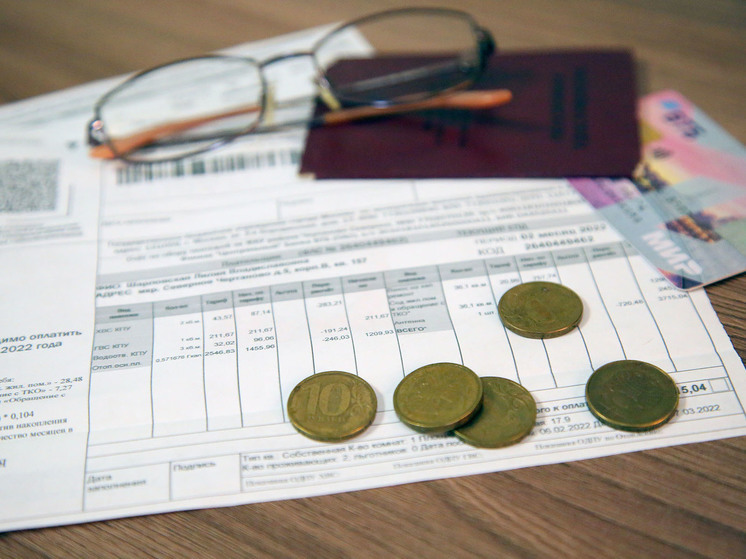
We can say that this idea is as old as the world. And it is discussed in Russia as often as the issues of indexation of pensions for working pensioners were once debated. Just a month ago, the parliament discussed an initiative to reduce the threshold for allocating subsidies from 22% of total family income to 15, or even 10%, as established in Moscow.
It is easy to guess that there was no money in the budget for such a responsible step. After all, half the country could very well become recipients of such a social benefit. What funds will be used to prepare for winter, repair boiler houses and maintain pipelines?
Meanwhile, the chairman of the Housing Union, member of the Committee on Housing and Utilities of the Chamber of Commerce and Industry of Russia Konstantin Krohin believes that there is money for subsidies for beneficiaries. As an expert, he claims that the utility budget itself is used extremely inefficiently. And if order is restored, about 500 billion rubles will be freed up, which can and should be used to pay subsidies to needy Russians.
By the way, about those in need. Their total number is unknown. Many of our fellow citizens simply do not know that the government is obliged to compensate family expenses if they exceed 22% of family income. And those who know are in no hurry to take advantage of such a benefit. You need to collect a lot of documents and visit government offices. And this right must be confirmed twice a year.
“There is a hidden message in the Accounts Chamber’s position,” says an expert from the Popular Front project. Analytics» Pavel Sklyanchuk. — In the housing and communal services sector, we have a flat tariff scale: the cost of resources is the same for everyone — both the rich and the poor. The availability of services is determined by the lowest paying categories of the population, which calls into question the economic justification of tariffs. A classic comparison: a liter bottle of mineral water in a store costs 50 rubles, and a cubic meter of tap water purified by a water utility costs 33 rubles. With such an imbalance, how can you maintain utility networks in reliable condition?
In many countries around the world, utilities pay 20, 30 or even more percent of the family budget. This is the main item of expenditure, along with food or medicine.
— Let's not compare ourselves to other countries. Is it realistic to reduce the threshold for allocating such subsidies to 15%, or, as in Moscow, to 10%?
— This is an old story. There are no legal obstacles in this direction; regions can independently set the maximum share of expenses for housing and communal services. However, in my opinion, adopting such a rule at the federal level is simply good intentions. Today, more than 4 million families receive subsidies. And if the government takes such a step, then, given the wide range of recipients, it is unclear how much additional funds will be needed from the federal budget.
The subsidy is considered as a temporary measure. It is assumed that at some point a person will improve his financial situation and abandon it. But since the subsidy system has been in place in Russia for many years, it has become permanent instead of temporary. It does not motivate people to increase their income. What is the point of a benefit recipient increasing their salary if the entire increase goes to pay for utilities?
— Many complain that applying for a subsidy requires collecting a large number of documents and spending a lot of time. Can this procedure be simplified? After all, all information about citizens is already in the database.
— Not all Russians have computers or the Internet. But I agree that some rules for recipients could be simplified. For example, apply for benefits not twice a year, as today, but once. After all, in 6 months, it’s unlikely that anything will change for a low-income family. There is no need to bother pensioners living alone, who must each time prove their financial inability to pay for utilities. It is difficult for them to hope for any material improvement.
I believe that after some time the country will lower the utility standard for receiving subsidies. How this happened with the indexation of pensions for working pensioners. But today is not the best time to lower this threshold.