


Potatoes are stressed by frosts, and buyers are stressed by their cost
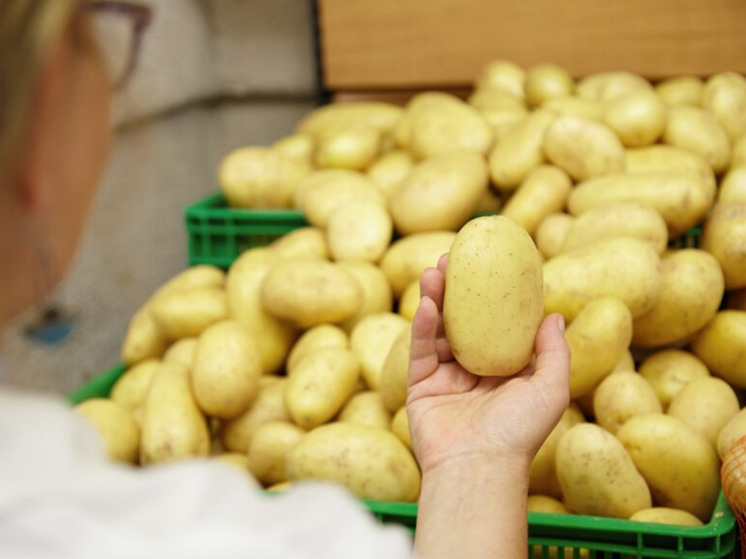
According to Rosstat, fruit and vegetable products increased in price by 1.4% during the week from June 18 to 24. This seems tolerable for the buyer, but there are nuances that are unlikely to please the consumer. Thus, potatoes, our second bread, “fall out” of the average statistical reporting. In just one week, they have increased in price by 7.6%. If last year’s tubers (not the first freshness) are still holding at 30 rubles per kilogram in online retail, then young and early ones cannot be found for less than 70 rubles. This, by the way, is almost 40% higher than it was a year ago.
For some reason, cucumbers have gone up in price a lot. Summer residents in the Moscow region are already tired of picking fruits in their greenhouses, they are growing like yeast. And in the store, cucumbers have become 3.2% more expensive in just a week.
All hope is for discounts. For vegetables they are in the chain trade from 15% to 36% – for onions. But all this is in the moment, whether there will be a promotion or not. But in general, the prices are steep. Carrots — 63 rubles per kilogram, young white cabbage — 124…
In general, in the vegetable market the obvious is the incredible. Over the past years, we have become accustomed to the fact that from the end of June until October, the country experiences a general vegetable deflation — the notorious seasonal factor. When the most thrifty Russians buy bags of vegetables for their borscht soup for the winter.
However, such a pleasant trend has not yet been observed. Prices for the same potatoes have increased by almost 70% since the beginning of the year. As the farmers themselves explain, this is mainly due to the fact that product imports from Egypt have decreased. A discussion even broke out on specialized websites: can our Astrakhan potatoes replace Egyptian ones? The Potato Union of Russia “MK” authoritatively answered that it would not be able to do it fully. Since early potatoes come to us from Egypt in February, and Astrakhan potatoes are just beginning to “unfold.”
There is no information about how many tubers the food market did not receive from Egypt (and by whose grace we pay 70-80 rubles per kilogram). But the truth is that Egypt is not to blame for anything here. The Ministry of Agriculture initially requested less early potatoes for import, since large reserves of last year's potatoes remained (and still remain!) in the country. Why it does not appear on the shelves in a timely manner is another question, to which the concerned departments have not yet given an answer. As a result, fried potatoes or the much-loved mashed potatoes can become a luxury for Russians. As for seasonal deflation, it seems that we will have to wait a little longer. Harvesting is just beginning in July-August. So, at best, a price reduction can be expected in September-October, not earlier. According to Tatyana Gubina, the head of the Potato Union staff, the May frosts have nothing to do with it, they did not directly affect prices. “But the products were stressed. The dates for planting (and, accordingly, harvesting too) early vegetables have moved forward.”
Of course, we are all interested in summer prices today. But there is not a word about them in the Potato Union: comments on this matter are prohibited by the Federal Antimonopoly Service. However, even without forecasts it is clear that until the beginning of autumn, that is, two more summer months, they are unlikely to decrease significantly.
Head of the Potato Gene Fund Department of the Federal Potato Research Center named after. Lorkha, Doctor of Agricultural Sciences Evgeniy Simakov characterizes the current difficult agricultural year in a matter-of-fact way:
“It’s a leap year, and in my memory there has never been a time when a leap year was successful in agricultural terms,” explains scientist. — 2024 is no exception. Somewhere in Russia the soil dried out, somewhere it flooded… They promise that natural disasters are about to end, but they are still making themselves felt. There is no point in counting on last year's successes. There will not be that surplus of potatoes — 82 million tons in industrial production, which we had last year. Both in terms of yield and gross harvest. Many farms did not really plant potatoes due to bad weather, some even refused to grow them this year.
— Now young potatoes have already arrived from the south of Russia — from Astrakhan, Krasnodar, Rostov. In stores I saw a little over 40 rubles per kilogram. But there will be no excess, you need to keep this in mind. The peasants' expectations regarding the vegetables of the borscht set are also restrained.