


Experts assessed the prospects for the real estate market in the second half of 2024
From July 1st, the real estate market will experience big changes. This is due to the fact that from this day on the country will end the program of preferential mortgages for new buildings at 8% per annum, which in recent years has been the main driver of growth in both the housing lending market and the real estate market as a whole. The authorities hope in this way, on the one hand, to save considerable budget money that was spent on subsidizing the preferential interest rate, and on the other hand, to reduce the rise in prices for primary housing. MK found out from experts how justified these hopes are and how the market will change after July 1.
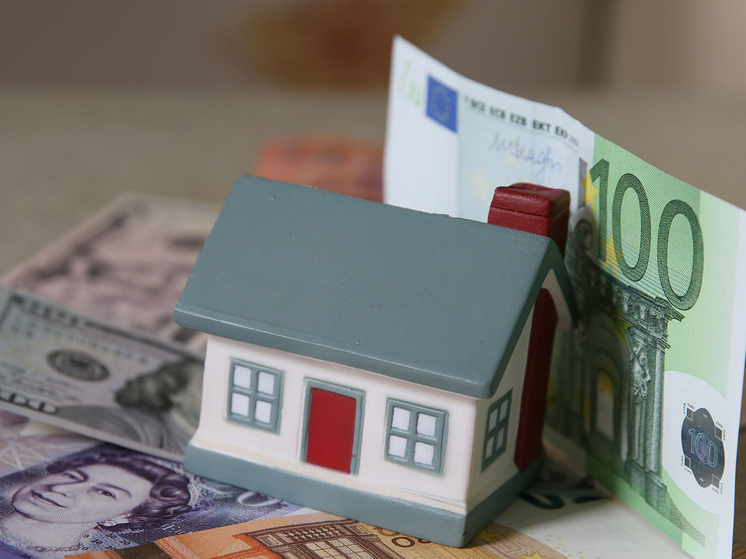 Photo: ru.freepik.com
Currently, there are seven federal preferential programs in Russia that allow you to purchase housing on credit at a low rate. However, from July 1, there will be six of them: preferential mortgages — the most widespread — will be completed. Let us remind you that under this program it was possible to receive up to 6 million rubles with an initial payment of up to 30%. The mortgage term is up to 30 years. Also, the rules for family mortgages with a rate of 6% are likely to be updated. It, too, was supposed to end, but at the proposal of President Putin it will be extended for another six years — until 2030.
The remaining programs — rural, Far Eastern and Arctic, military, mortgages for «IT specialists» and for new regions — They continue to function unchanged for now.
Note that according to government data, 60% of the mortgage market was accounted for by subsidized programs, and in the primary housing market the figure reached 90%. In total, since the launch of preferential mortgages, about 1.5 million housing loans worth approximately 5.8 trillion rubles have been issued.
“The Bank of Russia is moving away from the mass mortgage program, since the negative effect of it (increasing prices in the real estate market, the price gap between the cost of square meters in the primary and secondary markets) exceeded the positive one (increasing housing affordability).
One of the main reasons for the increase in the cost of square meters is the use of preferential conditions for investment purposes, and not just the desire to fix payment terms that are favorable to oneself personally. That is, the market was heated up mostly by “outbids” using government programs as a convenient credit instrument. Hence the introduction of a legal norm on the one-time issuance of mortgages to one person, which was introduced back in December 2023.
The next logical step was the curtailment of mass preferential mortgages — which simply happened in the form of non-extension of the program after its completion on July 1, 2024. Instead of mass issuance, the regulator insists on targeted support for certain segments of the population or territories, so a wide pool of preferential programs remains on the market: IT, rural, Far Eastern and Arctic, military, for new regions and family.
If we talk about the popularity of the programs, then the most popular over the entire period of operation were two — the same preferential at 8% and family at 6%. Periodically, one or the other would break out in demand.
However, even taking into account the curtailment of one popular program and the change in the conditions of another, I would not expect a decrease in the cost of square meters. Only the rate of lending will change. Possible consequences include a slowdown in housing price growth to the level of inflation (currently it is slightly more than 8% per annum), a decrease in demand in the primary market, and an increase in the attractiveness of the secondary market. That is, the prices of square meters in terms of annual values in the country as a whole will still grow, but not at the same rate as in 2020. Gradually, the overheating of the real estate market, primarily the primary market, will decrease, but prices on the secondary market will begin to catch up with the primary market.
“The market has long been ready to wind down the preferential mortgage program for new buildings. A much greater impact on the market now is exerted by the fact that many banks have already exhausted their limits on other government programs, including family mortgages. Currently, banks are waiting for redistribution and increase in limits on preferential programs from the Ministry of Finance. If the limits are not increased, then we do not expect a collapse in prices, and developers will not work at a loss. Banks are also not eager to somehow shake up this low-income segment in the absence of government support.
As for prices per square meters, you should not expect sharp fluctuations in either direction; the price will be approximately at the same level as now if we are talking about “primary”. Only individual discounts from developers are possible for some properties. Liquid “resale” prices will continue to grow, matching the price of new buildings. The old housing stock will not show such growth, in some cases even falling in price.”
“On the one hand, after July, there will be no more growth drivers for new buildings, so prices will have to, at a minimum, stop. On the other hand, developers will try by all means to retain buyers and prevent sales from collapsing. For this purpose, banks are already coming up with various kinds of “short-term” mortgages, where, for example, for the first 5 years the loan is serviced at 8% per annum, and then changes to the market rate. And such offers will come more and more often — we will probably see cases from different banks with no fees for the first two or three years or before the keys are issued with subsequent recalculation of the loan. Another thing is that for such offers the buyer will most likely pay by increasing the price of the apartment. Therefore, in the coming months we can expect a new round of conflicts between the Central Bank and the union of developers and banks, which will offer ever new sales and lending schemes. As for the secondary market, the trend towards a gradual decline in prices will continue, especially in the context of a very likely increase in the key rate at the Central Bank meeting in July.”
“Of course, After the completion of the preferential mortgage program for primary housing, the demand for new buildings will subside. But this is unlikely to affect prices. You can expect only a slight reduction in the price per square meter, and for a short time. After the completion of the program, the market will begin to level out, the “primary” will pull along the “secondary”, which for a long time was on the sidelines. In general, this is good for the market, because it will restore the disrupted balance of supply and demand. Most likely, additional offers will begin to appear from developers and banks that will offer mortgages at a lower interest rate. But we should not forget that this is not generosity on their part, but merely a redistribution, since the price of apartments with a subsidized interest rate is usually higher.”