


Experts named the consequences of such a step for the country's economy and citizens' wallets
The topic of the upcoming July decision of the Central Bank on the key rate has acquired exceptional urgency. This is evidenced by the unusually high degree of frankness with which representatives of the regulator speak on this matter. The other day, Elvira Nabiullina allowed the rate to increase to 20%, familiar to Russians from the shock February 2022. The reason is clear: something must be done about the inexorably growing inflation. That is, using limited means of monetary policy (MCP) to solve a problem of enormous social significance and resonance.
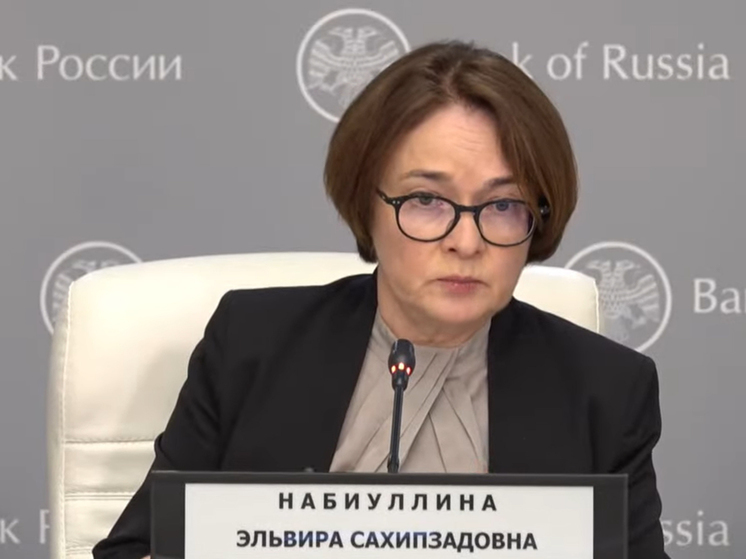 Photo: cbr.ru
According to Rosstat, annual inflation as of July 1 accelerated to 9.22% from 8.61% a week earlier. “We have largely deviated from the baseline scenario,” Nabiullina admitted. Meanwhile, at the June meeting of the Board of Directors of the Central Bank, its participants differed in their positions: supporters of raising the rate pointed, in particular, to the growth of inflation expectations, and supporters of maintaining it (at the level of 16%) — to the insufficient effectiveness of monetary policy. According to the latter, there are a number of “autonomous” factors that minimize or negate the impact of the rate. This is, for example, a shortage of labor resources, forcing employers to increase wages to retain workers. As a result, consumers buy a lot, including on credit, and the demand for goods and services significantly outstrips supply.
In general, one gets the feeling that inflation exists on its own, and the Central Bank’s monetary policy exists on its own. And no matter what efforts the regulator makes, no matter how much the rate is raised, consumer prices will live their own life. Is this so?
“Inflation and the monetary policy of the Central Bank of the Russian Federation are in the closest relationship; it is a single system,” says Denis Astafiev, founder of the investment company SharesPro. – In the fight against inflation risks, the regulator will act in its own standard ways — tighten the conditions for issuing loans and increase the key rate. My forecast for the rest of the year is 17-18%. As the head of the Central Bank correctly noted, the decision is determined by inflation indicators. Which, given high budget expenditures on the military-industrial complex and an increase in domestic demand, can be at least 9-10%.»
At the same time, Astafiev notes, inflation is also influenced by external “stress” factors — geopolitical risks, the increase in sanctions pressure, situational restrictions in matters of international payments, parallel imports, logistics (increasing delivery times) and procedural aspects.
“It is unlikely that the Central Bank will raise the rate to 20%, although inflation shows no signs of slowing down,” says Valery Tumin, a member of the Expert Council for the Development of the Digital Economy under the State Duma Committee on Economic Policy. “This could have a negative impact on economic growth, increase the burden on the budget and even increase the risk of default. It will be more difficult for businesses to obtain loans and invest in development. In turn, a decrease in investment activity is fraught with job losses and increased unemployment. At the same time, the rate remains the most important tool in the fight against inflation; its importance should not be downplayed.”
An increase in the key rate by 4 percentage points at once — from 16% to 20% — will mean a very strong signal to the market from the Central Bank. Most analysts predicted growth of a maximum of one or two percentage points. Such examples have already happened in the past, recalls Aleksey Lossan, an expert at the financial marketplace Compare: on February 28, 2022, against the backdrop of large-scale sanctions, the regulator raised the rate from 9.5% to 20%. So there is no doubt about his determination.
“At the same time, you need to understand: in Russia there are quite a lot of industries that enjoy support from the budget and various kinds of incentives, which ultimately affects the growth of inflation,” notes Lossan. — Essentially, a certain part of the economy is excluded from the competitive environment and receives loans not at market rates. For a long time, such a market was the mortgage lending sector, but from July 1, preferential mortgages for new buildings have been canceled — this will certainly have a certain effect, albeit with some lag. Therefore, we cannot say that the key rate does not affect anything.”
The key rate of 16% has been maintained since December 18, 2023, since then “a lot of water has passed under the bridge.” Experts agree: in the current conditions, leaving the rate at the current level for another month is tantamount to an even greater acceleration of the inflation spiral, says Elman Mehdiyev, founder of the Creditcheck service. As the modern experience of other countries shows, only strict monetary policy can lead to a reduction in inflation. Yes, such a policy sometimes means some “slowdown” of the economy, but we cannot allow overheating or too rapid growth in certain sectors. Even preferential loans can become its source, as happened in the case of preferential mortgages, which led to a general rise in price per square meter and, as a result, to a decrease in the availability of the mortgage itself.
“For purely psychological reasons, the Central Bank does not will raise the rate to 20% — the level at which it was already in February 2022, says Igor Nikolaev, chief researcher at the Institute of Economics of the Russian Academy of Sciences. “However, the regulator’s monetary policy clearly affects inflation, restraining it to some extent. The problem of the Central Bank is that it has to act contrary to the state’s budget policy, aimed at stimulating demand and provoking an increase in inflation. It turns out that the two most important strategies are butting heads. Moreover, the Central Bank has no chance of winning this confrontation. This is a clinch, a stalemate.»