


«Consumer activity is not cooling down»
Both of today's events — the Central Bank's decision to raise the rate from 16% to 18%, and Elvira Nabiullina's subsequent press conference — look extraordinary. Their main point and nerve was the question asked to the head of the regulator by journalists: «Why does the increase in the key rate not achieve the desired effect in full?» All other topics discussed on July 26 are just a side dish to this main, extremely spicy dish.
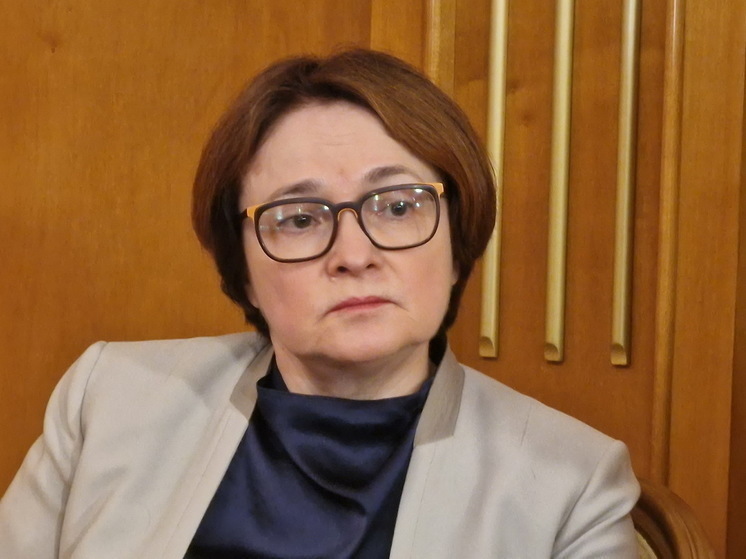
In fact, the situation contains a very obvious seed of conflict that goes beyond the Friday discussion. This is indicated by Nabiullina's categorical nature, and the questions addressed to her, and what is objectively happening in Russia today with consumer prices, with the money supply, which is growing in the economy regardless of the actions of the Central Bank.
«Earlier, we named four triggers for raising the rate,» Elvira Sakhipzadovna said, justifying this step. «All of them have been realized. First, stable inflation is increasing. Second, consumer activity is not cooling. Third, the positive gap in the economy is not decreasing, and the rigidity of the labor market is growing. Fourth, new inflationary risks associated with sanctions have been realized.»
According to the Central Bank Chairperson, in the first half of the year the economy experienced the maximum overheating in the last 16 years; it was higher only before the 2008 crisis.
«The reserves of labor and production capacity are almost exhausted, the shortage of these resources may lead to a situation where the rate of economic growth will slow down, despite all attempts to stimulate demand, and the entire stimulus will go into accelerating inflation. In essence, this is a stagflation scenario, and it can only be stopped at the cost of a deep recession,» — this is why, as Nabiullina explained, it was impossible to do without additional tightening of monetary policy. In addition, the growth in demand for loans significantly exceeded the Central Bank's estimates, although in the last six months the key rate has somewhat restrained this dynamic.
At the meeting with the press, the extremely relevant, painful topic of cross-border payments was also raised, which, in particular, Chinese banks do not accept from Russian exporters due to the risk of secondary sanctions. Today, as experts admit, this problem seems insoluble. «Companies are actively looking for ways to make payments,» — Nabiullina's answer was extremely diplomatic.
In different variations, the head of the regulator was asked the same question, which in the version of the MK correspondent sounds like this:
«Although the Bank of Russia kept the rate at a fairly high level for six months, inflation did not decrease, contrary to January forecasts. Has the Bank of Russia attempted to combine its efforts to combat inflation with other agencies? If so, what did they lead to? And can you somehow explain: if the 16% rate did not slow down inflation, then why not raise it, say, immediately to the required level, in order to achieve the desired goal by the end of the year?»
Elvira Nabiullina's arguments turned out to be exactly the same as in other similar cases. The main thesis is that the Central Bank's monetary policy (MP) is working: last year, the rates of inflation and lending obviously responded to the tightening of the MP. If not for these actions, today we would have had much higher rates of growth in consumer prices. «However, a rapid reduction in inflation to the target of 4% is not really happening,» Nabiullina admitted. As for the interaction of the Central Bank with other departments, each has its own tasks: the Central Bank's competence is monetary policy, the regulator influences aggregate demand. And the government, in turn, influences the budget, due to the balanced policy of the budget rule.
All this, of course, is wonderful, but what to do with the complex of obvious and latent risks and problems that experts consistently point to in connection with the equally consistent tightening of the MP?
It is obvious that an ever-higher rate leads to a decrease in the purchasing power of the population; loans become unavailable to most businesses and citizens; small and medium businesses (the backbone of the economy) are suffocating from a lack of working capital; new projects are frozen, current ones are curtailed; expensive money does not allow companies to invest in new technologies, in the modernization of production; manufacturers and sellers are forced to shift increased costs to end consumers; prices for goods and services are rapidly growing, and salaries — alas. And so on — ad infinitum.
The regulator's actions are unable to break this vicious circle. At least for now. Now a new step has been taken: after 7 months of maintaining the key rate at 16%, it was raised by two percentage points at once. The financial market is impatiently waiting: will the measure work and will it finally slow down the growth of prices. Ordinary consumers, infinitely far from the cunning decisions of the monetary authorities, are waiting for this with no less interest.