


«Funds settle in the stock market»
Last year, the combined wealth of all dollar millionaires increased by 4.7% to $86.79 trillion. The latter figure is an absolute record, the achievement of which was facilitated, first of all, by two factors — a decrease in inflationary pressure and the recovery of world markets, according to the annual World Wealth Report by Capgemini. Meanwhile, a completely natural, but rarely heard question arises: what is the benefit here for the global economy and civilization, for the 8 billion ordinary inhabitants of planet Earth? And it turns out that there is no special effect from the swelling of these incredible capitals.
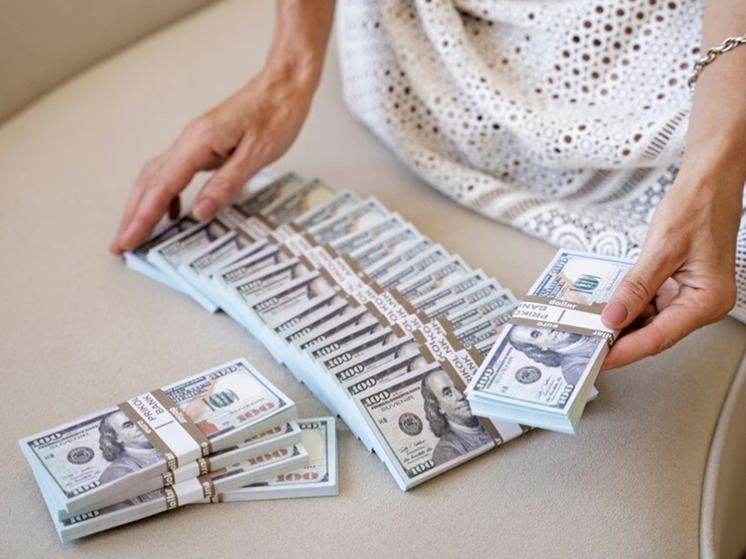
Statistics provided by researchers from Capgemini show that the number of dollar millionaires (high-net-worth individual, HNWI) increased by 5.1% in 2023 and reached 22.88 million people. We are talking about people or households who own liquid assets (money in bank or brokerage accounts) worth $1 million or more. Financial experts distinguish two more categories: Very-high-net-worth individuals (VHNWIs) — people or households whose liquid assets are estimated at between $5 million and $30 million; Ultra-high-net-worth individuals (UHNWIs) are people or households that hold more than $30 million in their accounts.
North American millionaires were particularly notable last year: their total wealth grew by 7.2% (to $27.5 trillion), in Europe the figure increased by 3.9% (to $18.9 trillion), and in Asia by 4.2% (to $25.7 trillion). Only African rich people were unlucky: their capital “dried up” by 1% (to $1.8 trillion).
According to a Capgemini survey, 21% of millionaires' capital was invested in stocks in the first quarter of 2024 (versus 23% a year earlier), 25% (34%) in cash and equivalents, 20% (15%) in fixed income assets, 19% (15%) in real estate, and 15% (13%) in alternative instruments. It is also noted that in 2023, HNWIs changed their investment tactics and reduced the amount of cash they held.
According to another rating – from Forbes Real Time Billionaires, the list of the richest people on the planet is headed by the founder of Space X, Tesla and owner of X Elon Musk with $207.9 billion. In second place in terms of wealth ($204.4 billion) is the founder of Amazon Jeff Bezos. In third place ($203.9 billion) is the head of LVMH Bernard Arnault. The capital of the richest businessman in Russia Andrey Melnichenko (58th place on the Forbes list) is estimated at $25 billion.
These figures correlate with data from a report by the international organization Oxfam. Moreover, the emphasis in the document is on the colossal wealth inequality. As the authors found out, in the last three years, the total wealth of dollar billionaires has grown three times faster than the rate of inflation, on average increasing by $14 million per hour, or $122 million per year. Today, 1% of the super-rich own 43% of all global financial assets, including 48% in the Middle East, 50% in Asia and 47% in Europe. Since 2020, the net profit of 148 of the largest corporations amounted to $1.8 trillion, with significant dividends paid to key shareholders, while hundreds of millions of ordinary employees faced a reduction in real wages. By the way, Russia is among the leaders in terms of wealth concentration. According to the Boston Consulting Group, less than 0.0001% of the adult population—about 500 citizens—own 40% of all financial assets in the country, or $640 billion.
«There is a huge amount of money accumulated in the world, too much of it: the economies of the US, Europe, and Asia are literally flooded with this liquidity, and in a very specific way,» says Alexey Zubets, professor at the Financial University under the Government of the Russian Federation. «The Americans' budget deficit has reached 6% of GDP, and the national debt has exceeded $35 trillion. The five largest corporations in the US, such as Google, are in the high-tech and artificial intelligence sectors. Their capitalization is growing by leaps and bounds, but the funds are not going into the real sector, into production, but are settling on the stock market, being embodied in shares and stock indexes, which are setting record after record. Accordingly, the owners of securities are getting rich automatically, without making any special effort.»
In Russia, the picture is radically different, notes Zubets: the IT sector is incomparably less developed, and the professional activities of the richest citizens are more likely to be associated with oil and gas and trade. Plus, the Central Bank's prohibitively high interest rate does nothing to promote the growth of private capital based on shareholder value. It slows it down.
“All over the world, top managers and company owners continue to make money on stable trends, and our country is no exception,” says Oleg Kalmanovich, chief analyst at Neomarkets. — For example, despite sanctions against the Russian Federation, the world still needs Russian oil and gas, timber, coal and grain. This means that the business involved in their production also gets richer. The problem is that the process is paralleled by increasing wealth inequality: the most socially vulnerable sections of society are becoming even poorer. Every tenth person in our country lives below the poverty line, and the trend can only be corrected by raising the minimum wage bar. In some regions, the debt burden of the population is close to 100%.
This is a stable trend, agrees Alexander Shneiderman, Head of Sales and Client Support at Alfa-Forex: even following the results of the 2020 pandemic crisis, the combined wealth of the world's richest people increased by 7.6%, to $79.6 trillion, and their number — by 6.3%, to 20.8 million people (according to Capgemini). According to the expert, the situation is affected, among other things, by the growth in the cost of cryptocurrencies: those who bought Bitcoin at the dawn of this market unexpectedly even for themselves turned out to be dollar millionaires. In addition, the rapid development of neural networks and the e-commerce sector over the past five years has literally reshaped the trade market. People are making capital in new niches.
«In recent years, the fortunes of many American businessmen directly or indirectly connected with the military-industrial complex and, accordingly, with arms supplies have grown,» says BitRiver Communications Director and economist Andrey Loboda. «They have received very good money thanks to contracts worth tens of billions of dollars. At the same time, high-tech corporations have also become rich, and business demand for chips for super-powerful computers capable of supporting artificial intelligence has sharply increased. Nvidia, AMD, Samsung, TSMC and other fintech giants have made money on this.»
Summary: the two worlds — a handful of dollar millionaires and the rest of humanity living on a «bare salary» — still do not intersect in any way. When the capitalization of assets grows for an absolute minority, the absolute majority does not care about this wonderful process, as they say. In addition, the mechanisms for the reproduction and sale of goods are stalled. An ordinary person with limited financial resources is not able to «digest» all the products that corporations throw onto the market.