


«14th Sanctions Package Deals Blow to Companies Trading with Russia»
Recently, the Federal Antimonopoly Service (FAS) suggested that three major Russian retailers offering electronics and household appliances to the population limit prices on some of their popular models. Earlier, it became known that prices for electronics in Russia could rise by 5-8% by autumn. And before that, a month ago, market participants reported a much more significant increase in the price of equipment and gadgets by autumn (due to the new EU sanctions package) — by 15-20%. «MK» together with an expert figured out whether to expect further growth in prices for «electronics» and what consequences the FAS initiative may have?
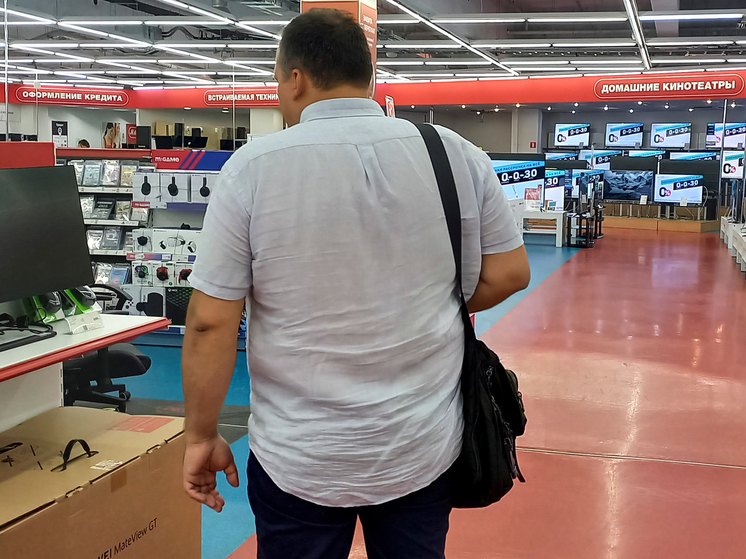
Market analysts explain that at the end of August and beginning of September there is always a buying surge, as people return from vacation, but most importantly, children go to school. In summer, there is generally a lull in the consumer goods market. Therefore, economists express the opinion that the FAS's goal is to attract buyers to stores during the «hottest» time. The next surge in demand will begin closer to the New Year holidays, approximately from the end of November.
The FAS confirmed this in its official statement: their initiative, they believe, will help prevent a possible increase in the cost of these goods and will make them more accessible to Russians. Another goal is that, in their opinion, it will have a positive impact on the market. The agency also reminded market participants «of the importance of adhering to the principles of responsible pricing and preventing unjustified price increases.»
Two of the three networks supported the FAS proposal, giving their comments. They stated that they would prepare a list of goods, the prices of which would be fixed from the end of August to the end of September (for a month). The reaction of the third company is still unknown.
And so, today, August 15, the FAS issued a new message: one of the online retail chains with which the agency negotiated, reduced the price level on a number of its products by an average of 7%. «Prices are fixed for 160 items from 60 product categories, including computer and household appliances, electronics, office furniture, and office supplies.» The FAS announced the following terms of the program: the price fixing will be in effect until September 22 with the possibility of extension, and the price reduction is calculated from the average retail price of the goods.
As is known, after the start of the SVO, many foreign brands suspended or completely stopped working in Russia due to sanctions from the US and the EU and difficulties in logistics, as well as pressure from their politicians. Some international electronics giants stopped supplying their equipment to our country, some of them also suspended assembly of equipment at local factories.
In the summer of 2023, the parallel import scheme began to work — when goods are imported without the permission of the copyright holder. At the same time, the vacated niches of European, American and South Korean brands began to be occupied by Chinese and Turkish manufacturers.
For an explanation of why prices for electronics are rising, whether their growth can be stopped, and what consequences the FAS initiative may have for the market, a correspondent for MK found out from a well-known Russian economist.
— There is a problem of rising prices. And this problem is not only related to electronics and household appliances, manufacturers of other goods also say so, — explains Georgy Ostapkovich, Director of the Center for Market Research at the National Research University Higher School of Economics. — In general, the reasons are rooted in the payment system. Now the 14th package of sanctions does not apply to any specific type of product — it mainly hits those companies (non-Russian) that will trade with Russia. And they trade not only with the Russian Federation. The Russian market, despite the large territory of our country, is not that big in an economic sense. We occupy only 2.5% of the global economy. Therefore, most foreign brands will not take risks for the sake of Russia. And therefore, everyone is holding back payments for parallel imports.
Parallel imports have become very complicated. We usually talk about third countries, but in reality entire chains are built there! Conventionally speaking, Saudi Arabia buys and sells to Kazakhstan, Kazakhstan sells to Belarus, Belarus sells to Russia. But everyone wants to get their «gingerbread». Such chains are built by a huge number of intermediaries, each of whom inflates the price.
Plus, everyone is afraid to take risks in terms of sales, because the settlement system is very, very complicated. Few banks work through the Russian SPFS — the Financial Message Transfer System. It is far from SWIFT, where you can order any bank. That is, because of this, there are difficulties in conducting transactions. And since difficulties arise, the price of all these transactions increases. Naturally, the importer increases the price of his goods, which he transfers to retail.
At the same time, Georgy Ostapkovich emphasized that if earlier our retail trade received a conditional gadget for 100 rubles, and now receives it for 130 rubles for sale, then they set the same markup as before (about 30-40%). Therefore, it is impossible to blame retail trade for price gouging. The goods that reach them for sale are already initially more expensive.
The expert expressed the opinion that prices for electronics and household appliances will definitely increase, but the growth is unlikely to be 10-20%, but 5-8% is quite possible.
— How do you assess the position of the FAS in this situation?
— The Antimonopoly Service can, of course, tell retail chains — we forbid you to raise prices. They will put up with it, and trade at the old prices for a month or two. But then they will understand that their profitability is falling. And there are people working there too, who need to be paid salaries… They need to modernize their enterprises, somehow develop their business. They will say — why should we buy such products, where prices are regulated? Instead of electronics, we will sell, so to speak, mousetraps, where the price is not regulated in any way.
That is, they will maintain these prices for 2-3 months, and then a deficit will appear. This product will simply disappear from sale. First in one region, then in five regions. And in six months it will disappear at the federal level. And then the «black» market will start working. And in fact, we will return to Soviet times, when you could buy whatever you want, but «give a bribe from above.»
How to solve this problem? In my opinion, we need to come up with some kind of payment schemes — for example, through cryptocurrency, through barter, transport goods for cash …
But, of course, this is not a market mechanism and not civilized economic behavior. Even the Chinese, like our friends, but, as they say now, 98% of Chinese banks already divide yuan into «toxic» (dirty) and «clean». That is, «dirty» are those that were bought from us on the exchange, and «clean» are those bought in China itself. And they slow down transactions. All this grows into expenses, and expenses — into higher prices. I repeat, this concerns not only electronics, it is a general trend.