

A humanitarian project has become a hostage to big politics
The fate of the grain deal has become clear, but only for the next 60 days. The fact that the agreement has been extended for this period, «while maintaining all the basic conditions,» said the deputy head of the Russian Foreign Ministry Alexander Grushko. We are talking about a natural and at the same time formal act that does not solve the problem of the discrepancy between the initial goals of the transaction and how it is implemented. A large-scale action to prevent the risks of a global food crisis has turned into one continuous geopolitical game. Although it was conceived as a humanitarian and economic project.
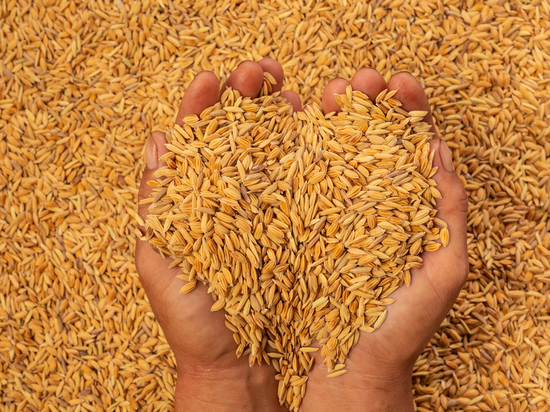 Photo: Freepik.com
The idea of the deal arose in the spring of 2022. The Russian-Ukrainian conflict has given the topic of global food security the highest degree of urgency. According to the US Department of Agriculture, both countries account for 16% and 10%, respectively, of global trade in the main food crop — wheat. Due to hostilities, the export of Ukrainian grain stopped, since the ports of the Odessa region, through which supplies went to the buyer countries, were mined. Russian exporters of grain and fertilizers also faced insurmountable barriers associated with the refusal of international logistics companies to work with the Russian Federation. Against this background, in March-April 2022, world prices for grain and fertilizers rose sharply. In May, UN Secretary General António Guterres announced a real threat of a global food crisis, which could not be prevented without the participation of Russia and Ukraine.
The role of mediators in the settlement of the grain issue was assumed by the UN and Turkey. In July 2022, two agreements were signed in Istanbul: a Memorandum of Understanding between the UN and Moscow on lifting restrictions on the access of Russian agricultural products to the world market, and the Black Sea Grain Initiative (with the participation of Russia, Turkey, Ukraine and the UN), which provided for creation of a safe corridor for the export of Ukrainian grain from the ports of Odessa, Chornomorsk and Yuzhny.
The deal implies an automatic extension in the absence of objections from either party. Initially, it was concluded for 120 days, until November 18, but after this date it was extended for a similar period — until March 18, 2023. And then a new extension followed — so far for 60 days. At the same time, official Kiev, represented by the Minister of Infrastructure of Ukraine Oleksandr Kubrakov, until the very end maintained that he was not satisfied with the idea of prolongation for 60 days, since this contradicts the provision of 120 days fixed in the documents.
According to the UN, by the beginning of March of this year, 789 ships departed from Ukrainian ports, which took out about 23 million tons of grain (49% of corn and 27% of wheat). Five countries received 60% of this volume: China (4.8 million tons), Spain (3.9 million), Turkey (2.6 million), Italy (1.7 million) and the Netherlands (1.4 million). In the regional context, the picture looks like this: 52.6% of grain went to Europe and Central Asia, 24.8% to the Asia-Pacific region, 14.3% to the Middle East and North America, and 2.6% to states south of the Sahara.
“The deal really made it possible to contain the growth of world food prices,” says Artem Deev, head of the analytical department at AMarkets. — If in March last year wheat cost more than $500 per ton, then in August it was already $380. At the same time, as follows from the reports of the UN and the World Trade Organization, instead of the poorest countries in Africa (where Kiev traditionally exported these products), Ukrainian grain was sent mainly to European countries. Accordingly, the agreement did not work as originally claimed, in particular, it did not help to increase the level of food security in poor countries. As a result, Ukraine benefited from the deal, while Russian exporters still had problems: obligations towards them were not actually fulfilled. The export of agricultural products and fertilizers from the Russian Federation from the Black Sea ports is difficult, because of the sanctions, our ships are still unable to enter European ports, and all restrictions on bank payments and insurance remain.
In early March, the Russian Foreign Ministry accused the West of sabotaging the UN's «humanitarian package» agreements. The department recalled that the Guterres plan involved the normalization of food supplies from Russia and Ukraine as part of a single package, in order to provide assistance to needy countries in Africa, Asia and Latin America. In fact, the grain deal is reminiscent of servicing Ukraine's commercial grain exports, since most of the production goes by no means to the poorest regions of the planet. Of more than 23 million tons of grain (mainly feed corn and feed grains), the bulk, 47%, went to high-income countries, primarily in the EU, and 34% went to upper-middle-income countries. Based on UN data in March, about 0.3% of the 23 million volumes of grain exported by the Black Sea ended up in Lebanon, about 0.2% in Somalia, and about 0.03% in Djibouti.
In the current the 2022-2023 season, world wheat production, according to the February forecast of the US Department of Agriculture, will amount to 783.8 million tons. Of these, 21 million are in Ukraine, 92 million are in Russia, without which the problem of global food security, it seems, cannot be solved.
Moscow, among other things, seeks to unblock Russian fertilizers stuck in European ports. It is ready to provide them free of charge to needy countries. The first and so far the only batch of 20 thousand tons was sent from the Netherlands to the South African state of Malawi on November 29, 2022, arrived at an intermediate point in Mozambique on December 28 and is still on its way to the recipients. Latvia announced its readiness to unblock another batch of 30,000 tons out of more than 200,000 tons on its territory in early February.
“The deal justified itself only in part: de facto, only the Black Sea Grain Initiative is being implemented, and in a very specific way,” said Nikita Maslennikov, a leading expert at the Center for Political Technologies. — Failure to comply with the terms of the Memorandum of Understanding reduces our export potential, which is estimated at more than 50 million tons of wheat. De facto, deliveries of grain from the Russian Federation for the entire last year increased by only 1.6%, while all agricultural products — by 12.1%.
Yes, thanks in large part to the deal, world prices for cereals — corn and wheat — went down. However, the developing countries, most in need of additional food, have gained almost nothing. And from this point of view, the agreement remains declarative: its mechanism ran into political obstacles, the real effect is very insignificant. As a result, Kyiv turned out to be the main beneficiary: about 23 million tons of Ukrainian grain was exported. In early March, the US State Department called for an extension of the deal, turning to Moscow, while the arrows were formally transferred to the Europeans: a cargo of Russian fertilizers got stuck with you, so you figure it out. In a word, argues Maslennikov, the deal, with all its humanitarian and economic filling, has become a hostage to big politics, which emasculates its true purpose. Plus, the situation could have been affected by the lobbying efforts of large grain traders in the West, who are absolutely not interested in the influx of additional grain into the world market, since this leads to lower prices.
Russia, on the other hand, needs clear guarantees for the fulfillment of the provisions that are fixed in both Istanbul agreements. For example, it states that the transshipment of ammonia through the Togliatti-Odessa pipeline should be resumed along with the launch of the Black Sea Initiative and the start of transportation of Ukrainian food. However, this did not happen, reminds Maslennikov. The ammonia pipeline, which pumps about 2.5 million tons of raw materials a year, enough to produce 7 million tons of fertilizers, is idle not for technical, but solely for political reasons.
By the way, according to Politico, its restart is supported by American and European officials, given the role of ammonia as a key ingredient in many fertilizers. “However, security concerns are cited in Kyiv, and some Western allies of Ukraine are concerned that the ammonia pipeline could provide Moscow with a new source of income,” the author of the article adds.
The main snag for Russia is the inability to use the Western fleet of bulk carriers: access to freight and insurance is still difficult due to sanctions, says Aleksey Zubets, a professor at the Financial University under the Government of the Russian Federation. At the same time, in his opinion, politicians in the West need a grain deal: in order to finally cope with the protracted food inflation in their countries, it is necessary to achieve a reduction in prices for agricultural raw materials, in particular for livestock feed. The heads of Russian agricultural holdings, as well as their Western counterparts, are categorically not interested in this: grain exports are becoming frankly unprofitable. And, coupled with export quotas introduced to protect the domestic market from «grain inflation», it is doubly unprofitable. The deal reduces prices in the external market, quotas — inside, as a result, the sector loses a lot of money.
“We need to understand: humanity is not in danger of starvation, there are millions of tons of grain in elevators around the world,” says Zubets. — Initially, the problem was not with the amount of food, but with its cost. Now, against the backdrop of high rates by the Fed and the European Central Bank, wheat prices have halved. And if Russia refuses to further participate in the deal, if the price dynamics goes up, there will be no global famine. In order for our farmers not to suffer losses, it is necessary to reduce duties and make exports more profitable. And in no way reduce production, sown areas. The country needs a currency, but there is always demand for grain.»
Vladislav Inozemtsev, director of the Center for Post-Industrial Society Studies, looks at the situation from a fundamentally different angle, seeing in it mostly political overtones. In his opinion, Russia retains its presence in the deal solely for the sake of Turkey (the main transit country) and China (which receives almost 40% of Ukrainian grain exports), which receive political and economic benefits from it. Apparently, the economist argues, in early March, Ankara sent a signal to the Kremlin in the form of a ban on the transit of parallel imports. In response, he agreed to a temporary extension of the deal — and the next day the transit went on as it had before, despite active pressure from the United States and Europe. Moscow is waiting for the results of the elections in Turkey and the arrival of Xi Jinping. Depending on the outcome of both events, it will become clear what will happen to the deal. For now, we decided to take a break.
The implementation of the Memorandum of Understanding and the grain deal as a whole is severely hampered, among other things, by conceptually different approaches to the format of the agreements. The West, or rather the European Union, views the deal not as a package agreement, but as two separate, autonomous agreements, the signatories of which differ: in the case of the Memorandum, these are Russia and the UN, in the case of the Black Sea Grain Initiative, Russia, Turkey, Ukraine and the UN. Moscow, on the other hand, through the mouths of the first persons of the Ministry of Foreign Affairs, claims that the deal is of a package nature and is invalid without the implementation of one of the two documents. “You can only extend what is already being done. And if the package is half-fulfilled, then the issues of extension become quite complicated,” Foreign Minister Sergey Lavrov said on March 9.
Brussels also insists that the EU sanctions against Russia do not prohibit it from exporting food and fertilizers to third countries, that there are no barriers to the supply of Russian grain abroad (with the exception of the EU itself). By the way, with regard to the supply of Ukrainian grain to Europe, they began even before the conclusion of the Istanbul agreements: the goods were transported by the so-called “solidarity routes” (by land and river routes) to neighboring countries, in particular to Poland and Romania. The largest volume of imports fell on the share of feed wheat, which is especially in demand in Spain, as it is a net importer of animal feed.
Alas, by March 2023, the grain deal was overgrown with a thick, thick scab of all sorts of political and opportunistic disagreements and inconsistencies. And in reality, it is not very clear whether the world needs it in its current form and status. In September 2022, the UN said the deal «returns much-needed grain to global markets and helps lower prices for staple foods.» On the one hand, the price index of the FAO (Food and Agriculture Organization of the United Nations) is decreasing non-stop: in February 2023, it was 129.8 points, which is 18.7% lower compared to the peak value of March last year. At the same time, FAO records the aggravation of food security problems in Burkina Faso, Mali, Haiti, Nigeria, Somalia and South Sudan: according to the UN, millions of people in these countries are at risk of starvation.
In addition, as reported in At the end of January, the Council of Europe, a sharp increase in agricultural imports from Ukraine turned into a severe headache for farmers from Poland, Romania, Bulgaria, Hungary, the Czech Republic and Slovakia. In particular, Warsaw was discouraged by a gigantic influx of Ukrainian corn into its market (1.6 million tons in November 2022, while in November 2021 supplies did not exceed 6 thousand tons), and Bulgaria was discouraged by a 22-fold increase in imports of Ukrainian sunflower ( from 36.1 thousand to 804 thousand tons in January-December 2022). These countries demanded an urgent response to the situation, reminding the EU leadership that European farmers have already suffered from the hostilities in Ukraine: prices for fertilizers, fuel, and electricity have risen.