


In the small town of Buzuluk on the border of the Orenburg region, it is difficult to find a family where there would not be at least one oilman. That is why the 60th anniversary of the Orenburgneft enterprise, which is part of the Rosneft company, is a real citywide holiday. Together with the residents, the MK correspondent traced the progress from paper maps of deposits to traveling through them in VR glasses.
 Press Service of Rosneft Oil Company
To imagine the scale of the enterprise, let's turn to dry numbers. Since 1963, Orenburgneft has extracted more than 456 million tons of oil and condensate and 35 billion cubic meters of gas from the bowels. At the beginning of this year, mining is carried out at 74 licensed areas. The total length of the enterprise's pipeline is over 5,800 km. For comparison: from Buzuluk to Moscow «only» 1100 km! Orenburgneft accounts for more than half of all oil production in the region, which makes the company the region's largest employer.
Most of Orenburgneft's fields are mature. High production rates are the result of the consistent application of a set of advanced geological and technical measures.
At a number of fields, thanks to innovations, the oil recovery factor (ORF) has increased to 56%. This is one of the highest industry indicators, the average oil recovery factor in Russia is about 35%.
“From 2018 to 2022, we implemented more than 100 projects, from which we received an economic effect of more than 8.2 billion rubles. Projects are rational proposals of our employees, which in one way or another made it possible to obtain economic benefits in the production process,” says Chief Engineer Dmitry Kasmynin.
 Rosneft Press Service
One of the key goals of innovation is to improve the environmental performance of production activities. In 2022 alone, the “green” investments of the enterprise amounted to 2 billion rubles.
“Among the most successful innovations applied in 2022, the project for gas purification from hydrogen sulfide, developed by the employees of the enterprise. The economic effect of this technology will be more than 1.3 billion rubles over 5 years,” said Nail Galiyev, manager of the department of scientific and technological development and innovation.
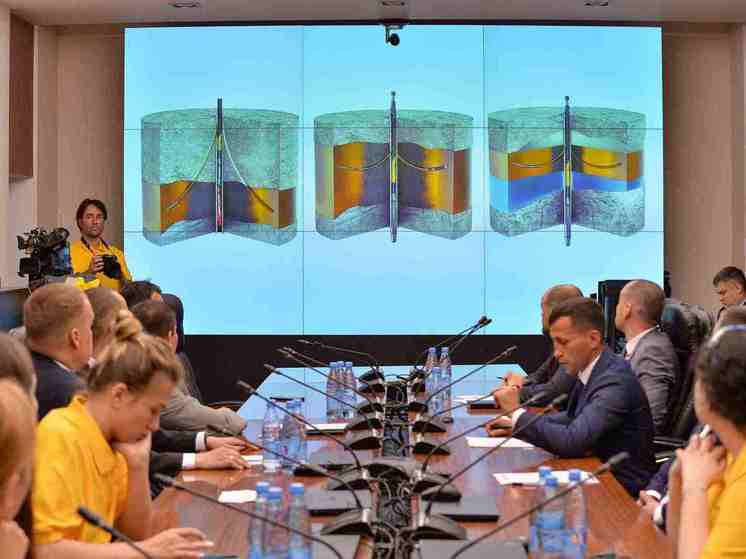
He added that testing of domestic technologies for the use of expanding plugging material to obtain additional oil production by reducing water in well production also started this year. The essence of the technology is the use of a new type of isolation of oil reservoirs from aquifers.
“In another project, we use reagents to increase oil production. The mechanism is based on the destruction of clay particles, after which they are easily carried away from the well. Of course, the approach is absolutely safe for the environment,” Galiev added.
The development of already mature fields is not an easy task. Usually the production on them either stays at the same level or falls. At least, that's how it used to be. So far, new non-standard solutions have not been applied at the fields.
So, in 2023, Orenburgneft put into development the Biktovskoye field, discovered as a result of prospecting and appraisal drilling. The wells were laid on the basis of seismic maps obtained from the results of reinterpretation of 3D seismic data. The use of new techniques for processing seismic data in geological exploration has made it possible to obtain commercial inflows of oil from the Carboniferous and Devonian deposits.
“During the extraction and transportation of minerals, companies often face the problems of collecting, storing, accumulating and analyzing large amounts of data. Previously, various paper materials were used for this, file cabinets were kept. It is not easy to analyze such a large amount of information. We have recently implemented new software developed by Rosneft research institutes. This digital service includes terrain maps, topographic plans, satellite images, displays the territories of nature protection zones, the history of engineering surveys, the parameters of oil and gas pipelines, as well as the coverage radius of communication systems,” said Alexei Strelnikov, head of the geoinformation support department.
Due to the use of the new software, the oil workers reduced the time for collecting and processing information for engineering surveys by 4 times. In addition, now it takes specialists only one week to determine the mouth of a future well, previously this painstaking work took a month.
 Press service of PJSC Oil Company «Rosneft»
Main assistance in the difficult task of increasing oil recovery to oilmen is provided by the developments of corporate scientific institutes of «Rosneft». Among them is microseismic monitoring of fracture propagation during hydraulic fracturing (HF). Based on the information obtained during monitoring, specialists determine the optimal trajectory for drilling horizontal wells.
“In order to get more information, seismic sensors are placed in the area of the well. And in the process of hydraulic fracturing, signals are recorded. We can monitor how the fracture is propagating and we can adjust the horizontal wellbore drilling,” explained Ivan Markin, Production Stimulation Department Manager.
Another own innovation is the radial opening of the formation. The technology is used to intensify oil production in those wells where hydraulic fracturing is impossible due to the close location of formation waters. The actual effect of one operation is more than 1.5 million rubles.
“The new approach has been successfully implemented at three wells of Orenburgneft and in 5 years will allow us to additionally produce more than 5 thousand tons of oil from each well”, — said Nikolay Tyugaev, head of the geological and technical operations department.
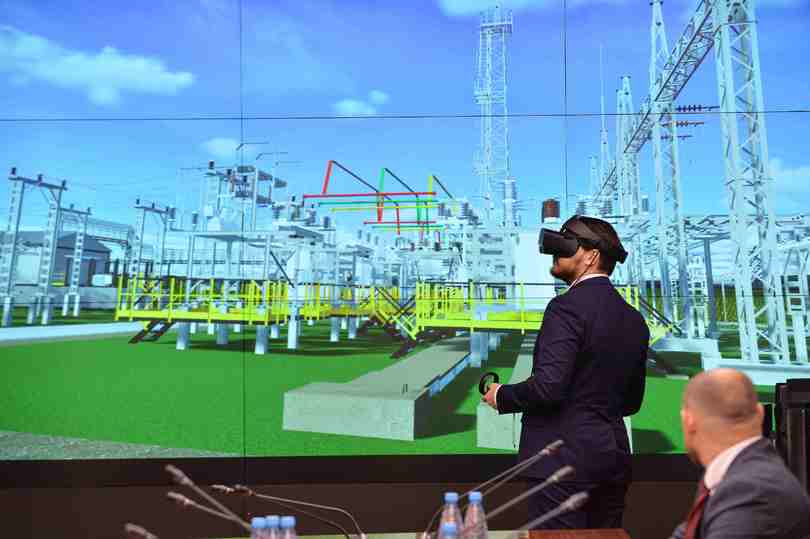
They concern innovation and training of employees. Today, the Samara Scientific Institute of Rosneft is developing a virtual model of the Gerasimovskaya substation for the enterprise. Specialists will create a VR-model of the substation with an immersive effect and a simulator for seven scenarios of operational switching.
“Even at the construction stage, long before the facility is put into operation, the technology will familiarize the personnel who will work at the facility with the layout and device equipment. The created simulator is planned to be used for personnel training and with augmented reality glasses,” said Deputy Chief Power Engineer Dmitry Malyshev.
Just put on your glasses and you're at work! Isn't it a dream? In complete safety on the simulator, you can rehearse all the most difficult situations: from a power outage to eliminating the consequences of freezing rain.
 Press service of PJSC NK «Rosneft»
While beginners are training on 3-D designs of new substations, experienced employees are modernizing existing ones. Orenburgneft is implementing a comprehensive program to increase energy efficiency and energy saving. From 2018 to 2022, the company reduced electricity consumption by 365 million kWh.
“The substation workers have special helmets with a non-contact voltage detector. In order for the electrician to be warned about the proximity of live equipment, a warning device is built into the helmet. Even if you bring it to an ordinary outlet, the signaling device will squeak, warning the person, ”said Leonid Gorbunov, deputy head of the CEEO-3.
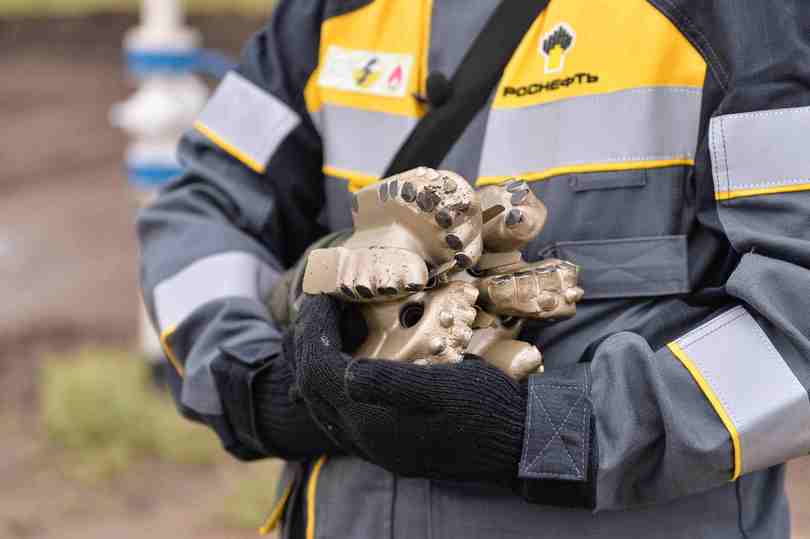
In the Orenburg region, soft and hard rocks alternate in layers. Therefore, in the past, drilling bits often failed. But domestic manufacturers took into account the recommendations of the company's engineers and produced special bits with double rows of weapons and wedge-shaped diamond inserts. Thanks to the application of the innovation of Russian engineers, Orenburgneft increased the maximum penetration rate to 24.2 meters per hour, which is 16% more than the previous record of the enterprise. This reduced the construction time of one well by more than a day.
 Rosneft Press Service
Orenburgneft is successfully converting injection well stock facilities to solar power. The controllers of 141 injection wells operate using the energy of light modules and allow specialists to receive reliable information on injection volumes online, and contribute to the promptness of decision-making on adjusting the formation water supply.
“In 2022, we reduced the volume of fresh water consumption for injection into the reservoir by 62% due to the transfer of injection wells to the injection of produced water. For this, about 10 km of high-pressure water conduits were built and a reservoir pressure support system was organized. This year we plan to build more than 12 km of high-pressure water conduits, which will practically eliminate the consumption of fresh water at 27 fields,” said Sergey Petrov, Deputy Head of the Metrology, Automation, Communications and IT Department.
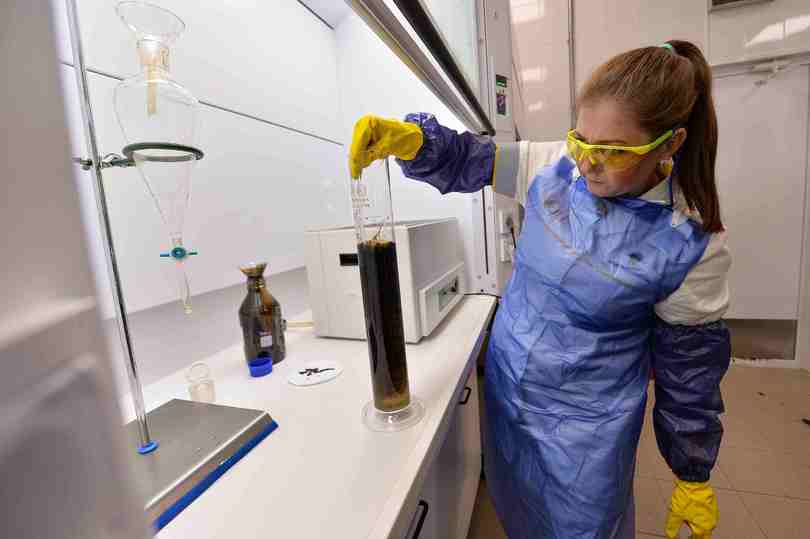
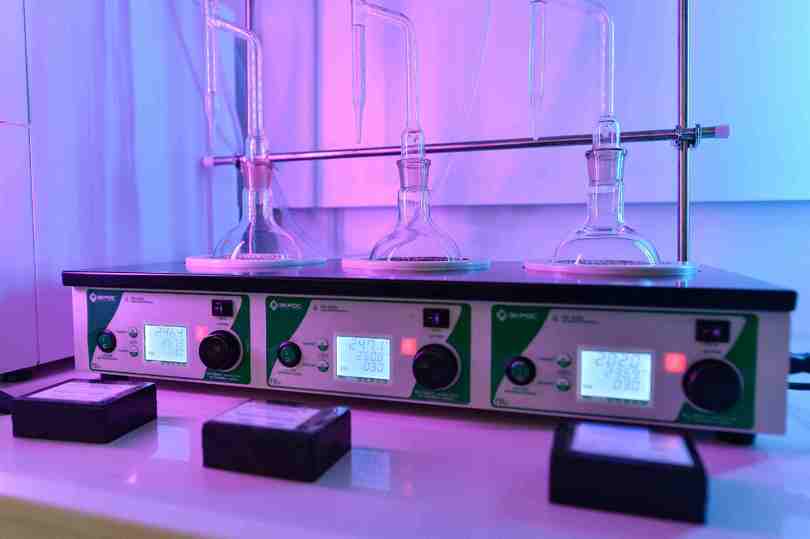
Recently, oilmen have put into operation a modern testing chemical-analytical laboratory at the Tananykskoye field. In the spacious rooms of the new stationary laboratory, modern domestic equipment operates around the clock, including an expensive spectroscan for complex analyses. The equipment of the laboratory allows one to determine the content of water, chloride salts, mechanical impurities, density, as well as organochlorine compounds in oil with absolute certainty. About 7 thousand tests per month are carried out here, that is, 230 tests daily.