


Dill — 50 rubles, basil — at least a hundred
Along with fresh vegetables and fruits, a pile of fresh herbs is on the market stalls in summer. There are not only dill and parsley, well known to everyone, but also basil, tarragon, mint, spinach, sorrel and much more. But buyers often complain: they may not need a plump bunch for 50 rubles, they won’t have time to eat it, but the merchants refuse to sell dill in smaller doses! The MK correspondent figured out how to solve this problem.
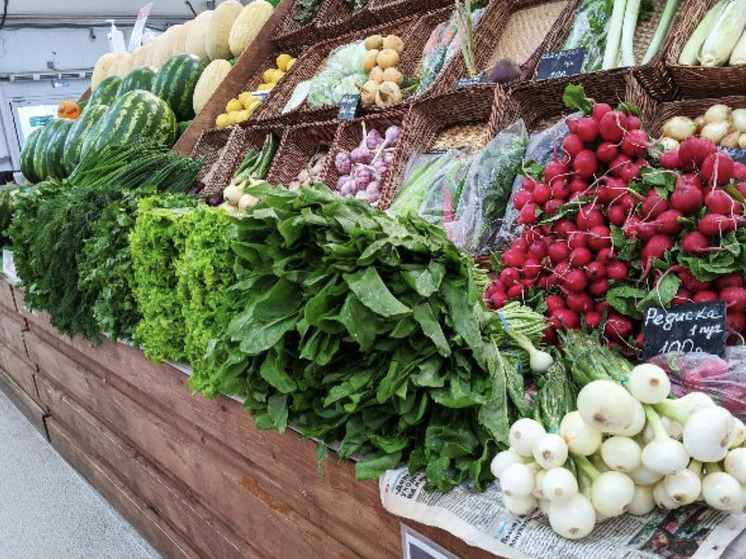 Photo: social networks
Let's take a look at a small local market located in the south-west of Moscow. There are a lot of stalls with herbs here, but the price level is the same everywhere: dill and parsley — 50 rubles each. Basil, black and green, costs 100 rubles per bunch. True, there is a nuance here: a bunch of green basil is noticeably thinner (for the same money) than black. So, to prepare any portion of pesto sauce, the classic use of basil, you need to take at least 2-3 bunches. Tarragon, also known as tarragon, spinach, mint and arugula, are also sold here for 100 rubles.
True, arugula in the role of greenery, tightly tied with an elastic band, is a strange decision in itself. It looks much more organic in the salad camp — and it is much more profitable to go to any supermarket and buy it in a box or bag, where for the same 100-120 rubles there will be twice as much grass, moreover, of better quality.
However, there are questions about the rest of the greenery. While looking at the basil, I hear one customer say to her husband:
— Let's get out of here. We have bunches of sorrel twice as thick at Yuzhnaya for the same 100 rubles, and we will buy it there. There is no need to take here: I will need four local bunches for soup.
She is probably right. Why this is so is an open question. Maybe Yuzhnaya is further from the center, which is why the prices are lower. Maybe everything rests on the impudence of individual sellers: in the end, everyone sells for as much as he considers it necessary (and acceptable) to sell. They buy it.
– Tell me, can I take half of such a bundle? I ask the merchant, pointing to the cilantro. – I don’t need so much, only three sprigs for salad.
She answers very succinctly:
– No.
Her neighbor turns out to be more talkative:
— You see, these bunches are given to us already prepackaged. There is no possibility for each buyer to weigh and measure. But if you want, come to me! Look, I have cilantro in small bunches?
— And how much is so small?
— 60 rubles.
An interesting pattern: the volume is much less than the previous one, but it costs not half the price, but only 40%. Unprofitable, of course. Apparently, the same pattern as the lady we met with sorrel.
In the market, apparently, it will not be possible to bargain. But it’s a completely different matter — in a small shop on the territory of the local, as they say, food market. Here, when asked about greenery, a smiling grandmother of southern blood takes out a solid bunch of dill from somewhere.
— Is this suitable?
— No, of course! Where do I need so much?! – from voice, seems, not managed to remove slight horror. No wonder: the beam resembles a sheaf of hay. Maybe if you're going to make dill oil, this is just right, but just like that …
Grandmother divides the bunch in half:
— And like this?
— So too much.
— Well … — it’s clear that grandmother is reluctant to sell one and a half dill, but I don't want to lose a client either. Divides the beam in half again: — Well, like this?
— That's so normal.
Dill is sent to the scales. Sentence: 43 rubles. Well, just as much as you need.
True, the remark of another lady puts a logical point — while I'm dealing with dill, she thoughtfully chooses a cherry and mutters as if under her breath: in summer it’s a dacha, but it grows beautifully on my balcony in winter too! Money wasted…
Idea #1 is to freeze. Dill or parsley, unlike zucchini, does not take up much space, so any, even the most modest freezer, will do. Using a blender, chop the greens, add a little salt, and then arrange in small ice cube molds. Such blanks can be used all year round.
Idea number 2 — mix with oil. The «delicious» or «green» oil is often served as a complement in cafes and restaurants, but you can also make it at home. To do this, you need a bunch of any greens (dill, cilantro, basil, you can mix), a pack of butter and a couple of garlic cloves. Put all the ingredients in a blender bowl (the oil needs to be slightly softened in advance) and grind until a homogeneous mass is formed. Add salt to taste. Green butter goes well with banal young boiled potatoes.